Need Starlink Installation or Network Optimization?
We help homes, offices, apartments, and businesses with Starlink installation, WiFi coverage improvement, and professional setup in Kenya.
Request Installation Chat on WhatsApp
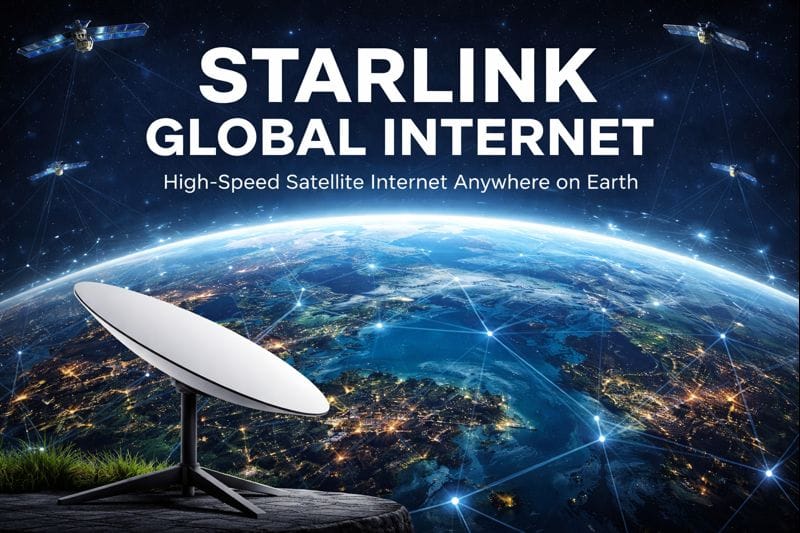
Introduction: The Need for Global Connectivity
In today’s digital world, reliable internet is no longer a luxury—it’s a necessity. Yet, millions of people around the globe, especially in rural and remote regions, still struggle with slow or unavailable internet. This is where Starlink satellite technology comes into play. Developed by SpaceX, Starlink leverages a constellation of small, low Earth orbit (LEO) satellites to deliver high-speed, low-latency internet across the globe, breaking the barriers of traditional connectivity.
What is Starlink Satellite Technology?
Starlink satellite technology refers to a revolutionary system of satellites operating in low Earth orbit. Unlike traditional geostationary satellites, which orbit approximately 36,000 km above the Earth, Starlink satellites orbit at altitudes ranging from 550 km to 1,200 km. This proximity allows for faster signal transmission, lower latency, and higher speeds, making Starlink an attractive solution for users in remote locations and areas underserved by fiber or cable networks.
Key components include:
LEO Satellites: Hundreds of small satellites forming a constellation to provide near-global coverage.
User Terminals: Compact satellite dishes that connect homes and businesses to the Starlink network.
Phased Array Antennas: Advanced technology enabling efficient communication between satellites and ground terminals.
Mesh Network: Satellites communicate with each other to route data efficiently across the globe.
How Starlink Works
Starlink operates through a combination of advanced satellite and ground technology:
Satellite Constellation Deployment: SpaceX regularly launches batches of satellites to expand network coverage.
User Connection: Customers install a Starlink dish that automatically aligns with the satellites overhead.
Signal Transmission: Data is sent between the user terminal and the nearest satellite, then relayed through the mesh network to ground stations.
Internet Delivery: Users experience high-speed internet with significantly lower latency compared to traditional satellite services.
This approach enables Starlink to provide consistent, high-quality internet access in areas where traditional infrastructure is impractical or unavailable.
Benefits of Starlink Satellite Technology
1. High-Speed Internet Anywhere
Starlink delivers download speeds ranging from 50 Mbps to over 250 Mbps, allowing streaming, video calls, online gaming, and business operations to run smoothly, even in rural or remote areas.
2. Low Latency Performance
Latency with Starlink typically ranges from 20–40 milliseconds, far lower than traditional satellite internet, which often exceeds 600 milliseconds. This improvement is crucial for real-time applications like gaming, virtual meetings, and telemedicine.
3. Easy Installation
Starlink’s compact satellite dish and user-friendly setup process mean installation takes just minutes, without the need for extensive cabling or professional assistance.
4. Expanding Global Coverage
The network is continually growing as more satellites are launched, providing enhanced reliability, faster speeds, and expanded geographic coverage.
Starlink vs Traditional Satellite Internet
| Feature | Starlink Satellite Technology | Traditional Satellite Internet |
|---|---|---|
| Orbit Type | Low Earth Orbit (LEO) | Geostationary Orbit |
| Latency | Low (20–40 ms) | High (600+ ms) |
| Download Speeds | 50–250 Mbps | 10–25 Mbps |
| Ideal For | Rural, remote, mobile users | Limited coverage areas |
| Scalability | Rapid, global expansion | Limited by fewer satellites |
Starlink’s LEO constellation provides a transformative leap in performance, making reliable internet possible in places previously considered unreachable.
Applications of Starlink Satellite Technology
Starlink satellite technology serves multiple industries and sectors:
1. Remote Communities
Brings high-speed internet to areas lacking fiber-optic or cable infrastructure, improving education, healthcare, and business opportunities.
2. Disaster Relief
Provides emergency communication when terrestrial networks fail during natural disasters.
3. Maritime and Aviation Connectivity
Ships, boats, and aircraft can stay connected at sea or in-flight, supporting operations and passenger internet access.
4. Enterprise Solutions
Supports industries such as agriculture, mining, oil, and construction in remote locations where internet access is essential for operations and safety.
5. Mobile Connectivity
Ideal for RVs, mobile homes, and temporary installations, offering flexibility in connectivity for traveling users.
Challenges and Considerations
While Starlink satellite technology is groundbreaking, there are challenges:
Weather Dependency: Heavy rain or snow can temporarily affect signal quality.
Initial Costs: The Starlink kit and subscription may be higher than traditional broadband in urban areas.
Orbital Congestion: The growing satellite constellation has raised concerns about space debris and long-term sustainability.
Despite these considerations, Starlink continues to innovate with new satellites and ground technologies to mitigate challenges.
The Future of Starlink Satellite Technology
Starlink is not just a solution for internet access—it’s a vision for global digital inclusion. As SpaceX continues to expand the constellation, future innovations may include:
Enhanced bandwidth and speed
Integration with 5G networks
Greater coverage in the polar regions
Support for emerging technologies like autonomous vehicles and IoT networks
The potential for Starlink to connect the unconnected and bridge the digital divide is enormous.
Conclusion
Starlink satellite technology represents a new era in global connectivity. By leveraging low Earth orbit satellites, advanced user terminals, and mesh networking, Starlink delivers high-speed, low-latency internet to even the most remote regions of the world. From rural communities to maritime and disaster applications, Starlink is reshaping how the world accesses information, communicates, and interacts online.
With continued expansion and technological innovation, Starlink is poised to redefine what “connected” truly means for billions of people around the globe.
Need Starlink Installation or Network Optimization?
We help homes, offices, apartments, and businesses with Starlink installation, WiFi coverage improvement, and professional setup in Kenya.
Request Installation Chat on WhatsApp