Need Starlink Installation or Network Optimization?
We help homes, offices, apartments, and businesses with Starlink installation, WiFi coverage improvement, and professional setup in Kenya.
Request Installation Chat on WhatsApp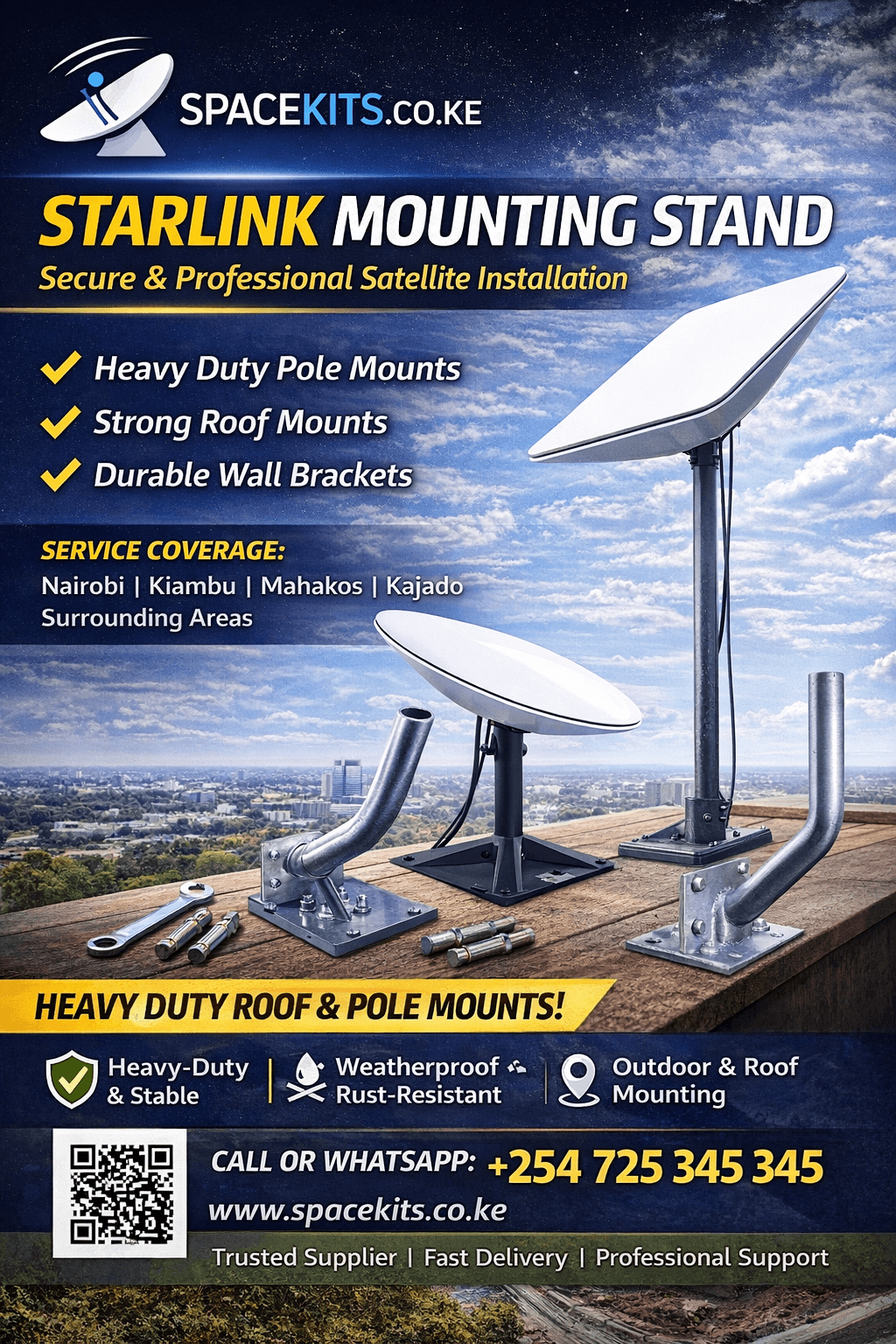
Are you searching for the best Starlink mounting stand in Kenya? Whether you’re installing satellite internet for your home, office, lodge, or farm, the mounting stand plays a critical role in ensuring stable connectivity, long-term durability, and optimal signal performance.
A high-quality Starlink mounting stand is not just an accessory — it is a structural foundation for your entire satellite internet system. Without proper mounting, even the most advanced satellite technology can suffer performance issues.
This comprehensive guide explains everything you need to know about choosing the right Starlink mounting stand, installation options, benefits, and why professional mounting matters.
What Is a Starlink Mounting Stand?
A Starlink mounting stand is the structural base or bracket used to secure your Starlink satellite dish in an elevated, stable position. It ensures:
Clear sky visibility
Wind resistance
Proper dish alignment
Long-term durability
Secure anchoring
Starlink operates using low Earth orbit satellites. Because these satellites move across the sky, your dish must have an unobstructed view in multiple directions. A strong and correctly positioned mounting stand makes this possible.
Why a Proper Starlink Mounting Stand Is Important
1. Stability in Wind & Rain
Kenya experiences strong winds and heavy rainfall during certain seasons. A weak mounting stand can cause:
Dish movement
Signal drops
Structural damage
Internet instability
A professional-grade mounting stand prevents these issues.
2. Clear Sky Positioning
Trees, walls, and neighboring buildings can block satellite visibility. A raised mounting stand ensures:
Higher elevation
Better line-of-sight
Reduced obstruction warnings
Improved internet performance
3. Long-Term Durability
Quality mounting stands are:
Rust-resistant
Galvanized or powder-coated
Weatherproof
UV-resistant
Cheap alternatives may corrode quickly, especially in coastal regions like Mombasa.
Types of Starlink Mounting Stands
Different locations require different mounting solutions.
1. Roof Mount
Ideal for:
Residential homes
Villas
Townhouses
Apartments with rooftop access
Features:
Secure anchoring
Weatherproof sealing
Strong roof brackets
2. Pole Mount Stand
Perfect for:
Rural areas
Open compounds
Farms
Estates
Advantages:
Elevated positioning
Reduced obstruction
Strong foundation
3. Wall Mount Bracket
Best for:
Commercial buildings
Apartment balconies
Offices
Benefits:
Clean installation
Space-saving
Easy cable routing
4. Ground Mount Stand
Used for:
Temporary setups
Construction sites
Camps
Mobile applications
Materials Used in Quality Starlink Mounting Stands
A professional Starlink mounting stand should be made of:
Galvanized steel
Stainless steel
Aluminum alloy
Powder-coated iron
These materials prevent:
Rust
Structural weakening
Mount instability
Starlink Mounting Stand for Homes
Homeowners benefit from:
Clean cable management
Aesthetic installation
Stable WiFi performance
Safe structural integration
Proper mounting reduces maintenance costs over time.
Starlink Mounting Stand for Businesses
Businesses require mounting solutions that support:
Heavy-duty usage
Long-term reliability
Wind resistance
Large roof installations
Industries that benefit include:
Hotels
Warehouses
Schools
Construction sites
Offices
A professionally installed mounting stand protects business connectivity.
How to Choose the Right Starlink Mounting Stand
When selecting a mounting stand, consider:
1. Roof Type
Concrete
Tile
Metal sheets
Each requires a different anchoring method.
2. Height Requirements
If your location has:
Trees
High walls
Adjacent buildings
You may need an extended pole mount.
3. Wind Exposure
High-wind areas require reinforced stands.
4. Installation Location
Indoor vs outdoor, rooftop vs ground — each demands different hardware.
Common Mistakes When Choosing a Starlink Mounting Stand
❌ Using lightweight brackets
❌ Mounting too low
❌ Ignoring obstruction checks
❌ Poor sealing leading to roof leaks
❌ Weak anchoring
Professional consultation avoids these problems.
Installation Process for Starlink Mounting Stand
Site assessment
Obstruction analysis
Stand selection
Secure mounting
Cable routing
Alignment testing
Final performance check
Proper installation ensures long-term stability.
Benefits of Investing in a High-Quality Starlink Mounting Stand
✔ Improved signal strength
✔ Reduced service interruptions
✔ Long-term durability
✔ Weather resistance
✔ Safe installation
✔ Professional finish
Starlink Mounting Stand vs Standard Satellite Brackets
Unlike traditional satellite dishes, Starlink dishes require:
Wider sky view
Dynamic satellite tracking
Stable angle alignment
This makes standard satellite brackets insufficient in many cases.
A purpose-built Starlink mounting stand ensures compatibility.
Frequently Asked Questions – Starlink Mounting Stand
Do I need a mounting stand if I have a tripod?
Tripods are suitable for temporary setups. Permanent installations require stronger mounting.
Can I install the mounting stand myself?
DIY is possible but professional installation ensures safety and performance.
Is the stand included with the Starlink kit?
Some kits include basic mounts, but advanced setups often require additional mounting hardware.
Does the stand affect internet speed?
Indirectly yes — poor positioning reduces signal stability.
Starlink Mounting Stand for Rural Kenya
Rural regions often have:
Wide open spaces
Tall trees
Uneven terrain
Pole mounts are typically recommended to ensure maximum elevation.
Why Professional Mounting Matters
Hiring professionals ensures:
Structural integrity
Clean installation
Secure fastening
Optimal alignment
Weatherproofing
Improper mounting leads to:
Signal drops
Safety hazards
Equipment damage
Buy High-Quality Starlink Mounting Stand Today
If you are looking for a durable and professional Starlink mounting stand, choose a trusted supplier that understands satellite installation requirements.
Whether for residential or commercial use, proper mounting ensures you get the full performance potential of your Starlink system.
Starlink Mounting Stand – Technical Guide for Long-Term Performance
Choosing the right Starlink mounting stand is not just about holding the dish in place. It directly impacts connectivity reliability, signal quality, safety, and equipment lifespan.
Because Starlink operates using low Earth orbit satellites that constantly move across the sky, your dish must maintain:
Wide field-of-view visibility
Structural stability
Precise angle alignment
Zero vibration movement
A weak or improperly installed stand can compromise all of this.
Understanding Load & Wind Resistance
One of the most overlooked factors when selecting a Starlink mounting stand is wind load capacity.
In many regions:
Strong gusts can shift lightweight mounts
Vibrations can cause micro-movements
Continuous shaking reduces signal stability
A heavy-duty mounting stand should:
Be anchored with industrial-grade bolts
Use reinforced brackets
Have stable pole thickness
Be securely sealed to prevent roof damage
This ensures the dish remains steady even in harsh weather.
Mounting Height & Signal Optimization
Elevation matters.
If your dish is:
Too low → trees may obstruct signal
Near walls → reflections and interference increase
Mounted under roof overhang → partial sky blockage occurs
A raised mounting stand improves:
Obstruction-free visibility
Satellite handoff performance
Reduced downtime
Consistent speeds
Permanent vs Temporary Starlink Mounting Stands
Temporary Mount (Tripod or Ground Stand)
Best for:
Campsites
Construction sites
Short-term events
Mobile setups
Advantages:
Portable
Easy to relocate
Quick deployment
Limitations:
Less wind resistance
Lower elevation
Not ideal for long-term use
Permanent Mount (Roof, Pole, Wall)
Best for:
Homes
Offices
Hotels
Schools
Farms
Advantages:
Long-term durability
Higher elevation
Weather resistance
Professional finish
For permanent installations, investing in a heavy-duty Starlink mounting stand is highly recommended.
Cable Management & Waterproofing
A proper mounting solution includes:
UV-resistant cable routing
Waterproof sealing
Neat entry points
Secure fastening
Poor cable handling can lead to:
Water leakage
Signal degradation
Cable wear and tear
Aesthetic damage
Professional mounting ensures clean, organized installation.
Industrial & Commercial Mounting Applications
Large-scale installations require:
Reinforced steel brackets
Extended pole mounts
Multi-point anchoring systems
Wind-load calculations
Industries that demand heavy-duty Starlink mounting stands include:
Logistics warehouses
Manufacturing plants
Telecom backup sites
Hospitality resorts
Agricultural estates
Commercial installations must meet higher structural standards.
Coastal & High-Humidity Considerations
In coastal environments:
Salt air accelerates rust
High humidity weakens untreated metal
Recommended materials include:
Galvanized steel
Stainless steel
Powder-coated iron
This ensures corrosion resistance and long-term durability.
Structural Engineering Best Practices
When installing a Starlink mounting stand, professionals consider:
Load-bearing roof capacity
Mount angle adjustments
Safe drilling points
Sealant application
Anti-vibration reinforcement
This prevents:
Roof damage
Water leaks
Structural cracks
Mount instability
Starlink Mounting Stand for Multi-Unit Properties
For estates, apartment complexes, or business parks:
Centralized mounting systems can be used
Multiple routers distribute signal
Elevated pole mounts serve larger coverage areas
Structured planning improves efficiency.
Maintenance Tips for Starlink Mounting Stand
Although maintenance is minimal, periodic checks should include:
Bolt tightening
Rust inspection
Sealant condition
Stability testing
Obstruction re-evaluation
Routine inspection prevents long-term damage.
Safety & Compliance Standards
Professional installation ensures:
Ladder safety protocols
Electrical surge protection
Proper grounding
Secure roof anchoring
Compliance with local building practices
Safety should always come first.
Frequently Asked Questions – Starlink Mounting Stand
Does the mounting stand affect signal strength?
Yes. Improper elevation or unstable positioning can reduce performance.
Can I use an old satellite dish mount?
Not recommended. Starlink dishes require wider sky tracking than traditional dishes.
How high should a Starlink mounting stand be?
Height depends on surrounding obstructions. Professional assessment ensures correct positioning.
Can mounting stands be relocated?
Yes, if installed with removable brackets.
Why Quality Mounting Is a Long-Term Investment
Investing in a durable Starlink mounting stand:
Protects your hardware
Prevents costly repairs
Maintains internet stability
Enhances structural safety
Improves overall system lifespan
Poor mounting often results in:
Reinstallation costs
Service interruptions
Structural damage
Professional installation avoids these risks.
Get the Right Starlink Mounting Stand for Your Installation
Whether you need:
Roof mount
Pole mount
Wall bracket
Heavy-duty commercial solution
Choosing a quality Starlink mounting stand ensures reliable satellite internet performance for years.
For residential, rural, commercial, or industrial applications, secure mounting is the foundation of stable connectivity.
Need Starlink Installation or Network Optimization?
We help homes, offices, apartments, and businesses with Starlink installation, WiFi coverage improvement, and professional setup in Kenya.
Request Installation Chat on WhatsApp