

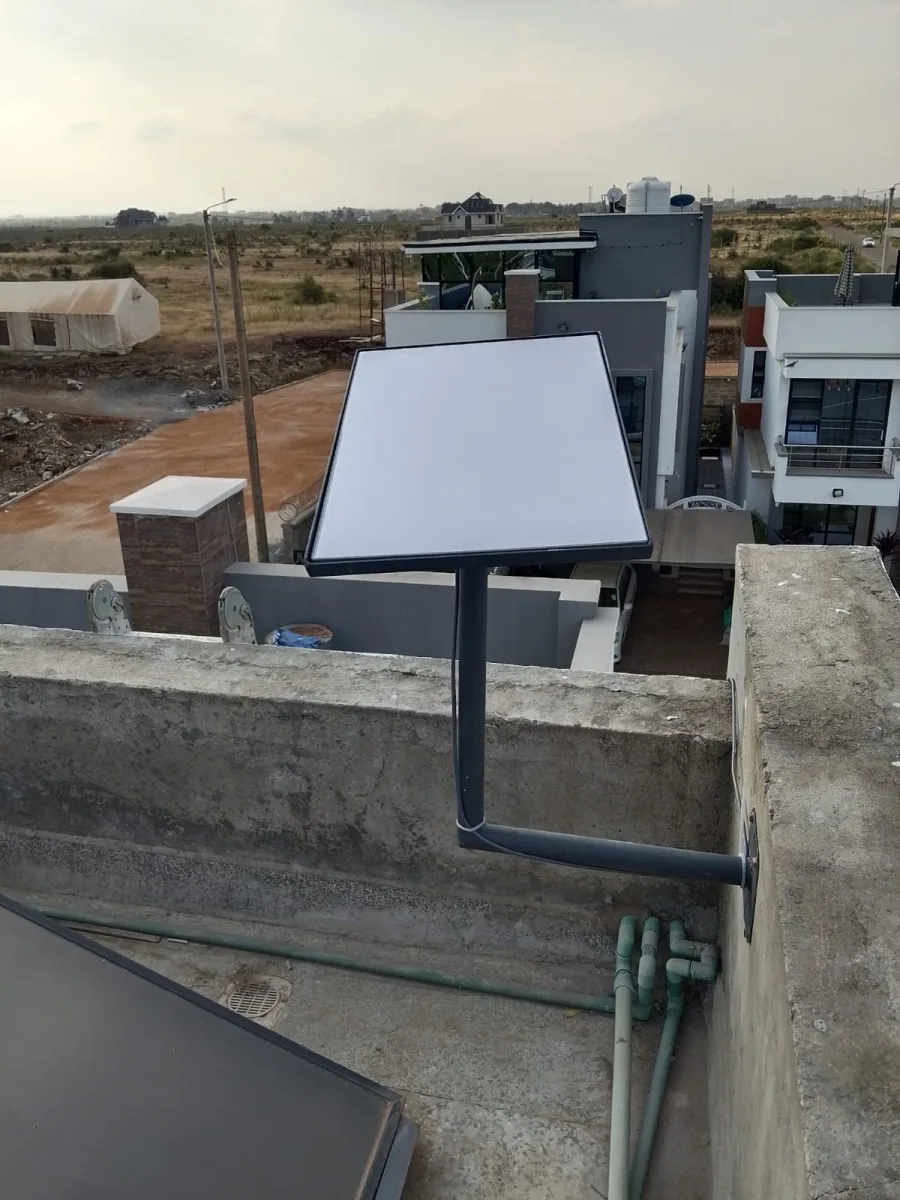
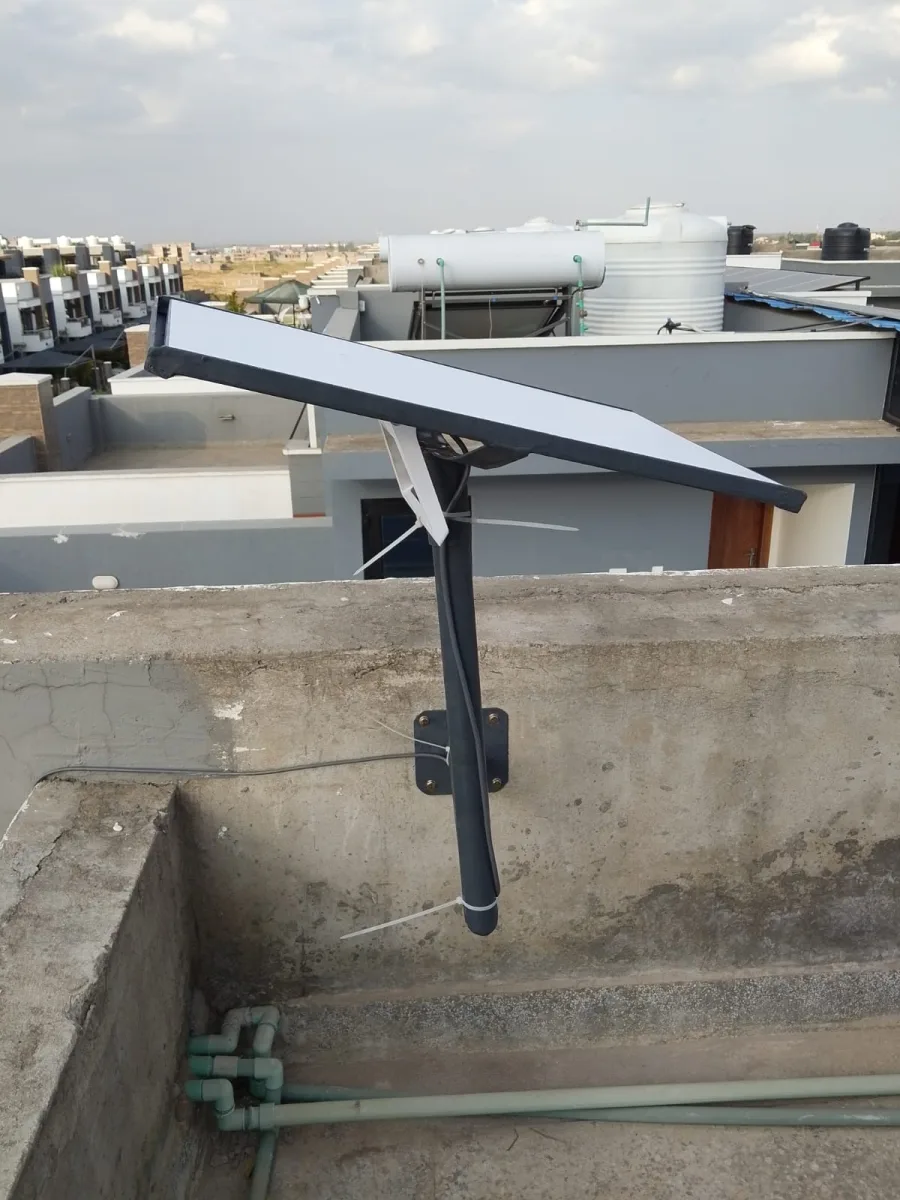
Need Starlink Installation or Network Optimization?
We help homes, offices, apartments, and businesses with Starlink installation, WiFi coverage improvement, and professional setup in Kenya.
Request Installation Chat on WhatsAppWiFi Extender Roysambu searches may start with a study desk that disconnects while the rest of the home seems fine. For online classes, interviews or remote work, consistency at that desk matters more than the number printed on an extender box. First establish whether the problem follows the room, the device or a particular time of day.
Talk to Spacekits
Need Starlink help for your home or business?
Talk to Spacekits before you buy or book installation. We help with kit supply, mounting, activation, router placement, WiFi coverage, and written quotes.

Use the actual study device for diagnosis
In a Roysambu home, test the laptop or tablet used for classes beside the router and at the desk. If only that device performs badly in both places, investigate its network settings or wireless capability before purchasing equipment.
If several devices fail at the desk but work near the router, the room is a more likely part of the problem. Note the number of intervening walls and whether moving the desk slightly changes performance. A small layout adjustment can be worth trying before a purchase.
Choose the simplest solution that meets the brief
A single extender can be sensible for one weak study area where a suitable installation position exists. Ask to test the proposed location before final mounting or handover. The extender's connection to the router matters as much as the laptop's connection to the extender.
If the desk is permanent and cabling is allowed, compare a wired connection or nearby cable-fed access point. A more expensive mesh kit is not automatically necessary for a single room, while the cheapest repeater is not automatically adequate for daily calls.
Plan an installation that can move with you
For a rented home, confirm drilling and cable-containment permissions. Ask what can be removed safely at the end of the tenancy and whether the equipment can be reconfigured for another router.
Keep the model numbers, power adapters and setup documentation together. A portable device still needs a new placement assessment when you move; the position that worked in one apartment may not suit another layout.
Check calls, uploads and reconnection
A speed test alone does not show whether an interview will remain usable. Try a call from the normal seated position, with the door closed and ordinary household activity continuing. Upload a representative file and watch for repeated disconnections.
Ask how the laptop should connect and whether the extender uses a separate network name. Confirm that it reconnects after sleep. This avoids discovering that the device has returned to the weaker router connection immediately before an important session.
Keep the quote proportional to the problem
A WiFi Extender Roysambu proposal should name the study area, include configuration and testing, and explain any optional equipment. Ask whether a return visit or repositioning is covered if the agreed room test is not met.
If performance is poor even beside the router, resolve that upstream problem first. Adding a stronger signal in the study room cannot repair an interrupted internet service.
WiFi Extender Roysambu: make the study desk the starting point
A compact rental can still have an awkward WiFi problem. The connection may work near the door while an online class freezes at the desk. Moving the laptop around the room becomes a daily workaround, but it does not explain whether the difficulty comes from coverage, shared demand or the internet connection itself. A useful assessment starts at the place where you actually study or work.
For a WiFi Extender Roysambu enquiry, describe the desk position, source router and ordinary study activities. Mention live classes, calls, document uploads and any other tasks that need a dependable connection. A small room does not automatically need an expensive system, and a large product-speed claim does not establish that an extender will solve the problem.
The aim is a practical setup that fits the room, the source connection and the permissions available. That might involve better placement, a suitable extender, a wired connection or coordination with the person managing a shared router. Diagnose first so the purchase addresses a real limitation.
Find out who controls the source connection
Some tenants have their own internet account and router. Others use a connection managed by a landlord, household member or building operator. Establish which arrangement applies before changing equipment. The person responsible for the source network may need to approve an extender or provide specific setup information.
Only extend a network you are authorized to use. Knowing a wireless password does not necessarily give permission to alter the router or add infrastructure serving other rooms. Explain the intended setup to the responsible party and agree how it will be supported. This prevents a personal study-room improvement from disrupting a wider shared arrangement.
Ask what happens if the source router or password changes. A portable extender may need reconfiguration, while a wired arrangement may depend on an agreed socket or switch port. Understanding these dependencies before purchase is particularly useful in a rental where the tenant may not control the main equipment.
Test the desk and the router area consistently
Use one familiar device to compare an ordinary task at the desk with the same task near the router, where access is permitted. Keep the application and approximate conditions similar. Note whether the issue is slow loading, broken audio, disconnection or a failed upload. Those details help distinguish a coverage problem from other limitations.
If you cannot access the router area, ask the responsible network manager for a comparable test or useful baseline. Avoid guessing that the source is healthy simply because a phone shows several WiFi bars. The bars mainly describe the local wireless connection and do not prove that the internet service beyond it is working well.
Repeat the observation at the time the problem normally occurs. An evening class may coincide with heavier shared use than a morning test. Recording that pattern helps determine whether the room needs better coverage, whether the shared connection is busy or whether both issues need attention.
Understand the needs of live classes and calls
Live communication depends on more than download speed. Audio and video can become difficult when delivery is inconsistent or delayed. A speed test may complete successfully while an ordinary call remains unpleasant. Include a representative call or class session in the assessment where practical, using the device and desk you normally rely on.
Check upload-dependent activities too. Sending assignments, sharing a screen and joining a video meeting all involve data leaving your device. If uploads struggle throughout the network, an extender in the room cannot create extra upstream service capacity. It may still improve a weak wireless path, but that is a separate benefit.
Keep a realistic standard. The goal is to support the activities you need under ordinary conditions, not to promise that every online platform will always work without interruption. Platforms, remote servers, the incoming service and your device all contribute to the final experience.
Check the study-device side of the problem
Compare the work laptop with another ordinary device in the same location. If one consistently struggles while the other works, the laptop’s adapter, software or settings may need attention. This does not mean the network is perfect, but it helps avoid purchasing new infrastructure for an issue limited to one device.
Note whether the device supports the bands used by the proposed equipment. Older devices can have different capabilities from newer phones. Follow the manufacturer’s guidance for updates and compatibility. Do not assume a product advertised with a newer WiFi generation automatically gives an older laptop the same capabilities.
Also review background activity that you control. A large backup or update can use the connection while you are trying to join a class. Scheduling non-urgent tasks differently may help a constrained connection. This is a practical adjustment, not a substitute for addressing a persistent coverage problem at the desk.
Choose a relay location before buying an extender
An extender needs a usable connection to the source network. The nearest empty socket to the desk may be convenient but unsuitable if it sits in the same dead zone as the laptop. Identify a position that can receive the source signal and still communicate with the study area.
Test with the room arranged normally. Close the door if that is how you attend classes. Keep the laptop at desk height rather than holding a phone high near the doorway. A practical WiFi Extender Roysambu assessment should reflect the environment you use every day.
Think about the socket’s other uses. If the extender must be unplugged whenever you charge your laptop or use another appliance, the arrangement will be unreliable in practice. Choose a stable position with suitable power and avoid trailing leads that create a hazard in a compact room.
Compare an extender with an Ethernet connection
A conventional extender may be useful where a wireless relay position exists and you want a portable setup. Check the exact model’s supported modes, bands and security compatibility. If the source network is managed by someone else, confirm that adding the device fits their arrangement.
An Ethernet connection can be a good option for a fixed desk if an authorized and practical cable route is available. It reduces dependence on the wireless link between the desk and the network. Some laptops need a suitable Ethernet adapter, and the route must still connect to a working source.
Compare the complete cost and practicality. Include the adapter, cable, containment and any installation work, not only the price of the extender. A modest wired arrangement can sometimes be simpler than several wireless devices, while a rental with no permitted cable route may need a different approach.
Know when mesh is more than the room needs
Mesh can be useful for several coverage areas under one coordinated system. For a single study room, it may be unnecessary unless the wider home also needs improvement. Do not buy a multi-node package purely because it sounds more advanced. Ask which specific problem each node will solve.
If an existing compatible mesh system serves the property, adding an appropriate node may be an option. Compatibility depends on the exact product family and configuration. The word mesh on two boxes does not prove the products will work together.
Discuss management ownership and portability before selecting a system. If you expect to move soon, consider how the equipment can be reused with a different source router and room layout. A product that fits the current arrangement may require new configuration or additional equipment after a move.
Plan a rental-friendly installation
Confirm what changes are permitted in the room. Plug-in equipment may avoid permanent mounting, but cables and shelves can still affect the property. Obtain the necessary consent before drilling or changing an existing installation. A neat removable setup is useful only if it also has a sound network design.
Keep cables out of doorways and walking routes. Do not trap them beneath a closing door or stretch them across shared space without an agreed safe route. The installation should remain practical when the room is cleaned or furniture is rearranged.
Keep packaging, power adapters and setup information with the equipment records. If you move, those details help you re-establish the connection properly. Avoid mixing power supplies simply because the connectors look similar; the correct specifications matter for the device.
Work within the limits of a shared connection
If several residents share the same source, the connection’s capacity is shared too. An extender can improve your local wireless path, but it does not reserve a private internet package for your room. Discuss persistent busy-period problems with the person responsible for the service.
Describe the problem without making unsupported claims about what other residents are doing. A record of times and symptoms is enough to show a pattern. The network manager can assess the wider connection within their authorized role. You do not need access to other people’s devices or activity to request better service.
Where possible, coordinate known high-demand tasks around important classes or meetings. This may improve a constrained shared connection, although it should not be the only answer to recurring problems. A clear service discussion can distinguish what is included in the current arrangement from what would require a change.
Keep connection instructions simple
After setup, record the intended network name and the normal way to reconnect. Some extenders create a separate name, while other arrangements use the same name as the source. Know which network the study device should use and test that it reconnects after an ordinary restart.
Keep the management password separate from the ordinary WiFi password. If a landlord or network operator manages the source equipment, respect that boundary. The handover should explain which device you control and which settings require their involvement.
Avoid leaving several old extenders broadcasting unexplained names. Devices can join an unintended network and create inconsistent results. If old equipment remains in use, its role should be clear and the complete arrangement should be tested.
Prepare a realistic study-session test
At handover, sit at the normal desk and use the actual laptop. Open the tools you normally need, join a representative call where practical and try an ordinary upload. Keep the door and furniture in their usual positions. A quick test in the hallway is not enough to establish that the desk problem has been solved.
If the original difficulty occurred during evening shared use, note that limitation when arranging the test. A daytime installation can still improve coverage, but it may not reproduce the busiest service conditions. Agree how a later observation will be reported if the remaining problem appears to be upstream capacity rather than room coverage.
Record the result in plain language. For example, note whether a call remained usable and whether an upload completed from the desk. Do not turn one measurement into a promise of a permanent exact speed. The record should describe what was observed under the test conditions.
Ask for a quotation that matches a compact rental
Request the exact equipment model, intended location, configuration, any cable work and the included tests. If a network manager must participate, state that before booking. A quotation should explain whether it covers only the room or includes changes to the wider property.
Check accessories. An Ethernet adapter, power injector or suitable cable may be necessary for a particular design. Including them in the comparison prevents an apparently cheap option from becoming incomplete after purchase. Ask what existing equipment can be reused safely and effectively.
Confirm support terms and appointment availability with SpaceKits. Ask how setup questions, equipment faults and changes after moving are handled. A portable device still needs a clear support arrangement, particularly if the source network is outside your control.
Prepare for moving without losing your equipment records
Before moving, identify which equipment belongs to you and which belongs to the property or service provider. Keep that distinction clear so the next occupant retains the infrastructure they are supposed to use. A personal extender and a landlord’s router may look similar but have different ownership.
Keep the model number, correct power adapter and setup instructions together. At the new property, assess the source connection and room layout again. The previous extender position was chosen for a different environment, so repeating the old placement without testing may not give the same result.
If transferring or disposing of equipment, follow its manufacturer’s guidance for handling stored configuration and account ownership. Do not leave personal management access attached to a device someone else will control. This is a separate step from ordinary troubleshooting and should be performed deliberately.
Use a short fault log instead of repeated resets
When a problem returns, note whether it affects one device or several, where it occurs and whether the source connection also appears affected. Compare with an ordinary second device if available. These observations help support distinguish a device issue from a coverage or service problem.
Consult the handover notes before changing settings. A normal restart may sometimes be appropriate, but it should follow the equipment’s guidance. A factory reset erases configuration and is not the same as switching the device off and on.
Keep the support request concise: identify the device model, the room, the symptom and the comparison already made. This gives SpaceKits or the responsible network manager a useful starting point while avoiding unnecessary disclosure of private accounts or online activity.
Questions about WiFi Extender Roysambu installation
Can an extender help when the router is outside my room?
It may help if you are authorized to extend that network and a suitable signal reaches the proposed relay location. If the source is too weak or the network is centrally managed, a different arrangement may be required. Confirm permission and assess the path first.
Why does my phone work while my laptop struggles?
Devices can have different wireless capabilities, antennas and software behaviour. Compare them in the same location and check the laptop’s supported bands and updates. The difference is useful evidence, but it does not by itself establish the exact cause.
Will buying a faster extender improve a busy shared service?
It may improve a local wireless bottleneck, but it cannot increase the incoming service capacity. If all users struggle during busy periods, the shared connection needs assessment as well. Separate that issue from the signal reaching your desk.
Is a cable always the best answer?
A suitable Ethernet connection can be useful for a fixed desk, but it needs an authorized, safe and practical route. Some rentals do not permit the necessary work. Compare the complete installation with a tested wireless option rather than assuming one approach fits every room.
What should I send in my first enquiry?
Share the router location and model if known, who manages the connection, the room layout and the study tasks that fail. Mention whether the problem changes with time or location. Those details help prepare a focused assessment and quotation.
WiFi equipment terms explained before you buy
A good quotation should be understandable without a networking qualification. The terms below explain the main parts of a coverage upgrade. They are a reference for comparing a proposal, not a substitute for checking the exact equipment manual or assessing the property. Ask the installer to connect each term to the devices and rooms in your quotation.
Internet connection and local WiFi
The internet connection is the service reaching your router from a provider. WiFi is the wireless connection between local equipment and your devices. You can have a working local wireless network while the internet service is unavailable. You can also have a good internet connection at the router but poor wireless coverage in another room. Diagnosis should distinguish those conditions.
Router, extender and access point
A router manages traffic between networks and often includes built-in WiFi. A wireless extender typically repeats an existing wireless connection into another area. An access point provides wireless connectivity from a network connection, commonly through Ethernet. Some products support several operating modes, so the model’s supported configuration matters more than the name printed on a retailer’s shelf label.
Mesh and backhaul
A mesh system uses compatible units to coordinate a network across several positions. Backhaul means the connection carrying traffic between those units or back to the main network. It may be wireless or wired, depending on the equipment and installation. A strong connection between your phone and a nearby node does not prove that the node’s backhaul is performing well.
Wireless bands and device support
Different wireless bands have different propagation and capacity characteristics, and equipment support varies. Many older connected devices use only 2.4 GHz, while other clients can use additional bands. Check the exact client and network equipment requirements before changing settings. A newer wireless standard does not remove the need for sensible placement or guarantee that older devices will use every new feature.
Advertised rate and usable performance
A wireless specification on a box is not a guaranteed internet speed at your desk. The result depends on the service, router, link between devices, radio conditions, client capability and simultaneous use. Ask for a practical test of the activity you care about. Calls, streaming, printing and file transfers reveal different aspects of a connection.
Ethernet ports and access-point mode
An Ethernet socket on an extender may connect a nearby wired device while the extender still communicates wirelessly with the router. It does not automatically mean the whole route is wired. If the intention is to use a cable back to the router, confirm that the unit supports the required mode and that the cable and upstream port have been tested.
Power over Ethernet
Some access points receive both data and power through a suitable Ethernet connection. This requires compatible equipment and an appropriate power source, such as a supported switch or injector. Do not assume that every Ethernet socket supplies power or that every powered network device uses the same requirements. The quotation should identify what provides power and where it will be installed.
Network names, roaming and guest access
A network name helps users identify a wireless connection. Reusing one name does not by itself guarantee uninterrupted movement between coverage points. Client devices influence roaming behaviour. Similarly, giving guests a separate name does not establish isolation unless the network is configured accordingly. Ask for demonstrations of the behaviour included in the installation scope.
Restarting and resetting
A normal restart turns equipment off and back on while retaining its configuration. A factory reset can erase that configuration. Follow the specific device instructions and avoid pressing reset buttons as a routine response to every problem. Keep an agreed recovery guide and support contact so a temporary connection fault does not turn into a complete reconfiguration task.
Indoor and outdoor equipment
Equipment should be installed in the environment it is designed for. An indoor unit placed under a roof edge is not automatically suitable for outdoor use. Where work extends outside, include environmental rating, mounting, cable entry and safe power in the assessment. Building-to-building routes may also need a separate technical evaluation before the equipment choice can be finalized.
Ownership and support
Retain receipts, model numbers, configuration ownership and the written scope. Confirm who handles equipment faults, who supports the internet service and what installation follow-up is included. Ask whether any management subscription or continuing fee applies. These details make it easier to maintain the network and compare proposals on more than the initial hardware price.
Prepare a study-desk installation brief
A concise brief can prevent an unnecessary purchase. Describe where the router is located, where your desk sits and what happens during a normal class or meeting. State whether the connection improves near the door, whether another device works in the same position and whether the problem changes between quiet and busy periods. These details give the installer a focused starting point.
Include the practical constraints of the room. Mention sockets that must remain available for other uses, restrictions on drilling and whether a cable can reach the desk through an approved route. If another person manages the source router, provide a way to coordinate the assessment with that person rather than assuming the installer can change their equipment.
End the brief with a simple acceptance task: use the normal laptop at the normal desk, close the door and complete a representative call or upload. This is more useful than asking for an unspecified maximum speed. A WiFi Extender Roysambu quotation can then explain how the proposed equipment addresses the room’s actual problem and how the result will be reviewed before handover.
Request a WiFi assessment in Roysambu
Contact SpaceKits with your estate or building, router model, internet source, affected rooms and approximate number of active devices. Request a written quotation that separates equipment, cabling, configuration and installation. Confirm appointment availability, access arrangements and any travel charges before booking.
Request a WiFi Extender Roysambu quote on WhatsApp, or call +254 725 345 345. For the wider service comparison, read the WiFi extender Kenya guide.
Equipment setup reference
Follow the exact equipment manual for supported modes, placement indicators and firmware instructions. See TP-Link’s extender placement guidance; product-specific instructions take precedence over a general layout example.
Need Starlink Installation or Network Optimization?
We help homes, offices, apartments, and businesses with Starlink installation, WiFi coverage improvement, and professional setup in Kenya.
Request Installation Chat on WhatsApp