

Need Starlink Installation or Network Optimization?
We help homes, offices, apartments, and businesses with Starlink installation, WiFi coverage improvement, and professional setup in Kenya.
Request Installation Chat on WhatsAppSpaceKits Connectivity Services
Talk to Spacekits
Need Starlink help for your home or business?
Talk to Spacekits before you buy or book installation. We help with kit supply, mounting, activation, router placement, WiFi coverage, and written quotes.
WiFi Installation Price in Kenya: What a Professional Home or Office Quotation Should Cover
If you are comparing WiFi installation price in Kenya, the most useful question is not simply, “How much is a router?” A reliable quotation should reflect the building, users, internet connection, coverage goals, cabling, equipment, configuration and testing. This guide shows what changes the cost, how home and office designs differ, and what to tell an installer before requesting a quote.

How much does Wi-Fi installation cost in Kenya?
There is no responsible single price for every home, office, school, shop, apartment block or rural property. A small open-plan apartment with an existing internet connection may need only careful router placement and configuration. A multi-floor home may need several coordinated Wi-Fi points. An office may require wired access points, a network cabinet, switches, separate staff and guest access, and a survey after installation.
The equipment brand is only one part of the quotation. Labour, cabling routes, wall and ceiling access, power availability, building size, device count, security requirements and the expected level of support all matter. A quotation that appears cheap because it leaves out cabling, mounting hardware, configuration or testing can become expensive once those essentials are added.
SpaceKits should therefore price from a defined scope. For simple jobs, photos and a remote discussion may be enough to prepare an initial quotation. Larger or uncertain sites may need a visit. The proposal should identify assumptions and state which items will be confirmed after inspection.
The three parts of a useful Wi-Fi budget
- Internet service: the connection from a fibre provider, wireless ISP, mobile network or Starlink. This may be billed separately by that provider.
- Local network: routers, access points or mesh units, switches, cabling, cabinets, power protection and mounting accessories.
- Professional work: assessment, design, installation, configuration, testing, documentation and any agreed support.
Keeping these categories separate prevents a common misunderstanding: installing more Wi-Fi equipment cannot create internet capacity that the provider does not deliver. A good local network distributes the available connection effectively, but the final experience also depends on the internet service, applications, remote servers and users’ devices.
A strong Wi-Fi installation solves a coverage and capacity problem
Many people first notice Wi-Fi trouble in a bedroom, upstairs office, detached room, reception area or outdoor workspace. The signal icon may disappear, video calls may become unstable, or a device may remain connected while data barely moves. Buying another router without understanding the cause can add interference, create competing network names or leave the original dead zone unchanged.
A planned installation asks two related questions. First, where must the signal reach? Second, what will people do there? A corridor that only serves a smart lock has a different demand from a training room full of laptops. A home office carrying video meetings has a different priority from a guest bedroom used occasionally.
The network should also reflect how the building changes during the day. An office can feel fast before staff arrive and struggle when meetings, cloud backups and guest devices begin. A home may work well in the morning but become busy when several people stream, game, study and work at once. Equipment selection and placement should follow actual use, not only the floor area printed on a plan.
What a Wi-Fi site assessment should establish
A site survey does not have to be mysterious. It is a structured review of the space, existing connection, physical obstacles, users and performance goals. The depth of the survey should match the project. A small home may need a walkthrough and basic measurements; a larger commercial project may need floor plans, test equipment, cable-route inspection and a documented access-point plan.
Building layout and materials
Concrete slabs, stone walls, metal structures, mirrors, lift cores, dense shelving and some coated glass can weaken or reshape wireless coverage. Open doors and corridors may let signals travel farther than expected, while a room directly beside the router can still perform poorly because of the wall between them. Multi-floor sites need attention to both horizontal and vertical propagation.
Internet source and handoff point
The installer should identify where the provider’s fibre terminal, modem, outdoor receiver or Starlink connection enters the building. That point is not always the best place for the main Wi-Fi device. If it sits in a corner, cabinet or utility area, network cabling may be needed to bring connectivity to better access-point locations.
Users, devices and applications
Count people and devices realistically. One person may use a phone, laptop, television and smart-home devices. Offices may add printers, payment devices, cameras, phones and meeting-room systems. The survey should note business-critical applications, guest access, voice or video use, cloud systems and any device that cannot connect reliably to newer wireless settings.
Existing equipment and interference
Reuse can save money when equipment is suitable, supported and placed well. The installer should record model numbers, ports, software status, power supplies and the way devices are currently connected. Nearby networks and non-Wi-Fi equipment can affect radio conditions, but a snapshot at one moment does not predict every future source of interference.
Coverage priorities
Define the required areas: bedrooms, balconies, boardrooms, stores, staff quarters, gatehouses, outdoor seating, workshops or detached buildings. Mark the spaces where a wired connection may be wiser than wireless. Agree which areas are critical and which are desirable, because “Wi-Fi everywhere” is too vague for design or acceptance testing.
Cable and power routes
Access points need connectivity and power. Some receive both through one suitable Ethernet cable and compatible network equipment; others use local adapters. The survey should consider ceiling access, trunking, conduits, drilling, fire or weather exposure, cable lengths, electrical outlets, equipment ventilation and the appearance expected by the client.
Home Wi-Fi installation in Kenya
A home network should feel simple to the people using it even when the design behind it is thoughtful. The goal is usually consistent access in the rooms that matter, smooth movement between coordinated Wi-Fi points, sensible controls and a setup the household can understand.
Apartments and maisonettes
In an apartment, the provider’s router may be placed near the entrance or one outside wall. Moving it into the open, changing orientation or connecting one better-positioned access point can sometimes improve the result. Adding many units in a compact space can be counterproductive if channels and transmit power are not coordinated. Neighbouring apartments also contribute to a busy radio environment.
Maisonettes and duplexes introduce concrete floors and stair layouts. A Wi-Fi unit on one level should not automatically be expected to serve every room above and below. Wired links between levels often produce a more predictable foundation than asking mesh units to communicate through dense slabs.
Multi-bedroom and multi-floor homes
Large homes need a coverage plan based on room use, wall materials and routes between equipment. Bedrooms, studies, entertainment areas, staff quarters and outdoor zones may have different priorities. Access-point locations should balance performance with appearance, service access and the practical route for cables.
Smart televisions, cameras and home devices
Smart-home devices may have modest data needs but still require stable coverage in awkward places. Some support only particular Wi-Fi bands or security modes. Televisions and fixed entertainment devices can often benefit from Ethernet when cabling is practical, leaving wireless capacity for mobile devices. CCTV cameras should be designed as part of a security system rather than added blindly to the household Wi-Fi.
Guest access and parental controls
A separate guest network can reduce the need to share the main Wi-Fi credentials. Available parental-control features depend on the router or management platform, and they should be explained without promising perfect content filtering. Technical controls work best alongside household rules and device-level settings.
Office and business Wi-Fi installation
Business Wi-Fi must support work patterns, not just cover the floor. The design should account for staff density, meeting rooms, visitor access, cloud applications, payment or operational devices, growth and how quickly a problem can interrupt service. A single consumer router may appear adequate when the office is empty but struggle with real usage or provide too little visibility for support.
Staff and guest networks
Separating staff and guest access can improve control and reduce unnecessary exposure between devices. Some businesses also separate operational devices such as payment terminals, cameras or building systems. The appropriate network segmentation depends on equipment capability, risk and management needs. A Wi-Fi installer should not claim that a network name alone creates complete security.
Meeting rooms and high-density areas
Boardrooms, training spaces, waiting areas and event rooms may bring many devices into a small area. The design should consider expected concurrent use rather than treating the room like an empty corridor. Mounting position, radio settings, wired uplink and available internet capacity all affect the experience.
Roaming between access points
Coordinated access points can help devices move through a site, but roaming decisions are influenced by both the network and each client device. No installer should promise that every phone or laptop will switch at exactly the same point. Good design provides sensible overlap and consistent settings, then tests representative devices.
Network management and documentation
Businesses benefit from an equipment list, labelled cables, saved configuration, admin-access handover and a simple network map. Cloud-managed equipment can provide useful visibility, but licensing, accounts, data handling and ongoing management should be stated in the quotation. The customer should know who controls the administrator account and what happens when support ends or staff change.
Continuity and backup planning
A Wi-Fi network depends on power and the internet source. If connectivity is critical, discuss suitable backup power, secondary internet options and a documented recovery process. Automatic failover requires compatible equipment and testing; merely owning two internet connections does not mean traffic will switch correctly.
Mesh Wi-Fi, wired access points and extenders: what is the difference?
These terms are often used as if they mean the same thing. They all aim to extend connectivity, but they connect and behave differently. The right choice depends on the building, cable availability, performance goals and budget.
Mesh Wi-Fi systems
A mesh system uses coordinated units under one managed setup. Some units communicate wirelessly; many systems can also use Ethernet between nodes. Wireless mesh is convenient where new cabling is difficult, but every hop still depends on the quality of the link between units. Placing a mesh node inside a dead zone does not give it a strong connection to redistribute. It needs a useful link back to the main unit or another node.
Mesh can suit homes and small workplaces that value simple management and coordinated coverage. Before buying, check how many Ethernet ports are available, whether wired backhaul is supported, what management account is required and how the system integrates with the provider’s router.
Wired access points
A wired access point connects to the network through Ethernet, giving its wireless clients a stable path back to the router or switch. This is often a strong choice for offices, multi-floor buildings and new construction where cabling can reach good ceiling or wall positions. The design still needs correct placement and configuration; more access points do not automatically mean better Wi-Fi.
Wi-Fi extenders and repeaters
An extender receives an existing wireless signal and rebroadcasts it. It can be a practical limited fix when the source signal is good at the extender location and the demand is modest. It may add another network name or reduce effective performance, depending on the product and configuration. An extender should be selected for a defined problem rather than used as the default answer for a large property.
Network cabling is the quiet foundation of good Wi-Fi
Wi-Fi is wireless only between the user device and the access point. The access point still needs power and a path to the router. Structured Ethernet cabling can connect access points, televisions, desktop computers, printers, cameras and other fixed equipment while reducing the load placed on wireless links.
Cable category and component quality
Cable selection should follow the required link, environment, equipment and installation standards rather than marketing labels alone. Patch panels, wall outlets, connectors and patch leads are part of the channel. Mixing poor components with good cable can undermine the result. Copper-clad substitute cables and unverified products may not perform or power devices as expected.
Indoor and outdoor routes
Outdoor, underground or exposed routes need materials and protection suited to moisture, sunlight, physical damage and electrical conditions. A normal indoor cable should not be placed outside simply because it reaches. Detached buildings may need additional consideration for distance, surge risk and whether fibre is more appropriate. Complex routes should be assessed by someone competent for the environment.
Power over Ethernet
Power over Ethernet can carry network data and compatible electrical power over one cable to an access point. The switch or injector and device must support compatible power requirements. The total power budget matters when several devices share a switch. The quotation should identify injectors, switches and adapters rather than assume every access point can be plugged into any port.
Cabinets, ventilation and labelling
A router and switch hidden in a sealed cabinet can overheat or become difficult to service. Choose a secure, ventilated, reachable equipment location with appropriate power. Label both ends of permanent cables and record which access point or outlet each one serves. That small step reduces future troubleshooting time.
Testing cable links
New cables should be checked before handover using a method appropriate to the project. A simple continuity check can identify basic wiring faults, while larger or higher-assurance projects may need more detailed testing. The quotation should state the level of testing and documentation included.
Coverage planning, configuration and handover
Equipment should be placed for users, not for the easiest available socket alone. Access points generally work best when open and positioned to serve the intended area, away from avoidable obstructions and interference. Hiding a Wi-Fi device inside a metal cabinet or behind dense equipment can reduce the benefit of buying it.
Network names and credentials
A coordinated network usually uses consistent names and security settings across access points intended for roaming. Guest and operational networks can use separate names. Passwords should be unique and handed over securely. Default administrator credentials should be changed, and the customer should know where recovery information is stored.
Channel and power planning
Nearby Wi-Fi networks share radio space. Automatic settings can be useful, but crowded or complex sites may benefit from reviewed channels and transmit power. Excessive power can create sticky connections and unnecessary overlap; too little can leave gaps. Settings should follow the actual layout and be revisited if the environment changes.
Testing where people work
Testing should take place in the agreed priority rooms and work areas, not only beside the router. The team can verify association, basic connectivity, roaming behaviour where relevant and representative application use. An internet speed test is one diagnostic tool, but it varies with server, provider, time, device and current network load. It should not be treated as the sole proof of Wi-Fi quality.
Handover that a client can use
The customer should receive the network names, user credentials, administrator ownership, device locations and a basic equipment list. Business installations may also need a topology diagram, cable schedule, configuration backup and support contacts. Document any feature that relies on a subscription or cloud account.
Starlink integration and Wi-Fi extension
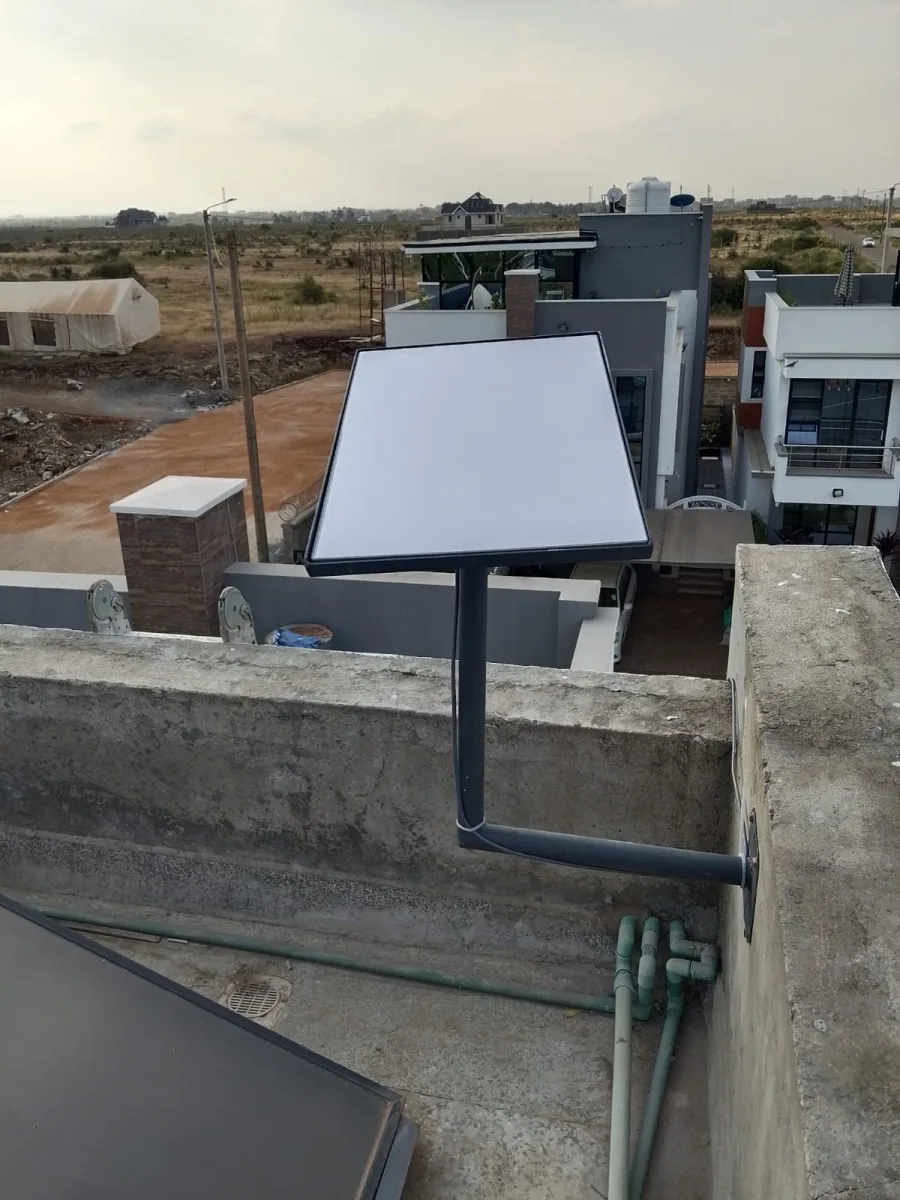
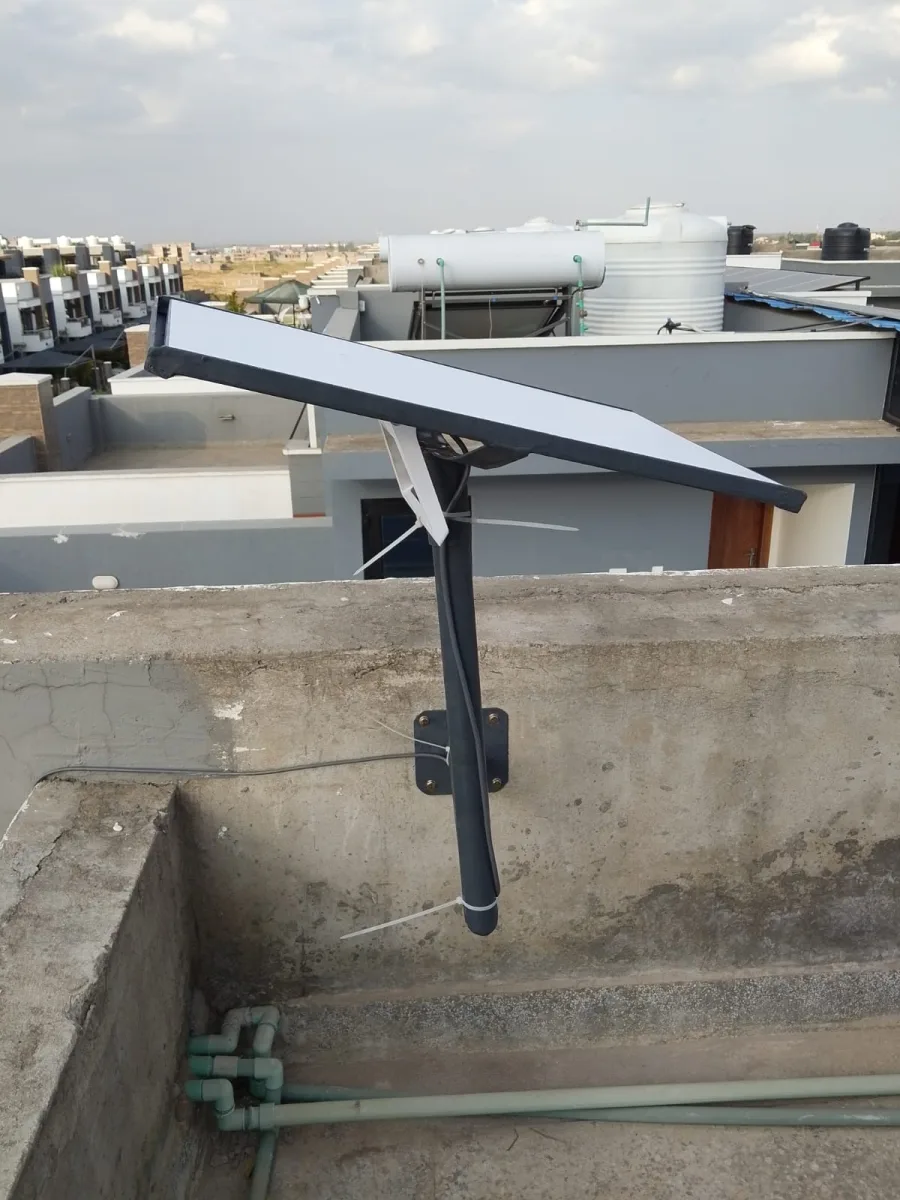
Starlink can provide the internet source while a separate local network distributes connectivity through the property. The Starlink router may be sufficient for a small, favourable space, but large homes, offices, schools, farms, lodges and multi-building sites can need additional Wi-Fi planning. The dish installation and the indoor coverage design are related projects, not the same task.
The installer should identify the Starlink hardware generation and available connection options before proposing third-party routers, switches or access points. Some designs use a supported bypass or adapter arrangement; the exact method depends on the equipment. Avoid buying network hardware until compatibility is confirmed.
For distant rooms or separate buildings, a wired link, suitable wireless bridge or combination may be more appropriate than a chain of indoor extenders. Outdoor links require clear-path, mounting, weather, power and surge considerations. A farm gate, staff house or guest cottage should be surveyed as a real endpoint rather than assumed to fall within the main house signal.
SpaceKits can scope Starlink installation together with internal Wi-Fi, mesh, access points and cabling. See Starlink installation services and Starlink Wi-Fi extension and mesh setup for related options.
Common Wi-Fi problems and what may actually fix them
“The bars are full, but the internet is slow”
A strong Wi-Fi signal only describes the local radio connection. The internet service may be congested or offline, another user may be consuming capacity, the router may be overloaded, or the remote application may be slow. Test a wired device where practical and compare local and internet symptoms before adding equipment.
“One room has no signal”
The wall or floor may be blocking the direct path, or the router may sit at one edge of the property. A better router position, a wired access point or a correctly placed mesh node may help. An extender placed in the dead zone usually has little useful signal to repeat.
“My phone stays connected to the wrong access point”
Client devices make their own roaming decisions. Excessive overlap, high transmit power, inconsistent settings or older client software may contribute. Review access-point placement and settings, then test more than one device before blaming a single component.
“Video calls drop even though browsing works”
Real-time calls are sensitive to interruption, delay and upstream performance. Check Wi-Fi coverage, internet stability, background uploads, device health and the meeting platform. A speed figure alone may not reveal brief packet loss or changing latency.
“The network became worse after adding another router”
The new router may be creating a separate network, competing address service, double routing or additional radio interference. It may need access-point mode, a different position or removal. Document how each device connects before changing settings.
“Wi-Fi works during the day but fails when everyone is home”
This pattern can indicate capacity, interference or internet-service contention rather than a total coverage gap. Test during the busy period and record which devices and applications are active. Designing from quiet-hour measurements can miss the real problem.
What affects a Wi-Fi installation quotation in Kenya?
A clear quotation should connect each cost to the design. Common factors include:
- property size, number of floors, detached buildings and priority coverage zones;
- wall, slab, ceiling and structural materials;
- number of users, devices and expected concurrent activity;
- fibre, fixed wireless, mobile or Starlink internet source and handoff location;
- router, mesh, access-point, switch and controller requirements;
- reuse, replacement or reconfiguration of existing equipment;
- quantity and route of Ethernet or fibre cabling;
- trunking, conduit, drilling, ceiling access and making-good expectations;
- power outlets, Power over Ethernet equipment and backup-power scope;
- guest access, network separation, captive portal or business-management needs;
- outdoor coverage, links to separate buildings and weather-protected hardware;
- survey, configuration, testing, documentation and user handover;
- travel, parking, building access, working hours and site rules; and
- ongoing monitoring, maintenance or support if requested.
What should be listed in the proposal?
Ask for equipment models or clear specifications, quantities, cable and accessory allowances, labour, configuration, testing, documentation, tax treatment where applicable, lead time, payment stages and exclusions. If a subscription, cloud licence or provider fee is required, it should be identified as recurring rather than hidden in installation language.
The quotation should also state who owns the management accounts and what support is included after handover. Do not assume “managed Wi-Fi” means indefinite free administration. If the scope is an estimate based on photos, the conditions that could change it after a site visit should be clear.
How to compare two Wi-Fi quotations
Compare the design outcome, not just the number of boxes. One proposal may use wireless mesh while another includes wired access points. One may include cable routes, mounting, configuration and testing while another lists hardware only. Ask each provider to mark intended device locations and explain how the design serves your priority areas.
Be cautious with absolute promises of coverage or speed made without enough site information. A credible proposal describes the assumptions, testing method and factors outside the installer’s control. It should distinguish internet-provider performance from the local Wi-Fi network.
How the SpaceKits Wi-Fi installation process can work
- Discovery: share the location, floor plan or photos, internet source, user count, current equipment and problem areas.
- Assessment: for larger or uncertain sites, review the building, radio environment, cable routes, power and equipment location.
- Design: select suitable router, mesh or access-point locations, wired links, switching, network separation and testing goals.
- Quotation: confirm equipment, materials, labour, configuration, documentation, exclusions and any items subject to inspection.
- Installation: mount equipment, run agreed cables, label links, configure the network and secure administrator access.
- Testing: check agreed coverage areas and representative uses, then adjust placement or settings where appropriate.
- Handover: provide credentials, device information, basic instructions and the agreed support route.
Before the visit, confirm access to locked rooms, ceiling spaces and provider equipment. Identify any building rules for drilling or working hours. Keep current internet account details private but have an authorised person available if provider settings must be changed. Back up important router settings where possible before replacing equipment.
Frequently asked questions about Wi-Fi installation prices in Kenya
What is the WiFi installation price in Kenya?
The price depends on the property, coverage areas, wall materials, users, internet source, equipment, cable routes, configuration and testing. A small home and a multi-floor office need different scopes, so SpaceKits should quote after reviewing the actual requirement.
Can I get a quotation from photos?
Photos, a floor plan and equipment model numbers may support an initial quotation for a simple job. Complex walls, multiple floors, outdoor areas, offices or uncertain cable routes may require a site assessment before the final scope is confirmed.
Does Wi-Fi installation include the monthly internet subscription?
Not automatically. The provider connection and monthly service are usually separate from local network equipment and installation. The quotation should state any provider fees or subscriptions clearly.
Is mesh Wi-Fi better than a normal router?
Mesh can improve coordinated coverage in some multi-room spaces, but it is not automatically better for every site. Router placement, node links, building materials, wired backhaul and expected use determine the result.
Are wired access points better than wireless mesh?
Wired access points often provide a predictable link back to the network, especially across floors or busy offices. Wireless mesh may reduce cabling work. The better choice depends on the building, cable access, performance goals and budget.
Will a Wi-Fi extender fix a dead zone?
It can help when placed where it still receives a useful source signal and the demand is modest. It may not be the right answer for thick walls, several floors, high device density or business-critical use.
How many access points does my building need?
The answer depends on layout, materials, user density, applications, radio conditions and equipment capability. Floor area alone is not enough. A survey or design review should identify suitable locations and quantities.
Can you extend Starlink Wi-Fi through a large home or business?
Starlink can be integrated with a suitable mesh, router, access-point and cabling design after the hardware generation and connection options are confirmed. The dish link and indoor Wi-Fi coverage should be scoped separately.
Can Wi-Fi reach another building on the property?
A detached building may use fibre, Ethernet where suitable, or a purpose-designed wireless bridge. Distance, clear path, outdoor conditions, power and surge risk should be assessed rather than relying on an indoor extender.
Does a stronger router guarantee faster internet?
No. A suitable router can improve the local network, but internet speed also depends on the service plan, provider conditions, remote servers, current traffic and client devices. Coverage and internet capacity are related but different problems.
Can you use my existing router or mesh equipment?
Existing equipment can be considered if it is compatible, supported and appropriate for the design. Share model numbers and power supplies. Reuse should be stated in the quotation together with any limitations.
Do you install network cables with Wi-Fi?
Structured cabling can be included for access points and fixed devices. The scope should state cable type, route, outlets, trunking, switching, testing and any finishing exclusions.
Can you create separate staff and guest Wi-Fi?
Yes, when the selected router and access-point platform supports the required design. More advanced separation may need compatible switches, firewall features and careful configuration.
Why is my Wi-Fi slow even with full signal bars?
Full bars show a strong local radio connection, not guaranteed internet performance. The provider link, network load, interference, router capacity, remote service or device may be limiting the experience.
What information should I send for a Wi-Fi quote?
Send the location, property type, floor count, approximate layout, priority rooms, user and device count, internet provider, current equipment, problem description, cable preferences, photos and any access restrictions.
Need Starlink Installation or Network Optimization?
We help homes, offices, apartments, and businesses with Starlink installation, WiFi coverage improvement, and professional setup in Kenya.
Request Installation Chat on WhatsApp