Need Starlink Installation or Network Optimization?
We help homes, offices, apartments, and businesses with Starlink installation, WiFi coverage improvement, and professional setup in Kenya.
Request Installation Chat on WhatsAppInstallation labour and site planning for customer-owned hardware
Starlink Installation Only Dagoretti North: Installers for Your Customer-Owned Kit
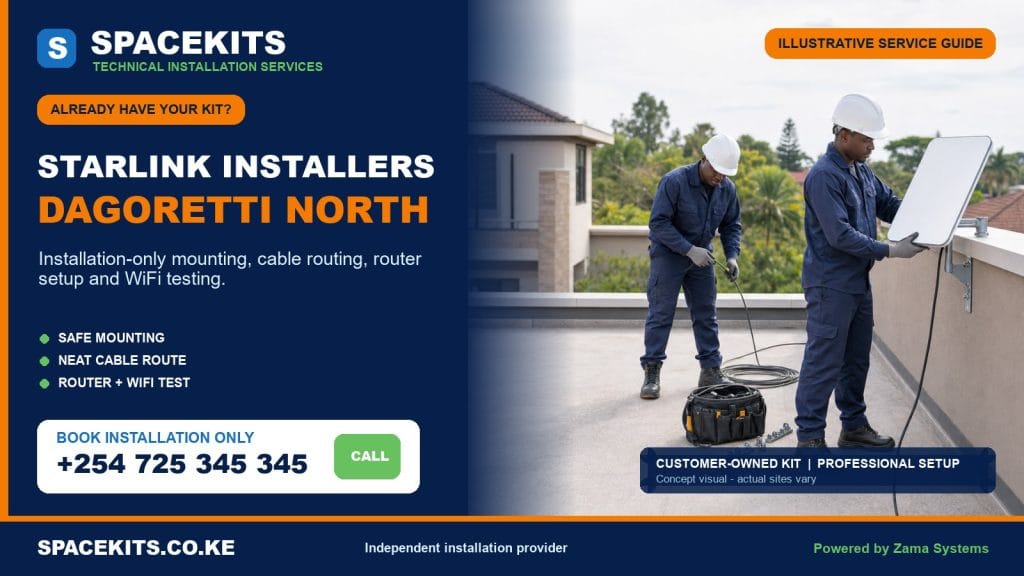
Starlink installation only Dagoretti North gives customers who already own the equipment a direct route to professional site work. SpaceKits can check the supplied hardware, assess the proposed position, fit an agreed compatible mount, route the cable, position the router and test the installation. The service is designed for homes, apartments, offices, shops, schools and hospitality properties that do not need another hardware bundle.
Talk to Spacekits
Need Starlink help for your home or business?
Talk to Spacekits before you buy or book installation. We help with kit supply, mounting, activation, router placement, WiFi coverage, and written quotes.
Searches for Starlink installers Dagoretti North cover very different sites: high-rise apartments in Kilimani, controlled compounds in Kileleshwa, busy mixed-use buildings in Kawangware, dense residential roofs in Gatina and homes or businesses around Kabiro. Roof permission, sky visibility, cable distance and indoor Wi-Fi design must be understood before labour and materials can be quoted responsibly.
SpaceKits is an independent installation provider, not an affiliate, agent or endorsed representative of Starlink or SpaceX. The customer owns the equipment and retains the account, passwords, payment details and official support relationship.
Request a Dagoretti North own-kit installation assessment on WhatsApp. Send the exact pin, ward or estate, kit photos, building photos and roof-access details.
Start with a five-minute check before choosing an appointment
Installation-only bookings succeed when the technician knows what is in the box and what is waiting at the property. Lay out the dish, router or power unit, cable, mains lead, temporary stand and every separately purchased mount or adapter. Photograph the full set, the product label and both cable connectors. For a used kit, say where it came from and whether you control the associated account.
Next, send the property evidence. A street name does not show whether the roof is accessible. Take wide photographs from the compound, balcony or safe upper level. Include neighbouring buildings, trees, tanks and parapets. State the number of floors, roof material, access method, proposed router room and whether a landlord, caretaker or management office must approve work.
Explain the desired result. Do you need direct Wi-Fi in a small apartment, whole-home coverage through several concrete rooms, connectivity for a shop, or integration with an office router? A satellite link and an internal network are different layers. SpaceKits can address both when agreed, but the quote should not pretend that one router automatically covers every floor.
Do not send passwords, payment-card data or authentication codes. The account owner should remain available to operate the official app. An installer needs physical model information and connection status, not permanent access to the customer’s identity or billing.
Installation conditions across Dagoretti North’s five wards
Dagoretti North officially includes Kilimani, Kawangware, Gatina, Kileleshwa and Kabiro. Customers often use more detailed estate or road names, so always include a pin. The ward name guides the local article; the physical property determines the installation.
Kilimani
Kilimani has apartments, offices, clinics, restaurants, schools and older standalone compounds alongside continuous construction. A balcony can be shaded by the slab above or the next tower. A shared roof may be the better position, but it requires management permission and an approved cable route. New construction nearby should be considered because today’s open view can change.
Business clients should separate roof work from network integration. If Starlink will support a firewall, point-of-sale terminals, guest Wi-Fi or fibre failover, the IT contact should define the handoff. A simple router password change is not the same as configuring business continuity.
Kileleshwa
Kileleshwa also combines towers with leafy compounds. Mature trees and neighbouring buildings can obstruct candidate positions. The survey may compare a parapet mount, an approved rooftop zone and a wall or pole within a standalone property. Appearance matters to many building managers, so route and containment standards should be agreed before drilling.
In large apartments, the central router position may be far from the outside cable entry. Thick walls and long corridors can create weak Wi-Fi. The customer should identify the home office, living area and bedrooms that matter, allowing SpaceKits to assess whether router placement is enough or mesh is a separate requirement.
Kawangware
Kawangware has dense residential and commercial buildings, narrow access points, busy streets and roofs carrying many services. Safe ladder placement, parking and movement through occupied areas need planning. A route should avoid signs, shutters, washing lines, drainage and cables belonging to other tenants. Neat protected exterior routing may be safer than forcing a concealed path through several businesses.
Gatina
Gatina sites can include compact plots, rental blocks, shops and homes where neighbouring structures stand close together. The installer should assess sky view at roof height and confirm that the chosen support does not intrude into another property. When roof surfaces are fragile or heavily patched, a wall or purpose-planned pole may be more appropriate than adding penetrations.
Kabiro
Kabiro contains homes, rental properties, institutions and commercial premises with varied road and roof access. Customers should send a pin and landmarks but also describe the final approach, gate width and parking. Trees, tanks and additions built over time can make the original main roof a poor position. The team considers the complete compound rather than assuming the front elevation is best.
For a broader overview, see the Nairobi installation-only hub. Neighbouring customers can use the Dagoretti South own-kit guide, while Westlands-side projects can use the Westlands installation-only guide.
Apartment installation requires permission, route planning and realistic Wi-Fi design
Owning the kit does not grant access to a shared roof. Before booking, identify the person who can approve the work: landlord, caretaker, property manager, residents’ committee or facilities office. Ask where private equipment may be mounted, which exterior or riser may carry a cable, and when the roof can be opened. Written permission protects the customer and installer.
A building manager may request a drawing, photograph, method statement or proof of the proposed mount. Give SpaceKits that requirement early. Do not accept a rushed promise that the dish will “fit somewhere.” The final position must have a suitable sky view, a sound mounting surface and a route that does not interfere with tanks, solar equipment, drainage, walkways or maintenance access.
Measure the route rather than the straight-line distance. A cable might travel from the roof across an approved zone, down a riser, through a corridor and into the apartment. Sharp turns, crush points and unsupported drops must be avoided. The supplied cable should not be stretched or joined casually. If it cannot serve the route, compatibility and an alternative plan must be established before installation.
Balconies sometimes work, but many do not. The floor above, side walls, screens, trees and nearby towers may interrupt the required view. A bracket must also be secure and allowed by the building. SpaceKits assesses the exact balcony rather than advertising it as a universal shortcut.
Inside the apartment, central coverage competes with the closest cable entry. If the router must sit near an exterior wall, test the rooms the customer uses. Mesh nodes or wired access points may improve coverage, but their quantity and position should come from the layout. Buying several units before measuring can create unnecessary cost without solving poor placement.
Practical planning for dense residential and mixed-use buildings
In a dense property, the main risk is treating every available surface as free space. Roofs may carry television antennas, water lines, solar equipment, other internet links and informal wiring. The installer should identify ownership and avoid disturbing existing services. The new dish and cable need a maintainable path that another worker can recognise.
Street-facing work needs control. Ladders and tools should not endanger pedestrians, customers or vehicles. A shop may need installation before opening or during a quiet period. A rental block may need a caretaker to inform residents before access through common areas. These are operational requirements, not excuses for surprise charges; they should be discussed in the quote.
Roof condition matters. Corroded sheets, unsupported edges, patched waterproofing and weak parapets are not suitable merely because they are high. SpaceKits can change the mounting approach or pause the job. Routine installation does not include structural repair or a guarantee for an already leaking roof.
Cables need protection from people, doors, animals, heat, water and future renovation. A route beside a busy stair or across a terrace can be damaged quickly. Clips, conduit or trunking may be specified according to exposure. The wall entry should be finished and arranged so rain is not guided indoors.
Power quality is part of reliability. Locate the indoor equipment at a dry, ventilated outlet. Avoid overloaded extensions shared with high-draw appliances. If the property experiences outages and internet continuity matters, plan a suitable backup for the Starlink hardware and any essential router, switch or access point. Backup sizing is a separate electrical calculation, not a guess based on one device.
Customer-owned kit compatibility and condition checklist
Starlink equipment generations can differ in shape, connectors, power arrangement, router features and mounting interface. A part described online as “universal” may not be safe or compatible. SpaceKits uses model and connector evidence to identify the expected interface, while the customer confirms legitimate account readiness.
- Verify the exact hardware. Photograph labels, dish, router or power supply, cable ends, stand and accessories.
- Check every supplied part. Missing power or data components should be found before the team travels.
- Inspect for damage. Look for cut or crushed cable, bent contacts, moisture, cracked housings and modified plugs.
- Verify the mount. Confirm the dish-to-mount interface and the surface-to-mount fixing plan.
- Confirm account control. The owner should know whether the kit is new, active or legitimately transferable.
- Estimate route length. Follow the real cable path, including vertical and indoor portions.
- Identify power. Choose a protected, ventilated outlet and note any backup requirement.
- Define network use. State whether the supplied Wi-Fi is enough or the link must feed other equipment.
A defective or locked kit is not repaired by fixing it to a wall. If the hardware is incomplete, SpaceKits can identify and quote a compatible missing item where available. If ownership, billing or service eligibility is the problem, the customer must work with the seller or relevant support channel. Physical installation can resume when the equipment is ready.
Three connected decisions: mount, cable route and router position
Choose the mount from the surface and exposure
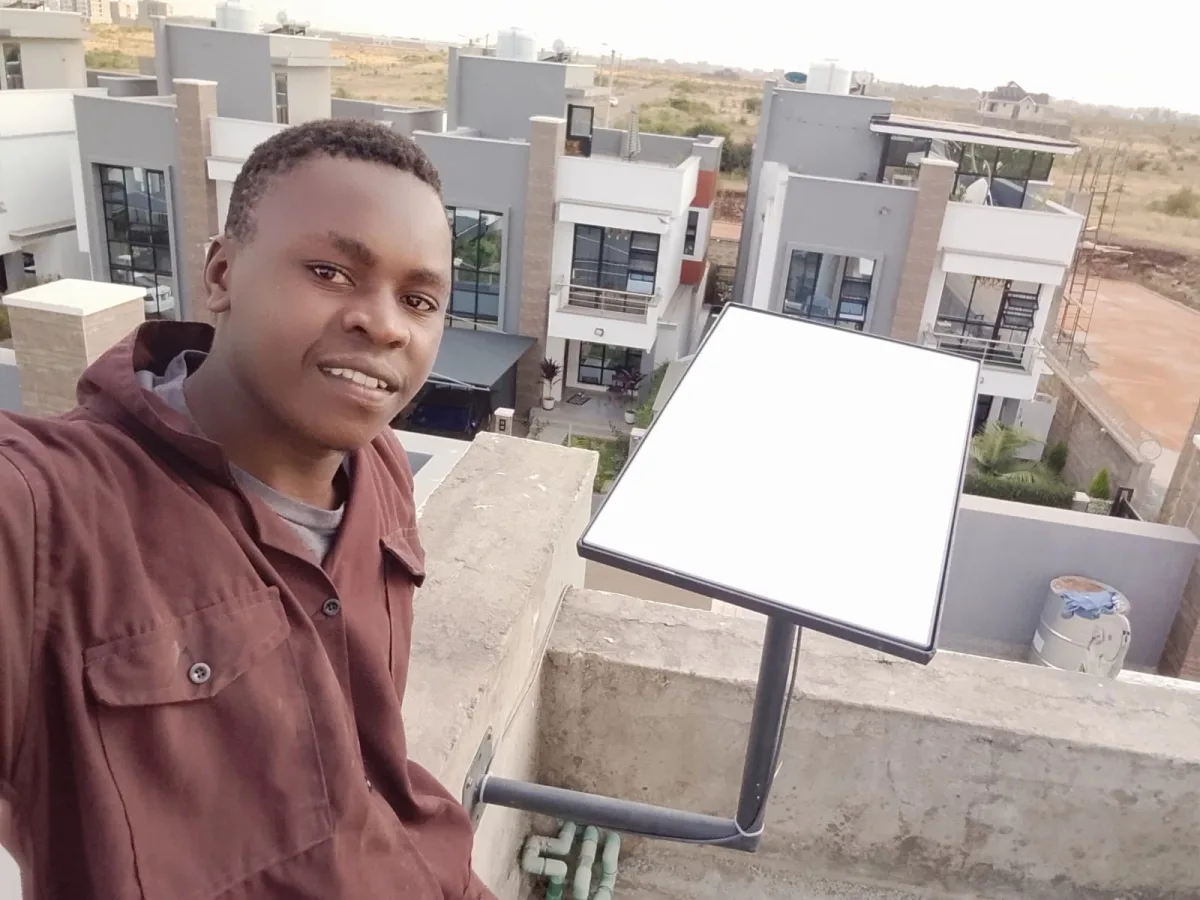
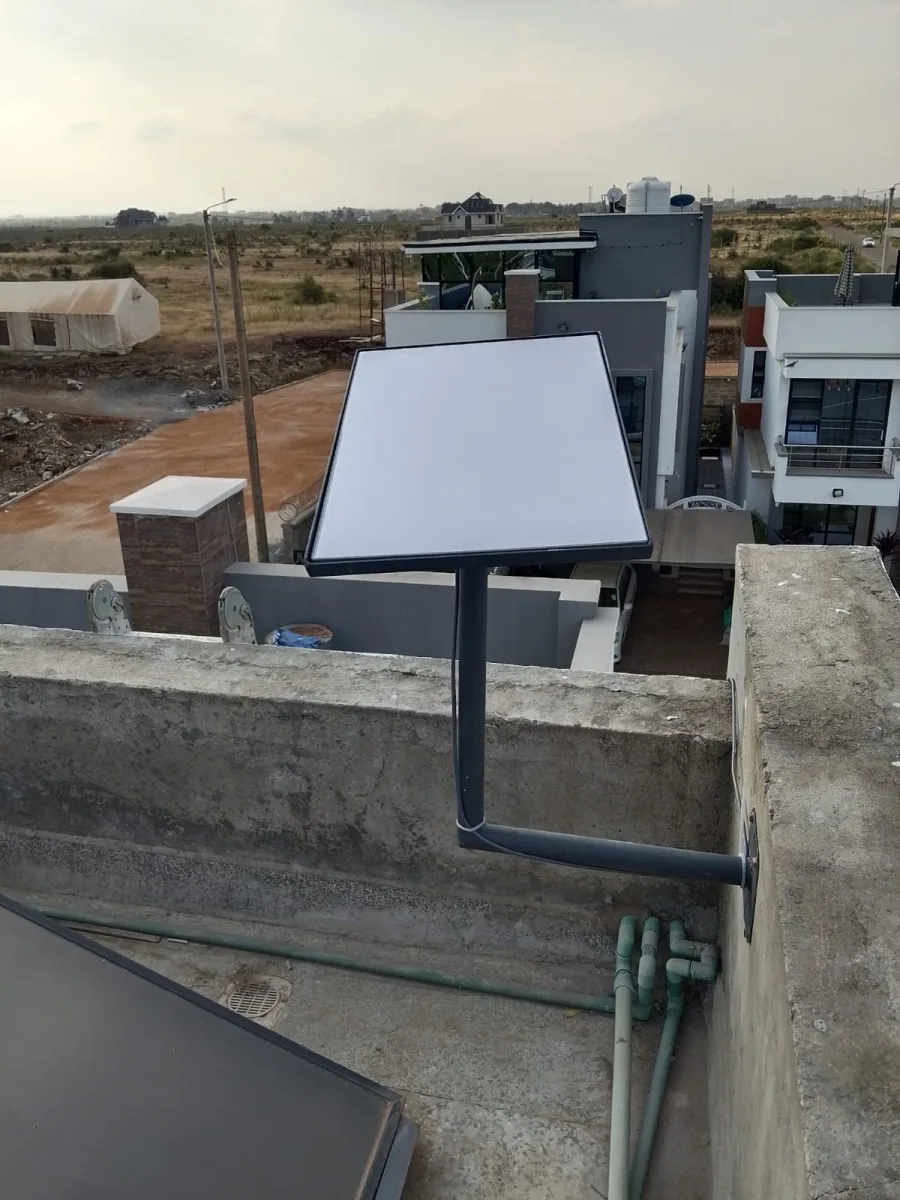
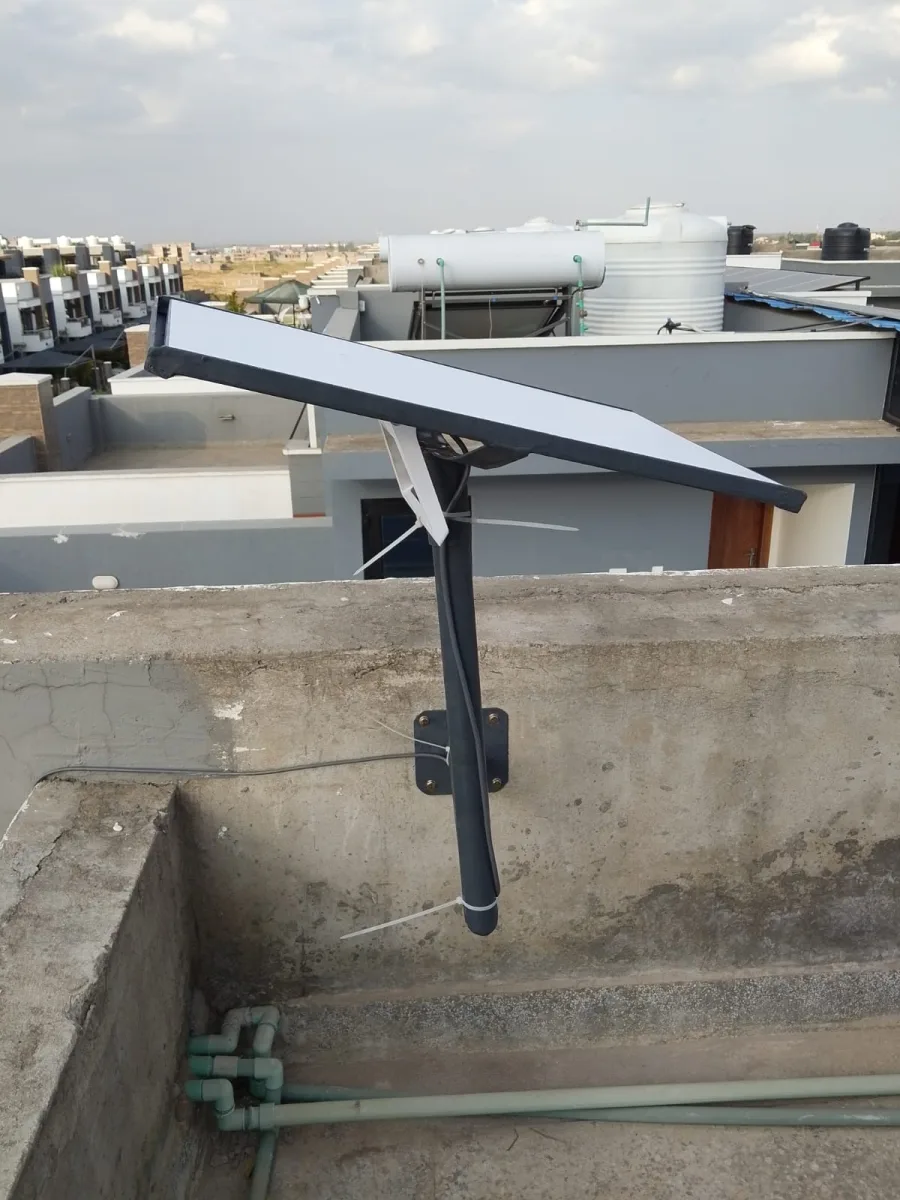
The support must fit the exact dish, attach to sound material and resist movement. Options can include a wall bracket, parapet solution, pole or other property-appropriate support. The highest point is not automatically best. A slightly lower position with a suitable view, strong substrate and safe future access can be superior to a flexible mast on a fragile ridge.
Plan the entire cable before drilling
The cable should maintain sensible bends, avoid crushing and remain supported. Outdoor sections need protection appropriate to their exposure. A drip loop and finished entry help keep water out. The route should not cross emergency exits, drainage channels or moving windows. On shared property, follow the approved path.
Place the router for users, not convenience alone
The router needs power, ventilation and a useful position. If it sits at one edge of a concrete apartment, distant rooms may struggle. If it is locked in a metal cabinet, coverage may collapse. The site plan balances cable limits with wireless performance or adds an agreed network solution.
Test the system in layers
First confirm the physical equipment powers and connects. Then review obstruction information through the customer’s app. Next test basic Wi-Fi and the agreed rooms or network handoff. If service is online beside the router but poor in a bedroom, that points toward internal coverage. If the equipment cannot activate, account or hardware investigation may be needed.
What installation-only work can include, and what remains separate
A typical agreed scope can include site-position confirmation, fitting a compatible mount, securing the customer-owned dish, routing and supporting the supplied cable, creating and finishing the approved entry, locating the router or power unit, guiding customer-operated setup, checking connection status and handing over the installed system.
Items that may be added separately include a mount, pole, adapter, anchors, conduit, trunking, mesh equipment, Ethernet hardware, access points, network switches, UPS equipment, special access, transport or additional labour for concealed routes. The written quote should say who supplies each item. “Labour only” should never be used to hide unavoidable materials.
The service excludes Starlink subscription payments, plan guarantees, account-transfer overrides, repair of defective customer hardware, warranties on equipment sold by another party, structural roof repair, unauthorised alteration of common areas and unsafe access. Existing leaks or weak structures require the appropriate building professional.
Performance also has boundaries. SpaceKits can improve the controllable parts: position, mounting stability, cable care, router placement and internal network design. It cannot guarantee an unchanging speed because service conditions, plan terms, obstructions, customer devices and network load vary.
What determines the Dagoretti North installation quotation?
This page does not publish an invented universal price. SpaceKits quotes from the actual work. A ready bungalow with a compatible supplied mount and short protected route differs from a Kilimani tower, a Kawangware mixed-use block or a Kileleshwa home that needs mesh coverage. A serious quote identifies the assumptions.
- Access: height, roof type, ladder position, hatch, security clearance and working hours.
- Mounting: supplied compatibility, required support, anchors, surface condition and exposure.
- Cable work: length, containment, drilling, shared routes, concealment and finishing.
- Network: basic router setup, mesh, Ethernet, access points or business integration.
- Power: protected outlet, cable management and optional backup requirements.
- Logistics: pin, parking, route, urgency, escort and risk of a return visit.
Ask whether the quote includes labour, mount, fixings, cable protection, wall entry, testing, travel and taxes where applicable. Read exclusions. A low phone figure can be misleading if the permanent mount and necessary route materials appear only after arrival.
From first message to a documented installation
- Send the Dagoretti North pin, ward, property type, kit photos and site photos.
- SpaceKits screens model, completeness, access and likely mounting constraints.
- A remote quote or site-survey requirement is proposed.
- The written scope separates installation, materials, networking and exclusions.
- The customer confirms permission, account-owner availability and appointment access.
- The installer rechecks the final position and route before drilling.
- The mount, dish and cable are fitted according to the approved scope.
- The customer operates account steps while the team tests the physical connection.
- Wi-Fi or network points named in the scope are checked.
- Handover records completed work, limitations and any follow-up recommendation.
A useful handover lets the owner recognise the equipment, understand the power point and restart sequence, see the status screen and retain private credentials. Photograph the completed route before repainting or renovation. If the project later moves, assess the new property rather than assuming the old mount and cable plan can be copied.
Examples of decisions a professional installer may make
In a Kilimani tower, the installer may reject a visually convenient balcony because the slab above blocks the view, then propose an authorised roof zone and riser. In a Kileleshwa compound, the team may avoid the main roof because mature trees cover that side and use a sound wall position with a cleaner view. In Kawangware, an exposed route across a shop entrance may be replaced with protected containment along a service wall.
In Gatina, a patched sheet roof may lead to a wall or pole proposal rather than new penetrations. In Kabiro, a central router position may be preferred over the nearest exterior room, with the cable route adjusted accordingly. These choices are not upselling by themselves. They are the practical consequence of matching equipment to a real building. The customer should ask why a recommendation is made and ensure it appears in the scope.
A professional team may also stop. If the roof is unsafe, permission is absent, the mount is incompatible or the kit appears account-locked, continuing can waste money or damage property. A pause with evidence and a next-step recommendation is better service than completing an installation that cannot be handed over responsibly.
Different Dagoretti North buyers need different handovers
A remote worker in a managed Kilimani apartment
The customer owns a new kit and primarily needs dependable access at a home-office desk. The first task is not drilling; it is obtaining the building’s rooftop and riser rules. SpaceKits reviews the box contents, the floor level, candidate roof areas and the likely vertical route. The quote can then separate the roof mount from any containment required by management. At handover, the important tests are the connection status, the work desk and the main living area. If the bedroom is outside the agreed coverage requirement, that is recorded rather than hidden behind a single test beside the router.
A small professional office in Kileleshwa
The office wants Starlink as a backup but already has a managed router. The installation scope covers the physical link up to an agreed handoff. The client’s IT provider remains responsible for firewall policy and failover unless those services are added explicitly. This prevents a roof technician from making undocumented changes to business equipment. The handover records which port or interface receives the service, what was tested and what the office should do during a fibre outage.
A shop in a Kawangware mixed-use building
The owner has the kit but shares exterior walls and roof access with other tenants. A caretaker identifies an approved mounting area and route that avoids signs, shutters and customer movement. Work is scheduled outside the busiest trading period. Cable protection receives particular attention because an exposed low-level run could be pulled or cut. The router is placed away from metal shelving and high-draw appliances, then tested at the till and work area named in the quote.
A family home in Gatina or Kabiro
The household wants coverage for work, school and entertainment. The roof has tanks and extensions added over time. The team compares several positions and chooses one with a suitable view and maintainable support. Indoors, the preferred cable entry is not central enough for the whole property, so the customer chooses between a revised route and an additional Wi-Fi design. The decision is made before installation, not discovered after the dish is fixed.
These journeys demonstrate why customer-owned equipment should not be treated as a commodity callout. The hardware may be the same, but permissions, routes, users and acceptance tests are different. The written scope converts those differences into a predictable appointment.
What to inspect before accepting the Dagoretti North installation
Begin outside. The support should be attached to a sound surface and should not rely on loose ballast or an improvised fit. The dish interface should be secure. The position should respect drainage, walkways and other rooftop services. Ask why that point was chosen and view the obstruction information with the installer through your own app.
Follow the cable. It should be supported without being pulled tight, crushed by doors or bent sharply around an edge. Exposed sections should have the protection stated in the quote. The entry should be finished with attention to water, dust and insects. A cable should not descend into the hole in a way that guides rain inside. Shared routes should be tidy and, where useful, labelled.
Inspect the indoor equipment. Power components need a dry, ventilated position and a suitable outlet. Cables should not create a trip hazard or sit under furniture legs. The router should serve the agreed use areas or hand off to the agreed network. Test those points while the installer is present.
Check documentation and boundaries. Keep the invoice, completed-scope record and installation photographs. Confirm which materials SpaceKits supplied and which belonged to you. Understand the difference between workmanship follow-up, warranty for a separately supplied accessory, and a defect in hardware bought elsewhere. Retain all account credentials yourself.
If a limitation remains, write it down. An unavoidable obstruction, an untested room, pending building permission for a mesh cable or a seller-side account issue should not disappear into a verbal promise. A clear handover protects the customer and gives any future technician a reliable starting point.
Protecting the installation after the technician leaves
Do not allow painters, roof contractors or water-tank teams to move the dish without recording its position and checking the cable. Share installation photographs with the caretaker where common areas are involved. After major building work or tree growth, review obstruction information instead of assuming a service change is responsible for every interruption.
Keep outdoor cable paths visible enough to inspect. Look for loose clips, abrasion, animal damage or water entry after severe weather or renovation. Do not wrap connectors in random materials or create unsupported joins. Contact SpaceKits for an assessment if the physical route has changed.
When Wi-Fi feels slow, compare performance near the router with performance in the problem room. If the connection is healthy at the router but poor behind several walls, the likely issue is local coverage. If all devices lose service and the app reports a hardware or account condition, follow the relevant path. This simple distinction prevents unnecessary roof work.
If you relocate, plan a controlled removal. Keep every component and protect connectors. The new property needs its own sky, mount, route and permission assessment. Reusing a customer-owned kit is reasonable; blindly copying the old installation design is not.
Frequently asked questions about Starlink installation only in Dagoretti North
Can SpaceKits install hardware I bought from another seller?
Yes, when the customer-owned kit is complete, compatible, in suitable condition and legitimately ready for use. Send component photographs before booking.
Which Dagoretti North areas do you cover?
Enquiries can be assessed across Kilimani, Kawangware, Gatina, Kileleshwa and Kabiro. Send an exact pin because estate and road descriptions vary.
Can you install on a Kilimani or Kileleshwa apartment roof?
Yes, subject to building approval, safe access, a suitable sky view and an approved cable route. Confirm management permission first.
Is a balcony installation always possible?
No. The floor above, neighbouring towers, screens and trees can obstruct the view. The balcony and mount require assessment.
Does the quote automatically include a mount?
No. A customer-supplied mount is checked for compatibility, or the correct mount and installation materials are quoted separately.
Can you fix a kit linked to the previous owner account?
Physical installers cannot override ownership or account rules. The customer must resolve transfer or account issues with the seller and relevant support channel.
Will one router cover my whole apartment or maisonette?
Coverage depends on walls, floor area and router position. Mesh or wired access points may be proposed as a separate scope after the layout is understood.
Do you guarantee internet speed?
No fixed speed can be responsibly guaranteed. Proper mounting and network design reduce preventable problems, while service conditions and plan terms remain external.
What photos should I send?
Send the complete kit, labels, connectors, mount, building, roof or balcony, surrounding sky, likely cable path and proposed router area.
How long will installation take?
Time depends on access, mounting, route and network work. SpaceKits provides an estimate after screening the property rather than promising one duration for every site.
Who controls my account during installation?
You do. The account owner should operate the official app and retain all passwords, payment details and recovery information.
How do I book?
Send your Dagoretti North site and kit brief through WhatsApp.
Need Starlink Installation or Network Optimization?
We help homes, offices, apartments, and businesses with Starlink installation, WiFi coverage improvement, and professional setup in Kenya.
Request Installation Chat on WhatsApp