

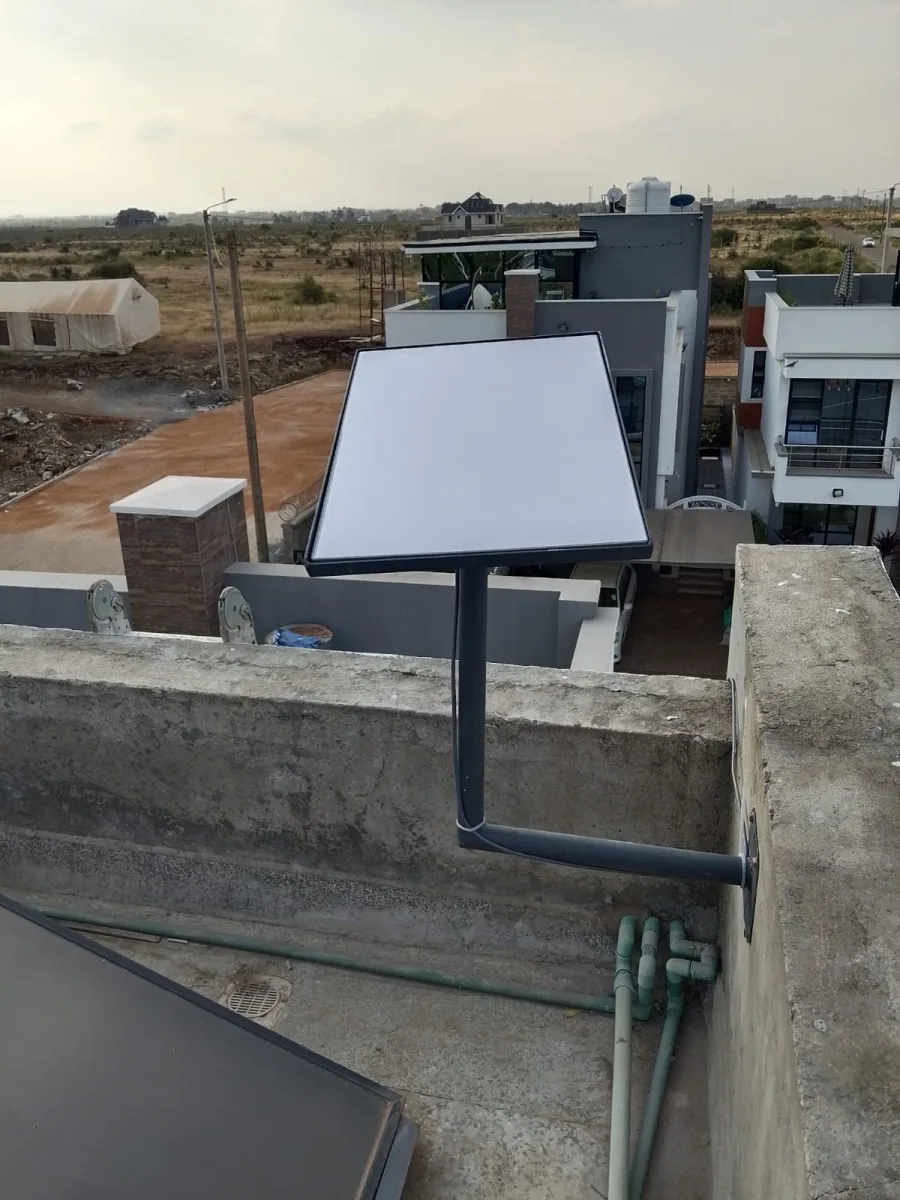
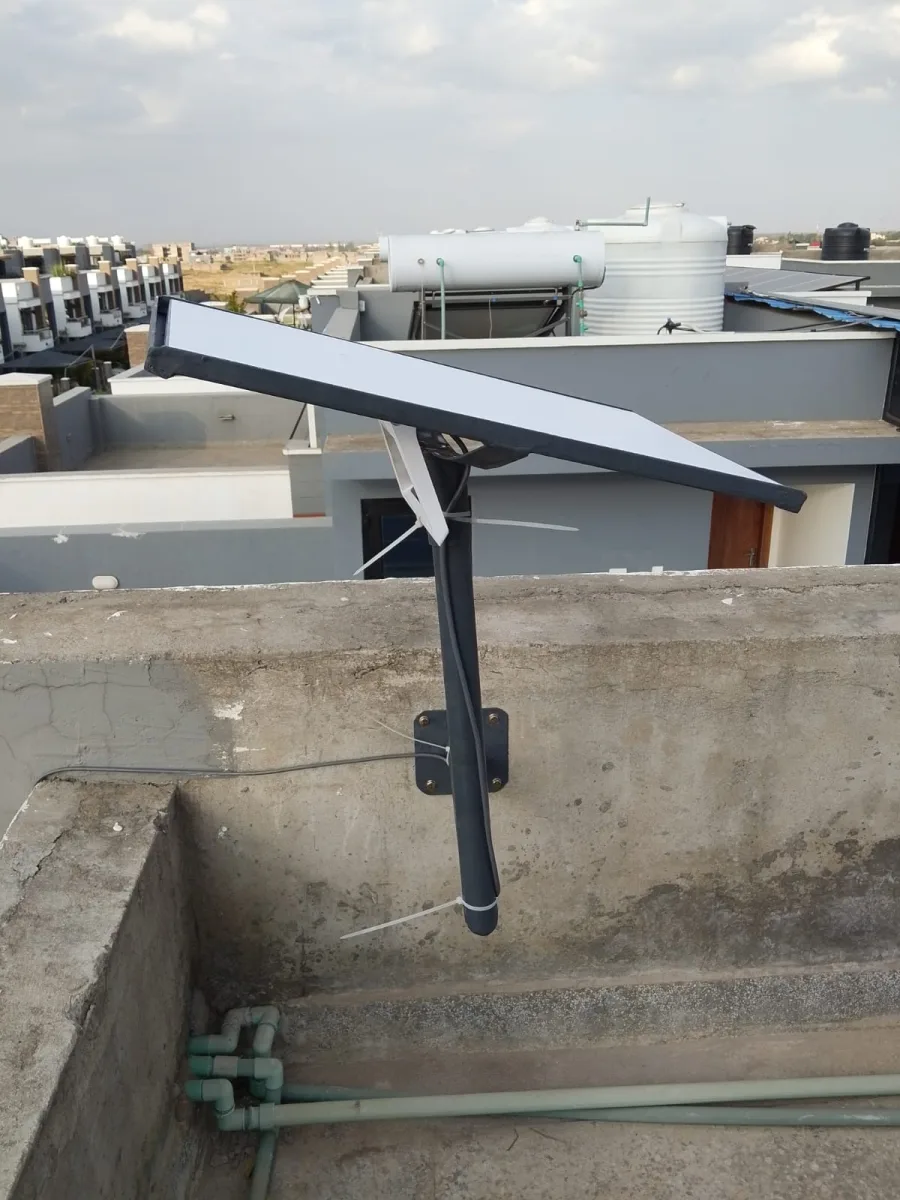
Need Starlink Installation or Network Optimization?
We help homes, offices, apartments, and businesses with Starlink installation, WiFi coverage improvement, and professional setup in Kenya.
Request Installation Chat on WhatsAppNairobi installation-only service for equipment you already own
Starlink Installation Only Nairobi: Professional Installers for Customer-Owned Kits

Starlink installers Nairobi customers can call when the kit is already in hand should solve a very specific problem: turn boxed equipment into a secure, neat and tested connection without forcing the customer to buy another kit. SpaceKits provides installation-only support for customer-owned Starlink equipment across Nairobi. We inspect the supplied parts, review the sky view, agree on a suitable mount and cable route, install the system, position the router and test the connection before handover.
Talk to Spacekits
Need Starlink help for your home or business?
Talk to Spacekits before you buy or book installation. We help with kit supply, mounting, activation, router placement, WiFi coverage, and written quotes.
This service is for a homeowner, tenant, landlord, office, shop, school, hospitality property or organisation that has bought its own kit and now needs practical on-site work. It is also suitable when a customer has moved with a working kit and needs it installed at a new Nairobi property, subject to account and service availability. The kit remains yours. The Starlink account remains under your control. SpaceKits is an independent Kenyan installation provider and does not claim affiliation with, endorsement by or authority from Starlink or SpaceX.
Ready to book? Send your Nairobi location pin, property type, kit model, a photo of every item in the box and clear photos of the roof or proposed mounting area. Request a Nairobi installation-only assessment on WhatsApp or call +254 725 345 345.
Already have the kit? Send these details before an installer travels
A useful installation conversation starts with evidence, not assumptions. A customer may say “the complete Starlink kit is here” while the box contains the dish and router but no permanent mount, a cable intended for another hardware generation, or equipment still linked to a previous owner. A few photographs can expose those issues before anyone books roof access or travels across Nairobi.
Place the supplied components on a clean surface and photograph them together. Include the label on the box, the connectors at both ends of the cable, the router, power equipment, dish, stand and any wall bracket, pole adapter or mount bought separately. Do not send account passwords, payment-card details or recovery codes. The installer needs to identify the physical hardware; the account owner should operate the official application and retain control of private credentials.
Next, send the exact site. A pin is more useful than “near town” because Nairobi routes, building access and parking conditions vary. State whether the property is a bungalow, maisonette, apartment, office block, warehouse, shop, school or compound. Mention the floor, likely roof access point, landlord or facilities-management approval, and whether a ladder can be positioned safely. Photographs should show the proposed mounting surface, the surrounding sky, nearby trees, water tanks, taller buildings, parapets and the likely route from outside to the router position.
Finally, explain the result you want. One household may only need stable Wi-Fi in three rooms. Another client may need an internet feed for an office firewall, several access points, CCTV remote viewing, a point-of-sale system or a detached guest wing. Installation of the Starlink kit and distribution of Wi-Fi are related but different scopes. Declaring the coverage requirement early helps SpaceKits distinguish a simple installation from a larger network project.
What “Starlink installation only in Nairobi” actually means
Installation only means the customer supplies the principal Starlink equipment and SpaceKits supplies an agreed professional service. It does not mean every Nairobi property has the same labour requirement. It also does not mean every possible mount, extension, containment material or networking accessory is included automatically. The purpose of the assessment is to turn an unclear request into a written scope that both parties understand.
For a straightforward property, the scope may cover an obstruction review, selection of a sensible dish position, fitting of a compatible customer-supplied or separately quoted mount, secure attachment, careful cable routing, a finished building entry, router positioning, customer-led account steps, connection checks and a basic handover. Where the building is taller, the roof is fragile, the cable route must be concealed or Wi-Fi must reach multiple floors, the scope expands and should be quoted accordingly.
The wording “labour only” can be misleading when a permanent installation needs consumables. Appropriate anchors, clips, cable protection, sealing materials or a support pole are physical items, not labour. If they are required, they should appear separately in the quotation. The customer can supply compatible items, or SpaceKits can identify what is needed and quote them. Transparent separation is better than promising an unrealistic all-inclusive figure before the site has been understood.
Installation work cannot guarantee that a damaged, locked, incomplete or incompatible kit will activate. It also cannot override plan availability, service-address restrictions, ownership-transfer rules, payment issues or decisions made within Starlink’s systems. SpaceKits can help the customer identify the point at which the physical installation is complete and the point at which an account or hardware issue must be taken to the seller, previous owner, manufacturer or official support channel.
Why a Nairobi Starlink installation is not just “put the dish on the roof”
Nairobi combines dense high-rise areas, older apartment blocks, new gated developments, standalone homes, informal commercial premises, schools, warehouses and large compounds within a relatively small county. The installation challenge changes from one road to the next. A clear sky view that looks possible from ground level may be interrupted by a neighbouring tower, mature tree, rooftop water tank, lift structure, billboard or planned construction.
Obstructions in built-up neighbourhoods
Satellite equipment needs a suitable view of the sky. The installer should evaluate more than the most convenient wall. In an apartment district, a balcony can face the wrong direction or sit below a parapet and adjacent buildings. On a compound, a beautiful mature tree may interrupt part of the view. On a commercial roof, solar panels, tanks, antennas and future maintenance routes compete for space. The position should be chosen with the official obstruction tool and a physical inspection, not from a guess made in a sales call.
Roof access and permission
Many Nairobi customers do not personally control the roof. Tenants may need written landlord approval. Apartment residents may need a caretaker, property manager or management committee to open a roof hatch and approve cable routing through common areas. Offices may have facilities, security and work-permit procedures. A booking is more likely to succeed when those permissions are confirmed before the technician arrives.
Access conditions also influence safety. A flat concrete roof with a secure stairway is different from a steep tiled roof reached from a narrow balcony. A warehouse roof may be high and made from material that is not intended to carry a person’s weight. SpaceKits may require a different mounting approach, appropriate access equipment, another technician or a separate survey. A responsible installer can decline or postpone unsafe work rather than improvise.
Cable paths in finished buildings
The shortest path is not always the neatest or safest. Cables should avoid sharp edges, hot surfaces, moving doors, standing water and places where cleaners, children or maintenance workers can pull them. Nairobi apartments often need coordination through service ducts, stairwells or agreed external elevations. Commercial clients may prefer conduit or trunking that follows existing services. Any wall entry should be planned, finished and weather protected instead of leaving an exposed hole.
Wi-Fi inside concrete structures
A successful connection beside the router does not prove that an entire Nairobi property is covered. Reinforced slabs, masonry walls, metal doors, mirrored surfaces and multiple floors weaken Wi-Fi. Router placement should consider the rooms where people actually work, stream, study or operate business systems. Larger properties may need a separate mesh or access-point design. That extra network work should be measured and quoted, not hidden behind the phrase “free Wi-Fi setup.”
Installation planning for common Nairobi property types
Standalone homes and maisonettes
Homes often offer several mounting choices, but the lowest visible roof edge may not give the clearest long-term sky view. The team considers trees, chimneys, tanks, neighbouring development and a route that keeps the cable protected. Router placement should balance the cable entry with indoor coverage. A large maisonette can require mesh equipment even when the Starlink connection itself is strong.
Customers should identify any roof leaks, fragile tiles, hidden electrical routes or areas that must not be drilled. If a pole or wall bracket is preferred, the wall condition and fixing point need inspection. The best installation is not necessarily the highest possible point; it is the safest suitable point that provides the required view and can be maintained later.
Apartments and gated developments
Apartment installation usually involves three parties: the equipment owner, the building manager or landlord, and the technician. Agree who can authorize rooftop work, where the dish may be mounted, how the cable may pass through shared space and who will restore any decorative finish. Do not book a same-day visit while roof access is still uncertain.
Balcony installations require careful assessment. A balcony may be attractive because it avoids the common roof, but it can be shaded by the floor above, screened by another tower or unsuitable for secure mounting. If a shared rooftop is used, the dish and route should not obstruct walkways, drainage, tanks, solar equipment or other residents’ services. Clear labelling can help prevent accidental disconnection during later maintenance.
Offices, shops and professional practices
A business often wants Starlink as a primary link, a backup to fibre or a connection for a branch awaiting fixed service. The installer needs to know whether the router will feed a single room, an existing firewall, a network rack or multiple access points. Integration with business networking is a separate technical decision from mounting the dish. The client’s IT contact should be available if existing equipment, IP addressing, failover or security policy is involved.
Installation time should be coordinated with working hours, security clearance and access to ceilings or service ducts. Drilling over a customer area during business hours may be disruptive. A clean handover records where the cable enters, which socket powers the equipment, who controls the account and what was tested. A speed test is useful, but reliable access to the business applications that matter is the more meaningful check.
Schools, clinics and community facilities
Institutional sites may have a suitable open roof but a wider distribution requirement. Classrooms, administration areas, staff rooms and outdoor spaces should not be assumed to receive equal coverage from one router. The scope should separate the Starlink link from campus Wi-Fi, content controls, user management, cabling and backup power. Installation should also avoid unsafe cable exposure in areas used by children or the public.
Warehouses, workshops and light-industrial sites
Metal structures introduce their own challenges. A long-span roof may require specialist access, while metal walls can restrict indoor wireless coverage. Dust, heat, vibration and machinery routes affect equipment placement. The team should coordinate with the site supervisor, keep clear of loading operations and determine whether a wired connection or protected access point is needed inside the working area.
Compatibility checklist for a Starlink kit bought elsewhere
Buying the kit independently is acceptable, but installation should begin with verification. Different hardware generations and service types can use different routers, connectors, power arrangements, cables and mounting interfaces. A bracket advertised online as a “Starlink mount” is not automatically compatible with every dish. Photographs and model information allow the installer to avoid arriving with the wrong adapter.
- Identify the hardware. Photograph the box label, dish, router, power components and connector ends. Keep serial and account information private where it is not required for physical identification.
- Check completeness. Compare the physical items with the documentation supplied for that kit. Look for the dish, router or power unit, the correct cable, mains lead, temporary stand and any ordered mounting accessories.
- Inspect condition. Check for crushed cable sections, bent connectors, cracked housings, water exposure, altered plugs, corrosion or signs that a used dish was mounted badly.
- Confirm mount compatibility. Establish how the dish connects to the proposed pole, wall bracket or roof support. Improvised force should never be the adapter.
- Confirm account readiness. The customer should know whether the kit is new, transferable and visible through the appropriate account process. A seller’s verbal assurance is not the same as successful account recognition.
- Check the cable distance. Estimate the route from the dish position to the indoor equipment without stretching, joining or crushing the supplied cable. Any alternative must be compatible with the exact hardware.
- Check power. Identify a suitable protected outlet and whether the property needs backup power. Avoid overloading informal extensions or locating power equipment where it can get wet.
- Define network outputs. State whether basic Wi-Fi is enough or whether the site needs Ethernet, mesh, access points, a switch, a firewall or connection to an existing network.
If an item is missing, the job does not automatically fail. SpaceKits can explain the missing requirement and, where practical, quote a compatible accessory separately. If the kit appears defective or account-locked, the sensible next step may be to pause physical work until the customer resolves the issue with the seller or relevant support channel.
What a professional Nairobi installation-only scope can include
The exact scope is written after assessment, but a complete installation normally moves through a clear sequence. First comes a site and obstruction review. The installer compares potential positions, access conditions and cable routes. Second comes the mounting plan: the support, attachment method and dish interface must suit the surface and expected exposure. Third comes the cable path, entry point and indoor equipment location.
On the agreed day, the team can fit the approved mount, secure the dish, route and protect the customer-supplied cable, create and finish the agreed entry, position the router or power equipment, and help the account owner follow necessary setup prompts without taking ownership of the account. The team then checks whether the equipment comes online, reviews obstruction information where available, confirms basic Wi-Fi operation and records any limitation that remains.
Basic handover should show the customer the installed components, the cable route, the power point and safe restart procedure. It should explain that immediate speed readings can vary and that the official application is the source for equipment status and obstruction information. If Wi-Fi extension is part of the quote, coverage should be checked at agreed points rather than only beside the router.
Optional work that may be added
- Supply of a compatible mount, pole, adapter or weather-resistant fixings.
- Conduit, trunking or enhanced cable protection for exposed routes.
- Mesh Wi-Fi, wired access points or Ethernet distribution.
- Connection to an existing router, firewall or network rack when technically supported.
- UPS or backup-power planning for the Starlink and network equipment.
- Relocation and reinstallation from another property.
- Remedial work on a previous unsafe or untidy installation.
- A documented survey for a complex commercial or multi-building site.
Important exclusions and responsibility boundaries
A serious sales page should explain what the service does not promise. Installation labour does not include the cost of the Starlink kit, subscription, official service plan, mounting hardware, mesh equipment, electrical work, civil work, special access equipment or travel unless those items are expressly written into the quote. A customer-owned box does not transfer the seller’s hardware warranty to SpaceKits.
SpaceKits cannot guarantee activation of equipment that is reported lost, linked to another owner, restricted, unpaid, incompatible with the intended service or defective. The installer cannot change the platform’s plan availability, capacity, billing, transfer policy or service-address rules. The account owner should retain the registered email, authentication method, payment information and recovery access.
Roof repairs, waterproofing of an already leaking roof, structural engineering, asbestos work, high-voltage electrical work and alteration of landlord-controlled common areas are outside a routine installation unless separately assessed by qualified parties. If the building condition creates a safety concern, the work may be paused. It is better to revise a mounting plan than to complete a hurried installation that risks injury or damage.
Internet performance is affected by service conditions, obstructions, plan terms, network load, weather, customer devices and internal Wi-Fi design. Professional mounting and network setup remove preventable installation problems, but they cannot promise a fixed speed at every hour or in every room. The handover should record what was tested and distinguish the satellite link from local Wi-Fi coverage.
What affects the price of installing a customer-owned kit in Nairobi?
SpaceKits does not invent a universal figure before learning the site. Pricing is shaped by work, materials, access and risk. A simple accessible bungalow with a suitable supplied mount and short route is different from a high apartment roof, a concealed office route or a warehouse requiring coordinated access. The useful question is not “What is the cheapest installation?” but “What work and materials are included for my property?”
Building height and safe access
The number of floors, roof pitch, surface condition, hatch location and ladder position influence the crew, equipment and time. Parking distance and movement through controlled common areas can also matter. If roof access is not available on arrival, a return visit may be required.
Mounting method
A customer who already has a compatible permanent mount may only need it checked and fitted. Another property may need a wall bracket, pole, adapter, fabricated support or a different fixing method. Wind exposure and the strength of the mounting surface affect the choice. Hardware should be itemised rather than disguised as labour.
Cable length and finish
A short external route clipped along a service wall requires less time and material than a concealed route through ceilings, ducts or several floors. Conduit, trunking, difficult drilling and decorative reinstatement can add work. The route must remain compatible with the supplied cable and hardware.
Wi-Fi and network coverage
Basic router setup is not the same as a multi-room network. Additional mesh units, wired access points, switches, Ethernet adapters or business integration are priced from the coverage and equipment required. A floor plan or walkthrough can prevent under-scoping.
Travel, scheduling and approvals
Nairobi travel varies by time and location. Urgent dispatch, restricted working windows, paid parking, security clearance and return visits can affect logistics. A planned appointment with access confirmed is usually more efficient than an installer waiting while permissions are sought.
A written quotation should state installation labour, mount or accessory supply, cable protection, network extras, transport, taxes where applicable, assumptions and exclusions. That makes different quotations easier to compare. A vague low price that omits the mount, access and finish can become expensive when the technician is already on the roof.
How SpaceKits handles installation-only bookings in Nairobi
- Customer brief. You send the pin, kit photos, site photos, property type, access information and coverage requirement through WhatsApp.
- Remote screening. SpaceKits identifies obvious compatibility gaps, likely mounting options and questions that the photographs do not answer.
- Survey decision. A straightforward site may proceed to a conditional quote. A tall, restricted or complex property may need a paid or agreed site survey first.
- Written scope. The quote separates labour, supplied materials, optional networking, travel and exclusions. The customer confirms the chosen scope and access.
- Installation appointment. The account owner or authorised contact is present, roof permission is active and the kit is available for inspection.
- Mount and cable work. The installer confirms the final position, secures the dish, protects the route and finishes the agreed entry.
- Setup and testing. The customer controls account credentials while the team checks connectivity, router placement and the agreed network points.
- Handover. The customer sees what was completed, receives practical operating guidance and is told about any limitation, optional improvement or seller/platform issue.
The process is deliberately evidence-led. It reduces wasted travel, prevents incompatible mounts from being assumed, and gives the customer a clearer idea of what the quote covers. It also protects both parties when a kit bought elsewhere has an account or hardware problem that cannot be fixed by mounting it.
Starlink installers serving Nairobi sub-counties with an own-kit option
This page is the Nairobi hub for installation-only enquiries. Local guides address the different property patterns and estates within Nairobi’s official sub-counties. Start with the guide nearest your site, then send the exact pin because ward and estate names sometimes overlap.
- Starlink installers Westlands for customer-owned kits, including Parklands/Highridge, Kitisuru, Karura, Kangemi and Mountain View.
- Starlink installers Dagoretti North for customer-owned kits, including Kilimani, Kileleshwa, Kawangware, Gatina and Kabiro.
- Starlink installers Langata for customer-owned kits, including Karen, Nairobi West, South C, Mugumoini and Nyayo Highrise.
- Starlink installers Kasarani for customer-owned kits, including Kasarani, Mwiki, Clay City, Njiru and Ruai.
- Starlink installers Roysambu for customer-owned kits, including Roysambu, Zimmerman, Githurai, Kahawa West and Kahawa.
- Dagoretti South installation-only guide.
- Embakasi East installation-only guide.
- Starehe installation-only guide.
Customers who need both equipment and installation should use the broader Starlink installer Nairobi service page. Customers comparing project components can also read the Starlink installation cost guide. This separation keeps the purpose clear: the current article is specifically for people who already own the principal kit.
How to judge a professional installation before accepting the handover
Look first at stability and route quality. The dish should be attached to a suitable support rather than balanced temporarily. Fixings should suit the mounting surface, and the support should not move excessively. The cable should not be pinched under a window, pulled tight around a sharp corner or left where people will trip over it. Outdoor runs should be supported and protected according to their exposure.
Look at the wall entry. A rough hole that can admit water, insects or dust is unfinished work. The route should encourage water to stay outside rather than follow the cable indoors. Inside, power equipment should sit in a ventilated, dry position with manageable leads. The router should be located for useful coverage, not hidden automatically beside the entry point.
Ask the installer to show the connection status and explain any obstruction warning visible through the customer’s application. Test the agreed rooms or work points, not only the phone held beside the router. If an existing network is involved, confirm which device now provides routing, how the connection is handed off and what equipment SpaceKits did or did not configure.
Finally, retain your own account details and invoice. Photograph the completed installation and note where cables travel before future renovation. Know whom to contact for workmanship questions and whom to contact for hardware, billing or platform issues. A professional handover leaves the customer informed rather than dependent on secret settings.
Frequently asked questions about Starlink installers Nairobi customers can book
Can SpaceKits install a Starlink kit that I bought somewhere else?
Yes. SpaceKits can assess and install customer-owned equipment when the kit is complete, compatible, in suitable physical condition and ready for legitimate account setup. Send kit and connector photographs before booking so obvious gaps can be identified.
Do you require me to buy another kit from SpaceKits?
No. The installation-only option is specifically for customers who already own the principal Starlink equipment. Any missing mount, adapter, cable-protection material or networking equipment is discussed and quoted separately.
What should I send on WhatsApp for a Nairobi quote?
Send your map pin, property type, number of floors, roof-access information, kit model and component photos, proposed mounting-area photos, router location and the rooms or business areas that need Wi-Fi.
Can you install on an apartment balcony?
Possibly, but only when the balcony has a suitable sky view, secure mounting option and relevant permission. Many balconies are obstructed by the building above or nearby towers, so the roof may be more suitable.
Does installation include the mount and pole?
Not automatically. A compatible customer-supplied mount can be assessed. If a different wall bracket, pole, adapter or support is required, it should be listed separately in the quotation.
Can you activate a used kit that is still linked to another account?
An installer cannot override ownership or transfer restrictions. The seller and buyer must complete any required legitimate transfer, and platform or billing issues may need the relevant support channel before installation can be completed.
Will one Starlink router cover my whole Nairobi property?
It depends on layout, walls, floors and required coverage. A small open home may be served by one well-positioned router, while a maisonette, office, school or compound may need mesh units or wired access points as a separate scope.
Can you guarantee a particular internet speed?
No responsible independent installer should guarantee a fixed speed at all times. SpaceKits can reduce preventable installation and Wi-Fi problems through suitable positioning, secure mounting, sensible router placement and testing, but service performance also depends on external conditions and the selected plan.
How long does a Nairobi installation take?
Duration depends on roof access, mounting method, cable route, finish and network work. A straightforward accessible home can be much simpler than a high-rise or commercial project. Site information is reviewed before a time estimate is given.
What happens if the kit is faulty or incomplete?
The team will explain the observed problem and pause the affected work. Missing compatible parts may be quoted separately. Defective or account-locked equipment normally has to be resolved with the seller, previous owner, manufacturer or official support route.
Do I give the installer my Starlink password?
You should retain control of passwords, payment data, recovery codes and authentication. The account owner can operate the application while the installer guides the physical and configuration steps required for handover.
How do I book installation only?
Send the Nairobi installation-only WhatsApp brief with your pin, kit photos and site photos. SpaceKits will respond with the next practical assessment step.
Need Starlink Installation or Network Optimization?
We help homes, offices, apartments, and businesses with Starlink installation, WiFi coverage improvement, and professional setup in Kenya.
Request Installation Chat on WhatsApp