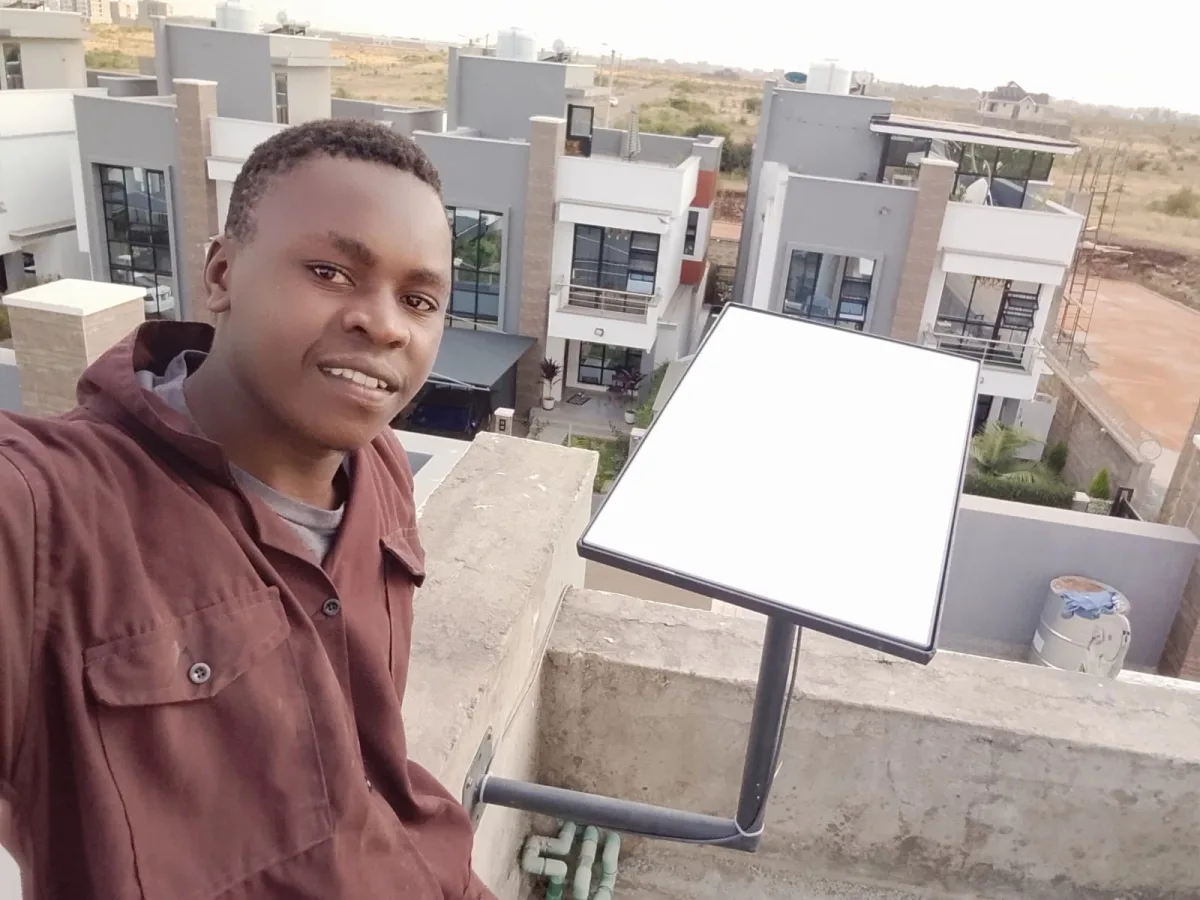
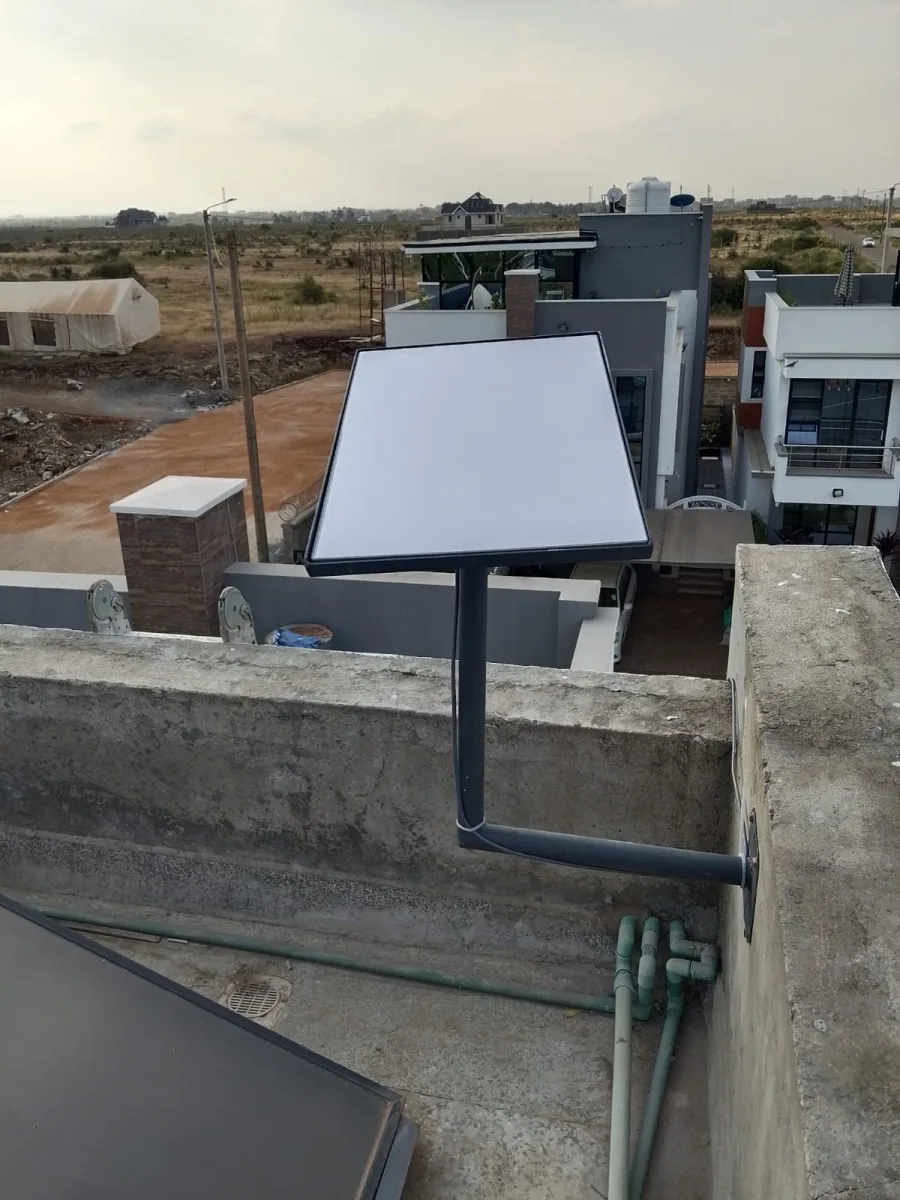
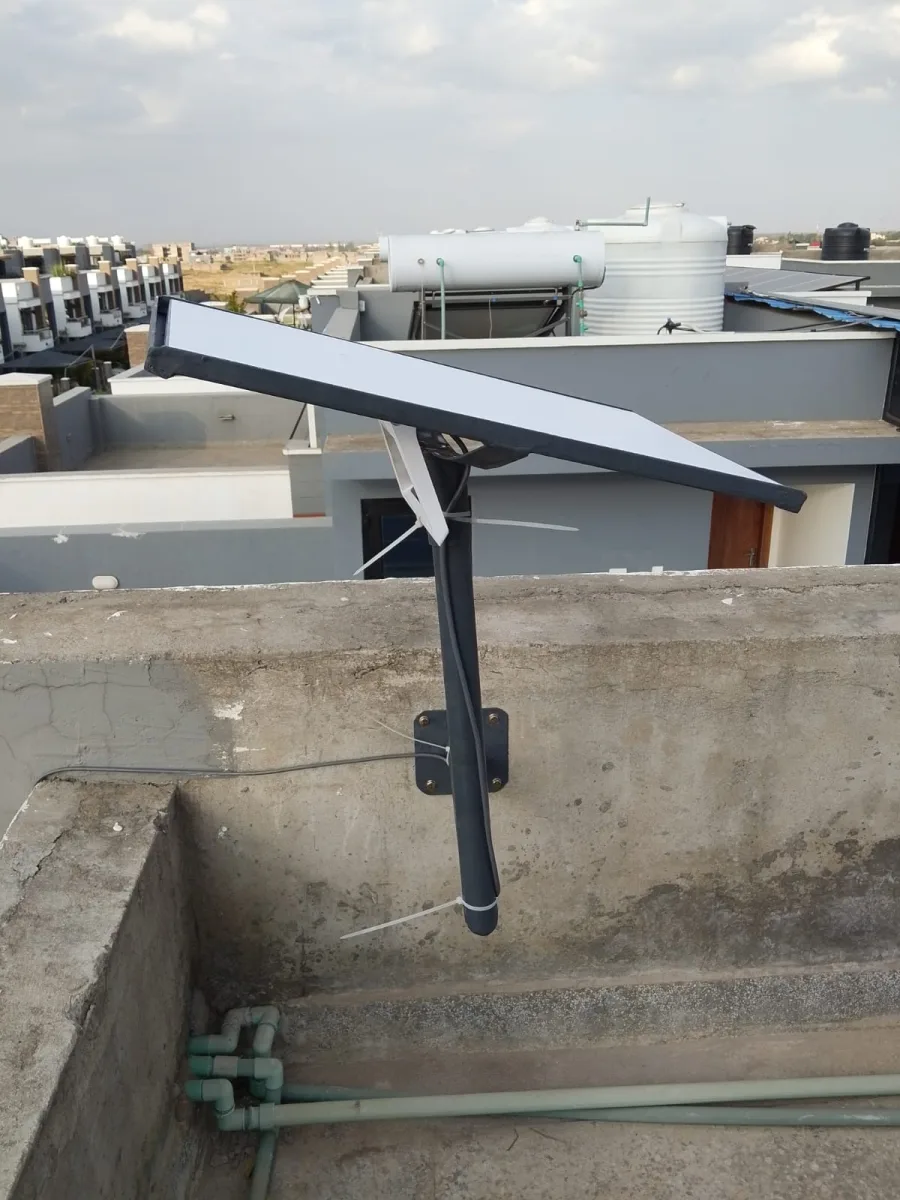
Need Starlink Installation or Network Optimization?
We help homes, offices, apartments, and businesses with Starlink installation, WiFi coverage improvement, and professional setup in Kenya.
Request Installation Chat on WhatsAppSpaceKits Technical Services
Talk to Spacekits
Need Starlink help for your home or business?
Talk to Spacekits before you buy or book installation. We help with kit supply, mounting, activation, router placement, WiFi coverage, and written quotes.
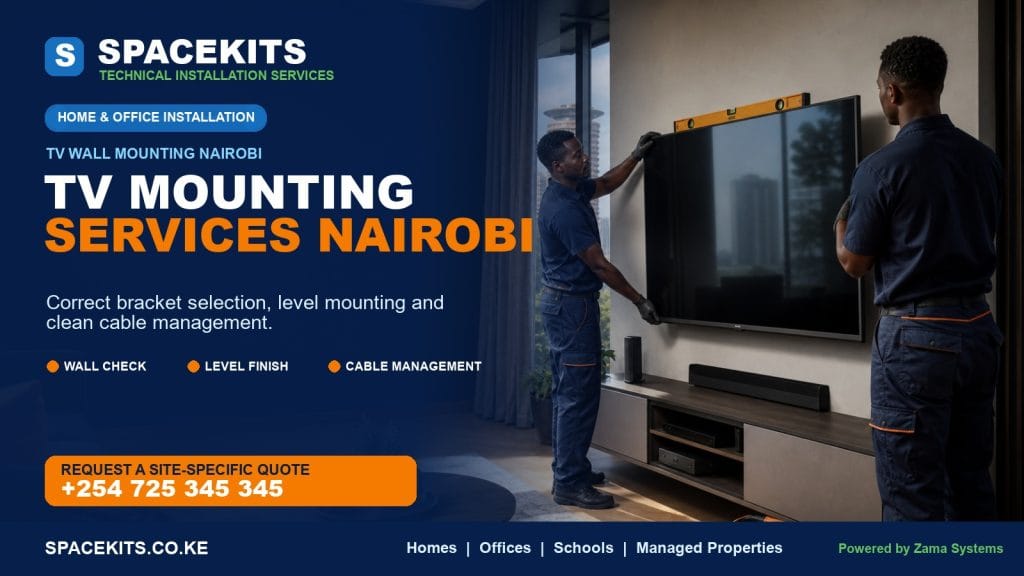
TV Mounting Services Near Me in Nairobi: A Practical Guide to a Clean, Safe Installation
Searching for TV mounting services near me in Nairobi usually means you want more than somebody who can drill four holes. You want the screen to sit straight, the bracket to suit the television and the wall, the viewing position to feel comfortable, and the cables to look intentional. This guide explains the decisions behind a professional-looking installation so you can request the right service and compare quotations with confidence.
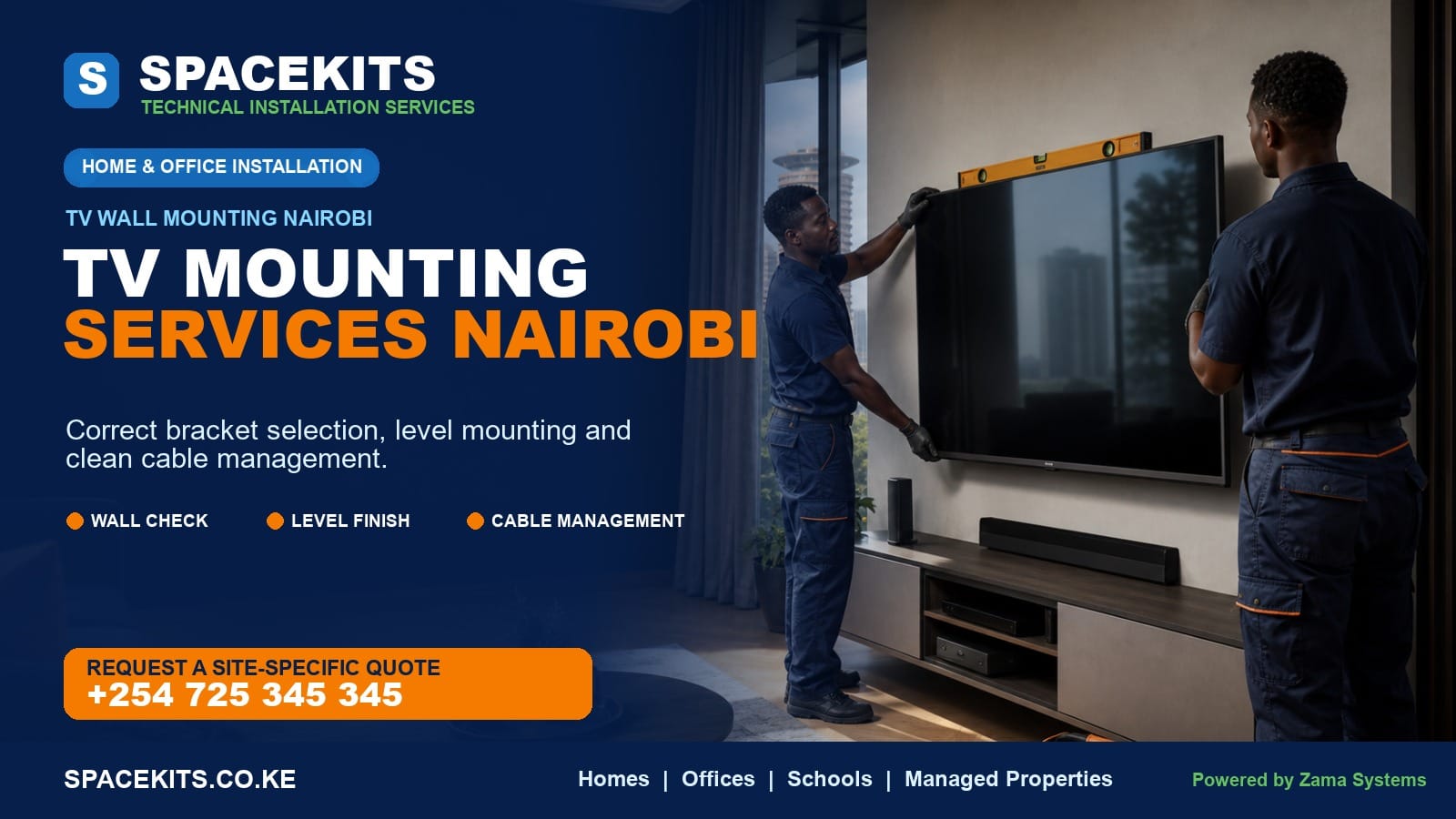
What should TV mounting services near you actually include?
A wall-mounted television can make a room feel calmer and create usable space, but the finished result depends on planning. A useful service begins by checking the television, the proposed wall, the room layout, the available power and signal points, and the accessories that must connect to the screen. Only then should the installer confirm the bracket type and mounting position.
For a straightforward job, the scope may include measuring the preferred position, confirming that the mounting hardware matches the TV, locating a suitable fixing area, drilling and anchoring the bracket, lifting the screen into place, levelling it, connecting existing devices, and checking that the mount is secure. A more detailed project may add surface trunking, in-wall cable routes where appropriate, soundbar mounting, decoder shelves, additional data cabling, Wi-Fi improvement or coordination with an electrician.
That difference matters when comparing quotations. A low figure for “mounting” may cover the bracket only, while another quotation may include cable management, accessories, travel and testing. Ask for a written scope rather than comparing one headline number. A clear scope protects both the customer and the installer from assumptions on arrival.
A good pre-installation conversation should cover:
- the TV brand, model and screen size;
- whether the television is new, already in use or being relocated;
- the wall material and what is behind or beside it;
- the bracket type, model and rated capacity;
- the intended seating position and viewing distance;
- the location of sockets, aerial, network and HDMI connections;
- whether cables should remain visible, run through trunking or use another planned route;
- soundbars, gaming consoles, decoders, streaming boxes and other connected equipment;
- building access, parking, working hours and permission requirements; and
- any special finish expectations, such as a media wall or minimal visible hardware.
SpaceKits can use these details to propose a practical installation rather than treating every Nairobi home, office or commercial space as the same job.
Wall type comes before the drill
The wall determines the fixing method. A bracket that is suitable for the television can still perform poorly if the installer uses the wrong anchors, misses a structural support or assumes the surface finish represents the structure behind it. Tiles, wallpaper, timber cladding and decorative panels can also hide the actual wall material.
Concrete walls
Concrete is common in Nairobi apartments, homes and offices. It can provide a solid mounting base when the correct fixing points and anchors are selected. The installer still needs to consider embedded electrical routes, plumbing, the condition of the concrete and the depth available for drilling. A detector and a careful review of nearby sockets and switches can reduce avoidable risk, but no detector replaces informed judgement about the building.
Concrete dust should be controlled and the room protected before drilling. The final holes should not be enlarged by an unstable drill angle, because loose holes can compromise the fix. The installer should also avoid treating plaster, skim coat or paint as part of the load-bearing depth.
Natural stone and masonry
Stone, brick and masonry walls vary considerably. Some are dense and stable; others contain joints, hollow sections or brittle finishes. A good installer examines the proposed fixing points rather than assuming every part of the wall has equal holding strength. Where decorative stone is present, the team should discuss the risk of chipping and whether a less visible or alternative position would be wiser.
Drywall, gypsum board and partition walls
Drywall needs a different approach. The board alone may not be the right place to carry a large or moving load. The installation plan may need to locate studs or another structural backing, use a mounting system designed for the wall construction, or add reinforcement. Full-motion brackets place changing leverage on the wall, which can make backing and fixing selection especially important.
If the wall construction is uncertain, the responsible answer is to investigate before mounting. It is better to revise the position or scope than to hide uncertainty behind more screws. Customers should mention if a partition was added during an office fit-out or renovation, because the visible surface may not reveal how it was framed.
Timber, panels and media walls
Timber cladding and custom media walls can produce a clean result, but the visible panel may be decorative rather than structural. The bracket should transfer the load to suitable backing. If a carpenter or interior contractor built the feature, drawings or confirmation of the internal support can be valuable. The mounting team may need to coordinate with that contractor before drilling a finished surface.
Tiled walls and fireplace surrounds
Tiles require careful drilling and a clear understanding of the substrate behind them. There is a risk of cracking, chipping or creating a hole that cannot be invisibly reversed. Mounting above a fireplace also introduces questions about heat, viewing height, the route for power and signal cables, and the manufacturer’s environmental guidance for the television. A visually dramatic location is not automatically the best technical or ergonomic choice.
When the wall needs another specialist
If there are signs of dampness, loose plaster, cracks, weak masonry, uncertain framing or a complex electrical route, the job may need input from a qualified builder, carpenter or electrician before the TV is installed. A professional mounting decision includes knowing when the mounting team should pause.
How to choose the right TV wall bracket
The bracket must be compatible with the television’s mounting pattern and weight, and it must support the movement you expect. Screen size labels alone are not enough. Two televisions with the same diagonal size can have different weights, connection layouts and mounting-hole positions. Check the TV manual and bracket specifications rather than relying on appearance.
Fixed brackets
A fixed bracket keeps the television close to the wall. It suits rooms where the seating position is stable and the screen can be mounted at the correct height without needing adjustment. The slim profile can look neat, but it may leave limited access to HDMI, USB, network or power connections. Right-angle connectors or planned cable access may be useful, depending on the television.
Tilting brackets
A tilting mount allows the screen angle to move vertically. It can help when the television must sit a little higher than ideal or when reflections need minor adjustment. It does not solve every glare problem, and an extreme downward tilt may make the installation look awkward. The correct approach is to improve position first, then use tilt for practical refinement.
Full-motion or articulating brackets
A full-motion bracket can extend, turn and often tilt. It is useful for open-plan rooms, corner viewing or spaces with more than one seating zone. This flexibility also increases leverage on the fixing points, particularly when the arm is extended. Wall structure, bracket quality, fixing method and cable slack all become more important. Cables need enough controlled movement without being pulled, pinched or visible as a loose bundle.
Ceiling, pole and specialist mounts
Some commercial spaces, bedrooms, gyms or rooms with glass partitions may require a ceiling or pole mount. These jobs need site-specific structural and access planning. A ceiling finish does not confirm that a suitable fixing point exists above it, and working height may require different equipment. The quotation should clearly state what has been inspected and what remains subject to confirmation.
Understanding mounting patterns
Many televisions and brackets refer to VESA mounting patterns, which describe the horizontal and vertical spacing of the threaded mounting holes. Compatibility also depends on the correct bolts, spacers and bracket rail position. Bolts that are too short may not engage adequately, while bolts that are too long may damage the television. Spacers may be needed if the back is curved, recessed or obstructed by a housing.
Should you buy the bracket or ask the installer to supply one?
Either route can work. If you already have a bracket, share a clear photo of its label, packaging and hardware together with the TV model before the visit. If you want SpaceKits to help source a suitable option, explain whether you prefer a close-to-wall finish, tilt or full movement. The quotation should separate the bracket from installation work so you can see what is included.
TV size, viewing height and room layout
A 43-inch television in a bedroom and an 85-inch screen in a boardroom are not simply smaller and larger versions of the same task. The larger screen may need more people or lifting equipment, a stronger bracket, wider fixing positions and more careful access planning. Even a light television can be awkward to lift safely if the screen is thin, the position is high or furniture restricts movement.
Start with the people who will watch
For a living room, identify the main seating position and the usual seated eye level. The centre of the screen should feel natural from that position; it should not force viewers to hold their heads tilted upward for long periods. Bedrooms are different because viewers may watch while reclined. Offices, reception areas, restaurants and classrooms may need visibility for standing or dispersed audiences rather than one sofa.
There is no universal mounting height that suits every room. Online rules of thumb can be a starting point, but furniture, screen size, room depth, intended audience and architectural features should guide the final mark. Before drilling, it is helpful to outline the TV dimensions on the wall or hold a template at the proposed position.
Account for the bracket, not just the screen outline
The mounting holes on the back of the television are not always centred. If the installer marks the wall using only the bracket centre, the finished screen may sit higher or lower than expected. Measuring the relationship between the TV edges, mounting holes and bracket rails helps place the visible screen where the customer approved it.
Ventilation and access
Keep the television’s ventilation guidance in mind and avoid trapping heat around the screen or connected devices. Leave a workable route for ports that may be used later. A beautiful installation can become frustrating if adding an HDMI cable requires taking the entire television down.
Cable concealment: what “no visible wires” really involves
Cable management is one of the main reasons people search for professional TV wall mounting in Nairobi. The right method depends on the wall, the number and type of cables, nearby power, the desired finish and whether the installation must remain easy to change.
Neat external routing
Paintable surface trunking or conduit can organise power and signal cables without opening the wall. It is often practical for rentals, finished concrete walls or installations that may change later. The route, bends and termination points should be planned so the result looks deliberate. Trunking cannot become a place to force too many tightly bent cables; capacity and connector size matter.
Concealed routes in suitable walls
Some walls or media units allow cables to pass behind the finished surface. This can create a minimal look, but it requires access points, a safe route and cables suited to the intended use. The team should check for obstructions and consider how the cables could be replaced in future. A hidden cable that cannot be serviced may turn one neat installation into a larger repair later.
Power is not the same as HDMI or network cabling
Low-voltage signal cables and mains electricity have different safety considerations. Do not run ordinary extension leads or detachable TV power cords inside a wall simply to hide them. If the desired TV position has no appropriate socket, the scope may need a qualified electrician to install or relocate power using compliant materials and methods. The TV mounting quotation should say whether electrical work is excluded, included through a qualified trade, or subject to a separate assessment.
Plan for current and future devices
List every connection: decoder, soundbar, aerial, game console, streaming device, network cable, USB accessory and any planned upgrade. HDMI cable length and capability should match the devices and route. For long or complex runs, product selection becomes more important. Leave a serviceable arrangement rather than sealing every cable permanently.
Label the other end
When several cables terminate at a cabinet or media console, simple labels save time during troubleshooting. The goal is not merely to make cables disappear; it is to make the system clean and understandable.
Soundbar mounting, decoders, consoles and streaming devices
A mounted television often reveals the next design question: where should everything else go? A soundbar can mount to the wall or, with a compatible system, move with the television. The correct position depends on the soundbar design, its controls, its upward- or side-firing elements if present, and the TV bracket. The mounting method should not block the television’s sensors, ventilation or ports.
Decoders and game consoles need ventilation, access and a practical signal path. Hiding a device completely behind the television may interfere with remote-control operation or make resets and cable changes difficult. A shelf, cabinet, ventilated media unit or suitable behind-TV holder may be a better choice. Power adapters also need support; they should not hang by their cables.
For meeting rooms, a camera, mini-computer or wireless presentation device may need to sit near the screen. The installation should anticipate who will connect laptops and how they will reach the ports. In hospitality or reception areas, controls may need to stay out of public reach while remaining accessible to staff.
If poor Wi-Fi is affecting streaming, mounting the TV will not fix the network. SpaceKits can assess whether the room needs a stronger access-point plan, wired connection or mesh coverage. See the Wi-Fi installation price in Kenya guide for the factors involved.
TV dismounting, relocation and remounting
Moving a mounted television requires more than lifting it off the rails. The team needs to identify the bracket release method, disconnect and label cables, protect the screen during transport, and decide whether the bracket will be reused. The new wall may require different anchors even when the same bracket remains compatible.
For office moves and house relocations, tell the installer whether transport is part of the request, how far the equipment will move, and whether stairs or restricted access are involved. Original TV packaging is useful when available. Without it, the screen needs suitable protective materials and an upright, supported transport plan.
The old fixing holes and cable routes are a separate finishing task. Filling and repainting may require a decorator, especially where colour matching or wallpaper is involved. Ask the quotation to distinguish dismounting, transport, installation at the new location, and repair of the former wall.
If the television has developed lines, impact marks, power faults or loose casing, mention this before the move. Mounting technicians should not imply that installation will correct an internal TV fault. The screen may need assessment by an appropriate repair specialist.
Safety checks that should never be rushed
A television is a valuable, fragile object mounted above people, furniture or equipment. Safe work begins before the first hole and continues after the screen is hung. The installation should follow the television and bracket manufacturers’ instructions, use compatible hardware, and respect the wall construction.
- Confirm compatibility: verify the TV model, mounting pattern, weight and bracket capacity.
- Inspect all hardware: damaged, missing or mixed fasteners should be resolved before lifting the screen.
- Assess the fixing surface: do not rely on decorative finishes or unknown partitions without suitable support.
- Check likely hidden services: review nearby power, plumbing and building information before drilling.
- Use safe access equipment: chairs and improvised platforms are not substitutes for stable equipment.
- Plan the lift: screen size, height, access and manufacturer handling guidance determine how many people or what equipment is required.
- Protect the display: pressure on the panel can damage a TV even when the glass appears intact.
- Secure moving parts: full-motion mounts should operate without cable strain or unexpected contact with the wall.
- Complete a final check: verify the locking mechanism, level, cable clearance and normal device operation.
Families with children should also consider the furniture below the screen, reachable cables and devices that could be pulled. Wall mounting can reduce some tip-over risks, but only when the wall and installation are suitable. Cabinets and shelves may still need independent attention.
What affects the cost of TV mounting services in Nairobi?
SpaceKits should quote from the actual scope rather than publish one invented price for every installation. The following factors commonly change the materials, time, access or number of people required:
- TV size, weight, model and physical condition;
- fixed, tilting, full-motion, ceiling or specialist bracket;
- whether a compatible bracket and complete hardware are already available;
- concrete, masonry, stone, drywall, timber, tile or custom media-wall construction;
- mounting height and safe access requirements;
- number, type and route of power and signal cables;
- surface trunking, concealed routing, drilling through cabinetry or finishing work;
- soundbar, shelves, decoder holders, consoles, cameras or other accessories;
- electrical or data work that needs a separately qualified trade;
- dismounting, packing, transport and remounting;
- location, parking, stairs, lift access and building working-hour rules; and
- commercial-site induction, permits or coordination with other contractors.
For a useful remote estimate, send clear photos showing the entire wall, nearby sockets, the back label of the TV, the bracket label and hardware, and the route you prefer for cables. A video call may clarify the plan, but some wall and access conditions can only be confirmed on site. The final scope should identify any assumptions.
Questions to ask before accepting a quotation
- Does the quotation include the bracket or only labour?
- Which cable-management method is included?
- Are new cables, trunking, shelves or soundbar brackets included?
- Is electrical work required, and who will perform it?
- Does the scope include connecting and testing existing devices?
- Are transport, parking or access charges stated?
- What conditions could require a revised quotation after inspection?
A serious proposal does not need to be complicated. It simply needs to make the agreed outcome and exclusions clear.
How a SpaceKits TV mounting request can work
- Share the brief. Send the location, TV model and size, wall photos, bracket details, preferred position and accessories.
- Clarify the scope. We discuss the wall, movement required, cable finish, power location, soundbar or device mounting, access and timing.
- Assess where necessary. Complex walls, commercial sites, high positions and concealed routes may need an on-site review before the scope is final.
- Confirm the quotation. The proposal lists labour, agreed materials, bracket supply if requested, cable management, accessories and relevant exclusions.
- Prepare the area. Move fragile objects and furniture where practical, confirm building access and keep the TV remote and required devices available.
- Install and test. The team confirms the final marks, fixes the mount, positions the screen, manages agreed cables and tests the connected setup.
- Review the result. You check the position, movement where applicable, device connections and the agreed finish before handover.
If the job reveals a condition that was not visible in photos—such as weak backing, hidden obstruction or unsafe power arrangement—the scope may need to pause or change. That is a responsible installation decision, not a reason to improvise.
How to prepare before the installer arrives
Confirm permission from the landlord, property manager or office administrator if required. Clear a safe working zone and identify any known water or electrical routes. Keep the TV feet, original fasteners, remote controls and manuals together. Log out of private apps if another person will test the television, or be present to handle account access yourself.
If you bought a bracket, do not discard its box, instructions or spare parts before installation. If the TV is new, consider checking the screen for transport damage and confirming normal operation before it is mounted. Report any concern immediately rather than assuming it arose during installation.
Common TV mounting mistakes to avoid
Buying a bracket from screen size alone
Check mounting pattern, television weight, bolt requirements, port access and the wall. The size range printed on a box is only part of compatibility.
Assuming every wall is solid concrete
Partitions, cladding, skim coats and hollow masonry can look similar after painting. Fixings must match the structure, not the colour or finish.
Hiding power with an unsuitable cable route
A clean appearance must not override electrical safety. Plan an appropriate socket or electrical solution instead of concealing an ordinary extension lead inside the wall.
Forgetting future access
Leave a way to connect or replace cables. Photographing the final cable layout can also help when equipment changes.
Mounting before testing a new TV
Confirm that the screen powers on and displays correctly first. This makes it easier to separate product or transport issues from installation work.
Frequently asked questions about TV mounting in Nairobi
How do I find suitable TV mounting services near me in Nairobi?
Look for a provider who asks about the TV model, wall type, bracket, cable finish and access before quoting. Share photos and request a written scope. The cheapest headline figure is difficult to compare if it excludes the bracket, cable management, accessories or transport.
Can SpaceKits mount a TV on a concrete wall?
Concrete walls can often provide a suitable mounting base when their condition, hidden-service risk, anchors and drilling depth are properly assessed. The final method should be confirmed for the specific wall and television.
Can a television be mounted on drywall or gypsum board?
It may be possible when the installer can use suitable studs, backing or a mounting method designed for the wall and load. The board surface alone should not be assumed to support every television or full-motion bracket.
Which is better: a fixed, tilting or full-motion bracket?
A fixed bracket suits a stable viewing position and slim look. A tilting bracket provides vertical angle adjustment. A full-motion bracket is useful for corner or multi-zone viewing but needs stronger structural and cable planning. The best option depends on the room and wall.
Can I use the bracket I already bought?
Yes, if it is complete, compatible with the TV and suitable for the intended wall and movement. Send photos of the label, hardware and TV model before the appointment so compatibility can be reviewed.
Do you hide TV cables?
Cable management can be included using an agreed method such as neat surface trunking, a suitable concealed route or integration with a media unit. The wall, power location, cable types and future access determine the best option.
Can a TV power cable be hidden inside the wall?
Do not assume an ordinary detachable power cord or extension lead can be run inside a wall. If power is not available at the desired position, the project may require an appropriate socket and work by a qualified electrician.
Can you mount a soundbar with the television?
Soundbar mounting can be added when the soundbar, bracket, wall and television layout are compatible. The plan should preserve sensors, ports, ventilation and the soundbar manufacturer’s positioning guidance.
Can you relocate a wall-mounted television?
A relocation scope can include dismounting, cable labelling, protective packing, transport if agreed, and remounting at the new location. Repair and repainting of the former wall should be listed separately.
How high should my television be mounted?
The position should be based on the main viewing posture, screen dimensions, furniture, room layout and any architectural constraints. There is no single height that suits every living room, bedroom, office or public display.
Can a TV be mounted above a fireplace?
Only after reviewing heat exposure, wall construction, viewing height, cable routes and the television manufacturer’s guidance. In some rooms another location will be safer or more comfortable.
What details are needed for a quotation?
Send your Nairobi area, TV brand, model and size, clear wall photos, bracket details, preferred height, cable-concealment request, connected devices, soundbar or shelf needs, and any building-access restrictions.
Does one quotation fit every screen size?
No. Large or unusually heavy screens, high positions, complex walls, moving brackets and extra accessories can change labour, equipment and materials. A scope-based quotation is more reliable than a universal price.
Should I test a new TV before mounting?
Yes. Check the screen and basic functions before installation when possible, and report transport damage or faults immediately. Keep packaging until the television has been inspected and tested.
Can you install several screens at an office or commercial site?
Multi-screen projects can be scoped from a room schedule and site survey. The plan should cover each screen, wall, bracket, cable route, device connection, working height and access rule rather than assuming every position is identical.
Need Starlink Installation or Network Optimization?
We help homes, offices, apartments, and businesses with Starlink installation, WiFi coverage improvement, and professional setup in Kenya.
Request Installation Chat on WhatsApp