

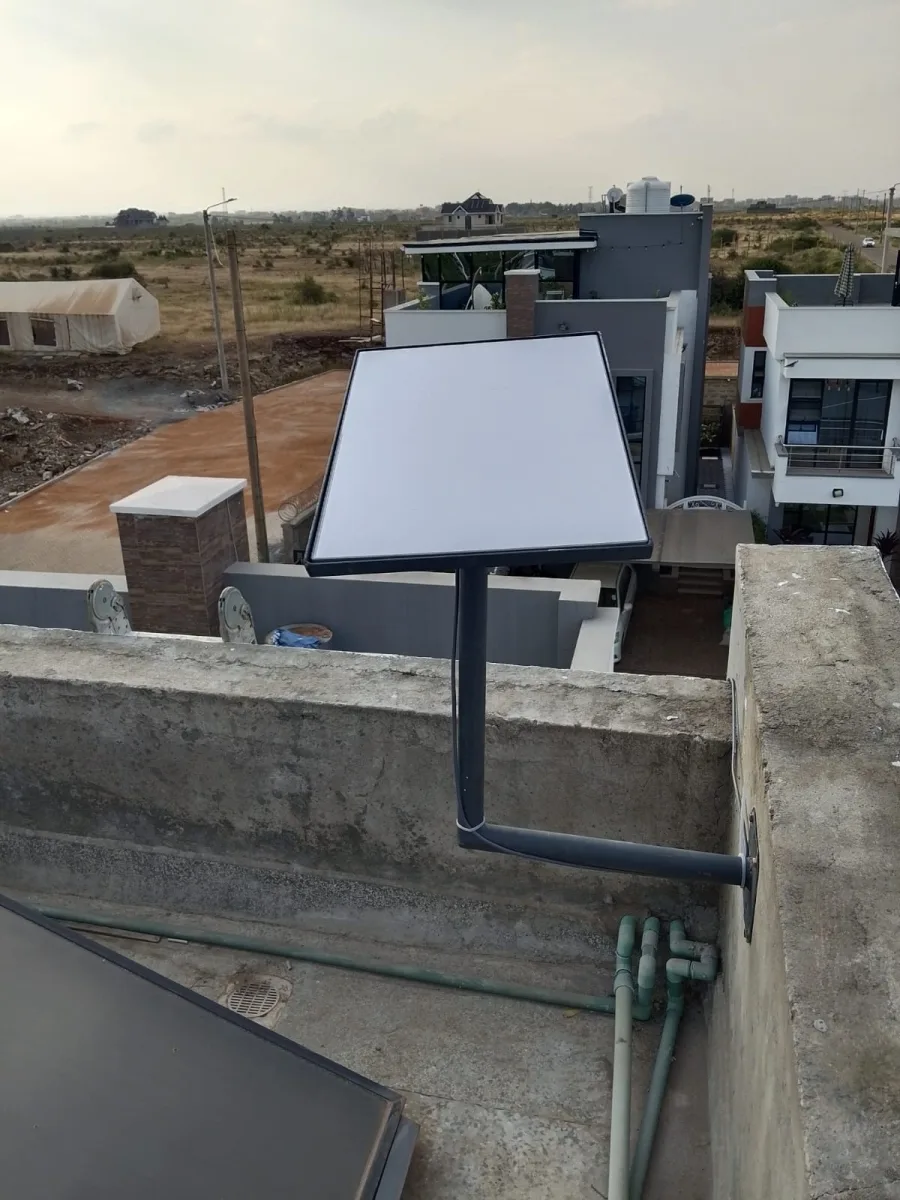
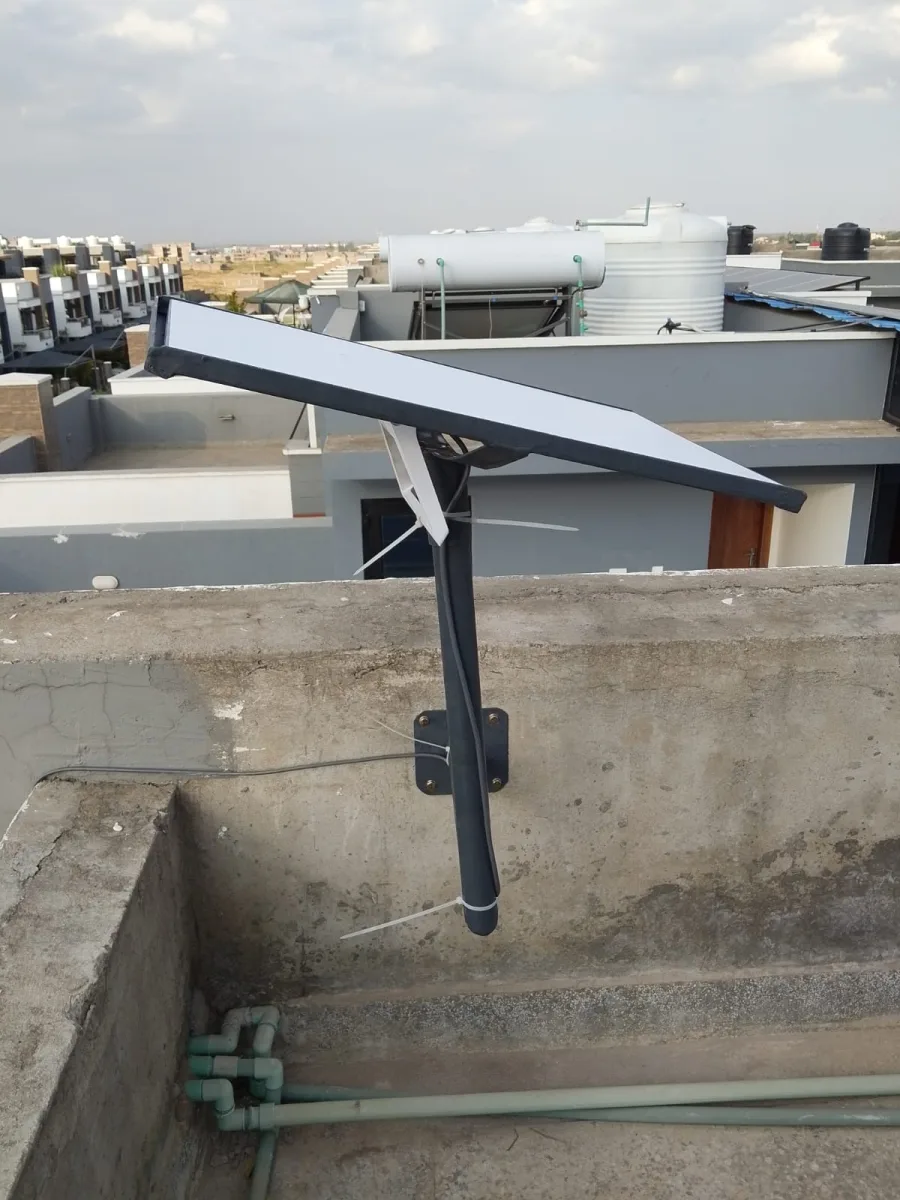
Need Starlink Installation or Network Optimization?
We help homes, offices, apartments, and businesses with Starlink installation, WiFi coverage improvement, and professional setup in Kenya.
Request Installation Chat on WhatsAppWiFi Extender Imara Daima enquiries from tenants often include a practical constraint: improve the bedroom or home office without leaving unwanted holes and exposed cables. A suitable plan balances coverage, landlord requirements and equipment you can take with you. Start with the room layout and the length of time you expect to use the property.
Talk to Spacekits
Need Starlink help for your home or business?
Talk to Spacekits before you buy or book installation. We help with kit supply, mounting, activation, router placement, WiFi coverage, and written quotes.

Define the room you need to improve
For a rented home in Imara Daima, mark the router and the desk or room with weak reception. Test at the actual working position and with the door closed. Note whether moving nearer the doorway improves the connection.
Explain whether the problem affects one room or several. This helps compare a compact extender with a wider mesh installation. Do not commit to a whole-home kit before checking whether a smaller change can meet the requirement.
Check permissions before choosing a cable route
Ask the landlord or managing agent about drilling, wall attachments and common-area cable routes. Even a removable-looking installation can affect paint or finishes. Agree the method and any restoration responsibility before work begins.
If Ethernet is suitable, specify tidy containment and safe routes away from walking paths. Existing data outlets should be tested before relying on them. A visible outlet is not proof that a working connection reaches the router.
Compare portability and performance
A plug-in extender is easy to move physically, but it still needs compatible setup and a good source connection in each home. A mesh kit may provide a more coordinated arrangement across several rooms, subject to exact compatibility and placement.
For a fixed desk, a cable can reduce dependence on the room's wireless path. The right choice depends on permitted installation work and daily use, not just whether a device can be unplugged when moving out.
Keep ownership and setup details clear
Retain model numbers, power supplies and configuration records. If an app or management account is required, it should be controlled by the person responsible for the network. Ask how to reconfigure the equipment for a future ISP router.
Avoid losing access because an installer is the only person with management details. Keep those details private and separate from the WiFi information shared with guests.
Agree the final room test and removal plan
Test calls or other normal work from the desk, confirm everyday devices reconnect and document equipment positions. Identify what is included if a unit needs repositioning after the initial setup.
A WiFi Extender Imara Daima quotation should separate hardware, configuration, cable work and any installation permissions that remain outstanding. Include the intended removal method so the upgrade works for both your current tenancy and your next home.
WiFi Extender Imara Daima: plan for this home and your next move
A tenant may need a reliable bedroom desk without wanting permanent alterations throughout the property. The useful question is how to meet the current requirement while keeping installation permissions, ownership and eventual removal clear. Portability matters, but a device that is easy to pack still needs to work in the room today.
Begin with the affected activity and position. Write down whether the problem is a dropped work call, a stream that pauses or a device that cannot connect. Compare the same task near the router. This gives the installer a concrete outcome rather than a request for the most powerful available booster.
The examples in this guide are illustrative. They do not assume that all Imara Daima homes share one layout or tenancy arrangement. Walls, service entry points and landlord requirements vary. Your final plan should reflect the actual premises and the changes you are permitted to make.
Map the current room before choosing equipment
Sketch the router, bedroom desk, television and doors between them. Mark available power sockets and any data outlets. Identify which rooms are essential and which are optional. A limited desk problem may not justify the same installation as several poorly served rooms.
Use normal furniture and door positions during testing. A laptop working beside an open doorway does not establish that it works at the desk behind a closed door. The final result should support the way you live, rather than requiring awkward temporary arrangements.
Compare another device in the same room where practical. If one laptop struggles everywhere while a phone works at the desk, the laptop may need separate attention. An issue that follows a device should not automatically become a reason to buy equipment for the entire apartment.
Check the incoming connection separately
If the service is unreliable near the router, extending local WiFi may not fix the main difficulty. Check ordinary equipment indicators and provider notices. Note whether all household devices are affected together and whether the problem follows a particular time or workload.
A booster does not increase the internet package or restore a service outage. Its role is to improve access to the existing local network where the chosen design is suitable. Ask the assessment to distinguish source limitations from the room’s wireless path.
Do not factory-reset provider-managed equipment without understanding how its service configuration is restored. The account may belong to a landlord or another resident. Identify who can authorize changes and arrange that person’s involvement before installation.
Clarify permissions while the options are still open
Ask the landlord or managing agent about drilling, wall attachments and use of shared spaces. A route through a corridor may require separate approval. Even an installation described as removable can affect paint or finishes, so discuss the actual method.
Record what is permitted and who is responsible for restoration. This does not need to turn a simple installation into a complicated project, but it should prevent assumptions. The installer needs to know whether a cable route is genuinely available before recommending equipment that depends on it.
Where permission is uncertain, compare feasible alternatives rather than proceeding with an unapproved route. A wireless option may be suitable for a limited gap; another property may need a different approved method. The technical recommendation and tenancy constraints should be considered together.
Compare a plug-in extender for one weak area
An extender can be a practical option when there is a useful intermediate position between the router and target room. It should receive a suitable source connection before repeating traffic towards your devices. Placing it deep inside the existing dead zone can leave the underlying problem unchanged.
Test candidate sockets using the manufacturer’s indicators and the actual task. A position near the desk is not automatically better than one outside the room. Keep a short note of what was tested so the final choice is understandable.
Consider normal use of the socket and surrounding space. The unit should remain ventilated, accessible and unlikely to be unplugged for another appliance. Avoid hiding it behind furniture merely because that looks tidier if the location undermines the wireless path.
Understand what portability does and does not mean
Equipment you own may be physically easy to move, but the next property will have a different layout and possibly a different router. Expect to reassess placement and compatibility. Do not assume that the same number of units will cover the next home in the same way.
Keep the original power adapters, model details and supported setup information. If an app or account is needed, ownership should remain with the responsible resident. Losing access to the management account can make an otherwise portable kit difficult to reuse.
Clarify which items you own and which belong to the property or provider. Do not remove provider equipment or fixed infrastructure simply because it is connected to your network. The installation record should distinguish movable devices from items that remain with the premises.
When a compatible mesh kit deserves comparison
Several weak rooms may benefit from coordinated coverage instead of unrelated repeaters. A mesh kit can be considered where compatible units have suitable connections between them. The exact product family matters; matching brand names alone do not establish shared mesh support.
Ask for a layout showing the main unit and additional nodes, including their wired or wireless connections. More nodes are not automatically better. Each position needs a purpose and a usable route back to the network.
Discuss setup after a future move. Ask how to change the upstream router and which configuration details should be retained. Portability should include manageable reconfiguration, not just the ability to unplug the boxes.
Consider a neat wired route for a permanent desk
A supported Ethernet connection can remove a weak radio segment for a fixed workstation. It is worth comparing when the desk is used daily and a suitable approved route exists. Confirm the computer’s interface or compatible adapter before selecting materials.
The route should avoid loose cable across walkways or cable trapped under closing doors. Discuss containment, attachment and eventual removal. A temporary-looking cable can still be damaged or inconvenient if it crosses the room without a considered path.
Existing data outlets need testing. A finished socket may not connect to the router or may require patching elsewhere. Ask for verification and labels rather than assuming that the visible outlet proves a working connection.
Check the exact operating mode
An Ethernet socket on an extender may connect a client while the extender still uses WiFi upstream. If your intention is a cable-fed access point, verify that the model supports that mode. The quote should describe the actual traffic path.
Ask whether the existing router can remain and what configuration is required. Replacement should have an explained reason. A suitable additional device may meet the need without changing a service router that already works in the main room.
Use model-specific instructions for setup, firmware and recovery. Features differ between products, including those sold under similar names. Avoid assuming that a general tutorial applies unchanged to the exact hardware you own.
Make shared-household ownership clear
If several residents use the connection, decide who manages it and who can authorize changes. Everyone may need WiFi access without everyone needing administrator access. This reduces conflicting adjustments when a temporary slowdown occurs.
If the account holder is absent during installation, arrange authorized involvement in advance. The installer should not have to guess whether a router change is permitted. Keep credentials out of public messages and share only what is needed through the appropriate channel.
Record ownership of purchased equipment when costs are shared. Clear records make a later move or change of residents easier. The network should not become unusable because the only management account belongs to someone who has left.
Test work, study and entertainment separately
A bedroom desk may need a sustained call or online lesson, while a television needs reliable playback. Test the actual devices and functions included in the brief. A page loading on a technician’s phone does not establish that all household equipment works.
Include printing or casting if these are important. Local device discovery can be affected by network changes even when browsing works. State those requirements before setup so they are part of the design and handover.
Run a representative simultaneous workload. A call while another person streams is more useful than demonstrating a quiet home with all other devices disconnected. Record the conditions and any remaining limitation rather than promising identical performance at every future moment.
Do not confuse coverage with subscription capacity
If the whole home slows during busy periods, record the activities occurring together. Large uploads and backups can affect interactive work. A coverage device does not add capacity to the internet subscription.
Compare the affected task near the router during the same period. If the difficulty is shared across locations, the incoming service or overall demand deserves attention. A local room improvement may still be useful, but it should not be presented as the cure for every upstream limitation.
Ask the installer to explain what the proposed change will address and what it cannot establish. This makes the quotation more honest and helps avoid buying multiple devices when the underlying issue lies elsewhere.
Plan the visit around access and interruptions
Agree the appointment and site contact, including any building access procedure. Clear reasonable access to the router and proposed routes. Keep the relevant laptop, television or other device available for testing.
Ask which steps may interrupt service. Router restarts or network-name changes should be scheduled around important calls. Arrange authorized access to reconnect the devices included in scope without sharing unnecessary private content.
Confirm that the permitted installation method remains the one being used. If a route turns out to require different attachments or additional work, resolve the change before proceeding. This avoids a finished installation that conflicts with the tenancy expectations.
Include removal in the installation brief
Ask which components can be detached and what marks may remain. Clarify whether removing containment or mounting points requires restoration and who will handle it. A future removal plan is easier to agree before materials are fixed to the wall.
Keep cable labels and model records. At move-out, these help distinguish your devices from provider or property equipment. Avoid disconnecting an unidentified cable just because it is near the router.
When taking equipment to a new home, follow supported procedures for changing network details and management access. If equipment is being transferred to another person, handle private configuration appropriately through the product’s normal ownership process.
Compare quotations on complete scope
Identify the rooms covered, equipment supplied and connection method. Ask whether setup, transport, cable, containment, mounting and testing are included. A hardware-only price is different from a complete installed result.
State permissions and route assumptions. If a landlord decision is outstanding, the quote should make that clear. Ask how additional work or a changed route will be agreed rather than assuming every possible adjustment is included.
There is no universal installation price for every Imara Daima rental. The amount depends on the verified need and permitted work. Request a written total and support terms for your property, and compare proposals that cover equivalent outcomes.
Ask what happens if the first position does not work
A sensible installation process allows the proposed position to be tested. Ask whether repositioning is included when that location fails the agreed room task. If a different method becomes necessary, understand how the revised scope will be discussed.
Buying a device is not the same as proving that the room is improved. The acceptance test should focus on the original problem and actual device. Record any exclusions so the household knows what remains outside the installation.
Keep support terms with the receipt. Clarify who handles equipment faults, who supports the internet service and whether follow-up labour is charged separately. These details are especially useful if you move before the equipment’s support period ends.
Retain a compact handover pack
Keep a room sketch with final positions, model numbers, power supplies and cable labels. Add the agreed test observations and normal recovery instructions. A short usable record is better than relying on memory when the connection fails months later.
Store administrator details privately and keep guest connection information separate. If a management app is used, ensure the responsible resident controls the account and can recover access through its normal process.
Distinguish a normal restart from a factory reset. The latter can erase configuration and should not be used as a routine response to every slowdown. Use the agreed support route with a specific description of the problem.
Illustrative choices for tenants
One bedroom desk needs improvement
Compare a suitable extender position with an approved wired route. Keep the proposal focused on the confirmed gap. Test the actual work device with the bedroom door closed.
Several rooms are weak and a move is possible
Consider a compatible coordinated system, but ask how it will be managed and reconfigured later. Portability does not remove the need to assess the current layout or the next home.
The landlord restricts drilling
Explain the restriction before equipment selection. Evaluate permitted methods and test the proposed wireless path. Do not assume that every no-drilling option will meet every coverage requirement.
Working data sockets already exist
Have them verified and identify the upstream connection. A cable-fed access point or fixed desk connection may become practical with little additional visible work, depending on the confirmed route.
Frequently asked questions about rental WiFi upgrades
Can I improve WiFi without permanent alterations?
Possibly, if suitable wireless positions or existing routes are available. The layout and permissions determine the options. Test the intended room rather than assuming a plug-in device will work anywhere.
Can I take an extender when moving?
If you own it, it can generally be considered for reuse subject to compatibility and condition. Keep its adapter and management details, and reassess placement in the new property.
Does a removable cable route need permission?
Clarify the landlord’s requirements for the actual attachment and route. Removable materials can still affect finishes. Agree restoration responsibility before work begins.
Will one network name prevent dropped calls?
No. Client behaviour and network configuration both affect roaming. Test movement between rooms if it matters, using the devices involved in ordinary use.
What should I send for a quotation?
Send the location, router model, internet source, affected rooms and a simple layout. Add installation restrictions, existing outlets and whether you expect to move. Request a clearly scoped written total.
Review the installation before packing away the paperwork
Use the rooms normally during the first week and note any repeatable issue. Compare it with the handover conditions before moving equipment. A furniture change, disconnected cable or unfamiliar device may explain a new symptom.
Keep the installation and removal records together. A WiFi Extender Imara Daima upgrade should improve daily use while leaving ownership, permissions and future reuse clear. That combination makes the investment easier to manage throughout the tenancy and when the next move arrives.
WiFi equipment terms explained before you buy
A good quotation should be understandable without a networking qualification. The terms below explain the main parts of a coverage upgrade. They are a reference for comparing a proposal, not a substitute for checking the exact equipment manual or assessing the property. Ask the installer to connect each term to the devices and rooms in your quotation.
Internet connection and local WiFi
The internet connection is the service reaching your router from a provider. WiFi is the wireless connection between local equipment and your devices. You can have a working local wireless network while the internet service is unavailable. You can also have a good internet connection at the router but poor wireless coverage in another room. Diagnosis should distinguish those conditions.
Router, extender and access point
A router manages traffic between networks and often includes built-in WiFi. A wireless extender typically repeats an existing wireless connection into another area. An access point provides wireless connectivity from a network connection, commonly through Ethernet. Some products support several operating modes, so the model’s supported configuration matters more than the name printed on a retailer’s shelf label.
Mesh and backhaul
A mesh system uses compatible units to coordinate a network across several positions. Backhaul means the connection carrying traffic between those units or back to the main network. It may be wireless or wired, depending on the equipment and installation. A strong connection between your phone and a nearby node does not prove that the node’s backhaul is performing well.
Wireless bands and device support
Different wireless bands have different propagation and capacity characteristics, and equipment support varies. Many older connected devices use only 2.4 GHz, while other clients can use additional bands. Check the exact client and network equipment requirements before changing settings. A newer wireless standard does not remove the need for sensible placement or guarantee that older devices will use every new feature.
Advertised rate and usable performance
A wireless specification on a box is not a guaranteed internet speed at your desk. The result depends on the service, router, link between devices, radio conditions, client capability and simultaneous use. Ask for a practical test of the activity you care about. Calls, streaming, printing and file transfers reveal different aspects of a connection.
Ethernet ports and access-point mode
An Ethernet socket on an extender may connect a nearby wired device while the extender still communicates wirelessly with the router. It does not automatically mean the whole route is wired. If the intention is to use a cable back to the router, confirm that the unit supports the required mode and that the cable and upstream port have been tested.
Power over Ethernet
Some access points receive both data and power through a suitable Ethernet connection. This requires compatible equipment and an appropriate power source, such as a supported switch or injector. Do not assume that every Ethernet socket supplies power or that every powered network device uses the same requirements. The quotation should identify what provides power and where it will be installed.
Network names, roaming and guest access
A network name helps users identify a wireless connection. Reusing one name does not by itself guarantee uninterrupted movement between coverage points. Client devices influence roaming behaviour. Similarly, giving guests a separate name does not establish isolation unless the network is configured accordingly. Ask for demonstrations of the behaviour included in the installation scope.
Restarting and resetting
A normal restart turns equipment off and back on while retaining its configuration. A factory reset can erase that configuration. Follow the specific device instructions and avoid pressing reset buttons as a routine response to every problem. Keep an agreed recovery guide and support contact so a temporary connection fault does not turn into a complete reconfiguration task.
Indoor and outdoor equipment
Equipment should be installed in the environment it is designed for. An indoor unit placed under a roof edge is not automatically suitable for outdoor use. Where work extends outside, include environmental rating, mounting, cable entry and safe power in the assessment. Building-to-building routes may also need a separate technical evaluation before the equipment choice can be finalized.
Ownership and support
Retain receipts, model numbers, configuration ownership and the written scope. Confirm who handles equipment faults, who supports the internet service and what installation follow-up is included. Ask whether any management subscription or continuing fee applies. These details make it easier to maintain the network and compare proposals on more than the initial hardware price.
Request a WiFi assessment in Imara Daima
Contact SpaceKits with your estate or building, router model, internet source, affected rooms and approximate number of active devices. Request a written quotation that separates equipment, cabling, configuration and installation. Confirm appointment availability, access arrangements and any travel charges before booking.
Request a WiFi Extender Imara Daima quote on WhatsApp, or call +254 725 345 345. For the wider service comparison, read the WiFi extender Kenya guide.
Equipment setup reference
Follow the exact equipment manual for supported modes, placement indicators and firmware instructions. See TP-Link’s extender placement guidance; product-specific instructions take precedence over a general layout example.
Need Starlink Installation or Network Optimization?
We help homes, offices, apartments, and businesses with Starlink installation, WiFi coverage improvement, and professional setup in Kenya.
Request Installation Chat on WhatsApp