
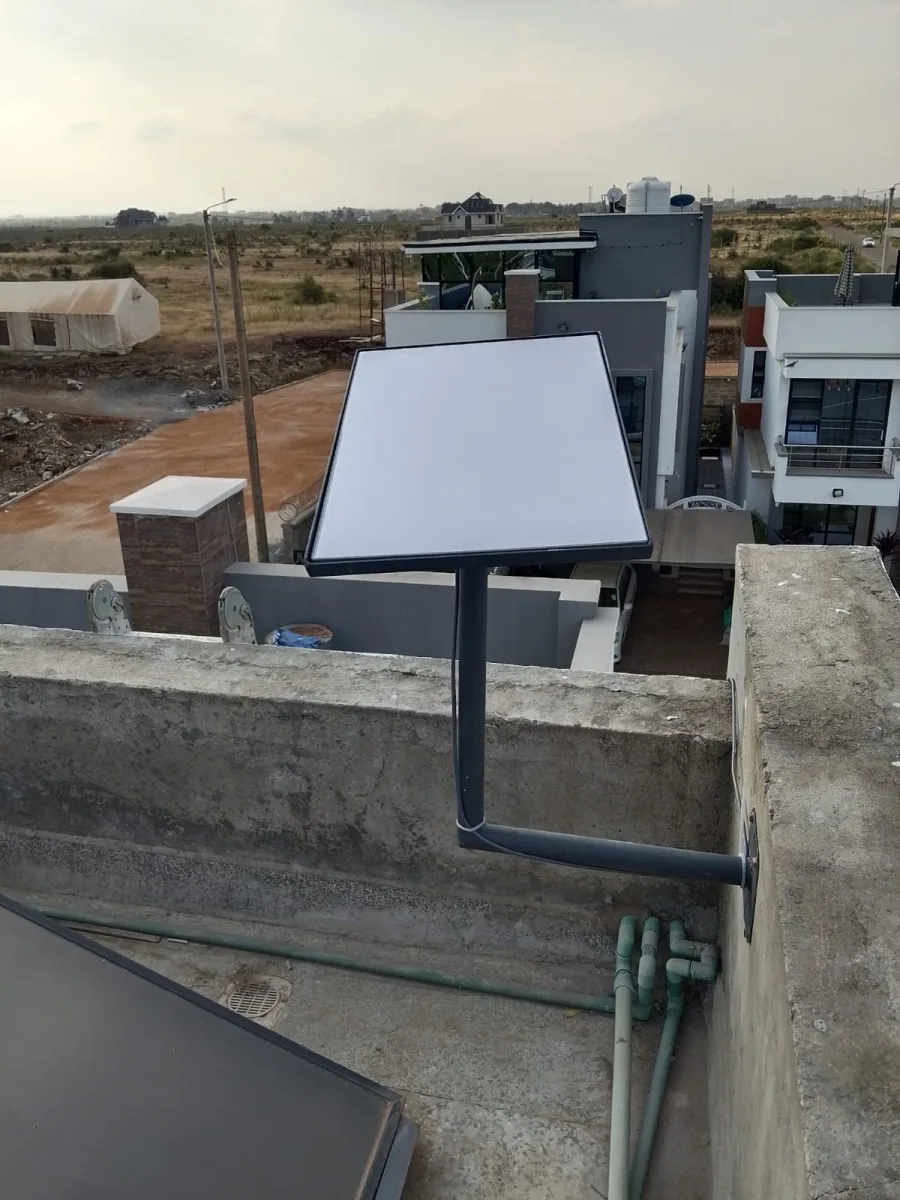
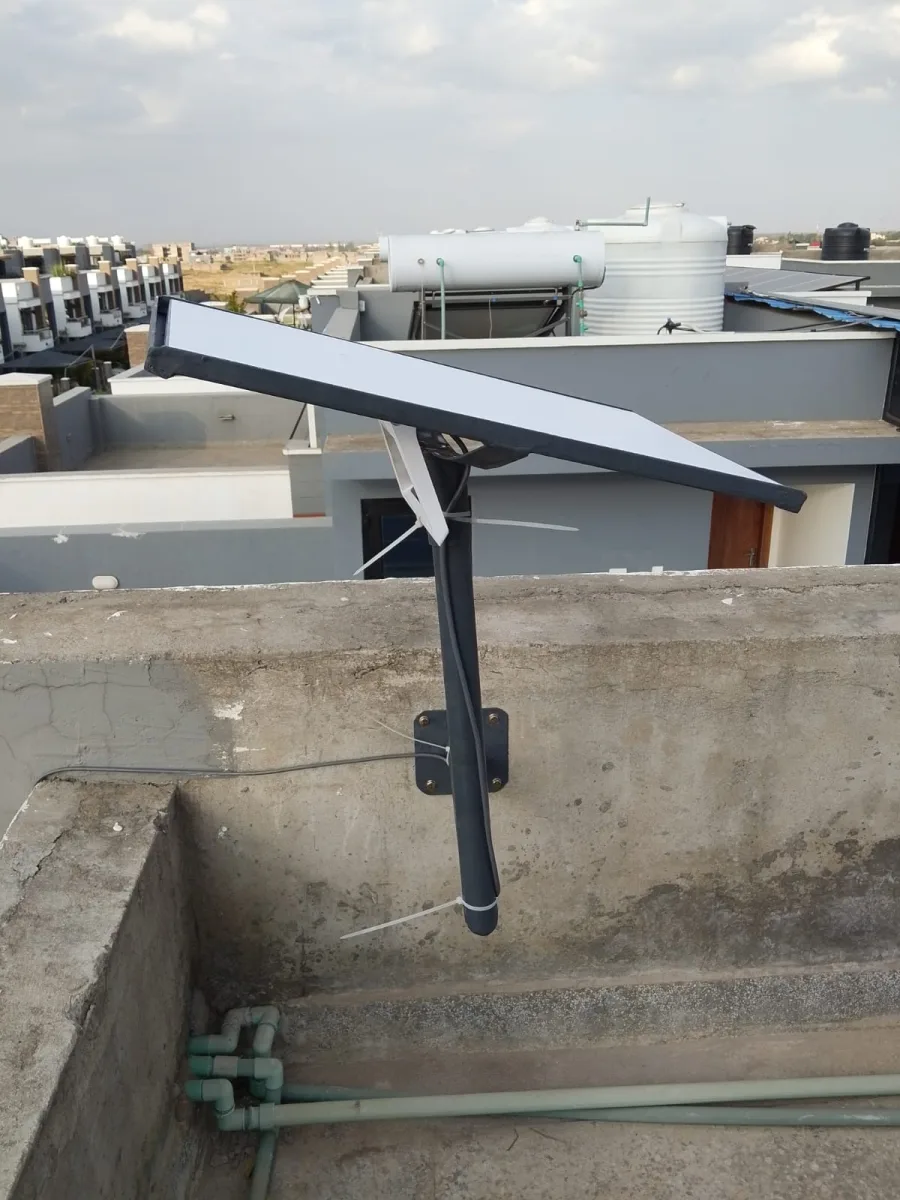

Need Starlink Installation or Network Optimization?
We help homes, offices, apartments, and businesses with Starlink installation, WiFi coverage improvement, and professional setup in Kenya.
Request Installation Chat on WhatsApp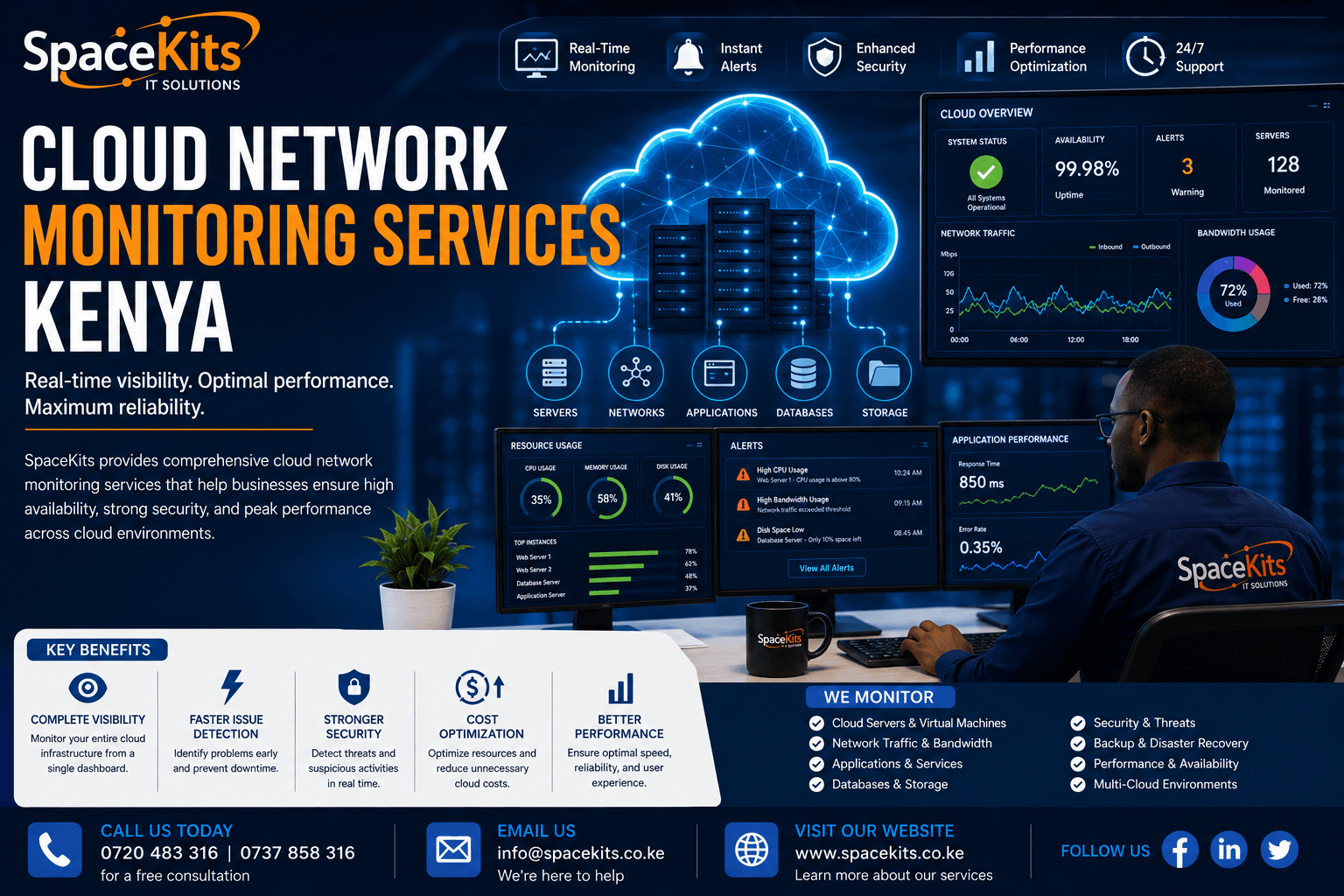
Cloud Network Monitoring Kenya: Improving Performance, Security, and Reliability
Businesses in Kenya are increasingly moving their applications, data, communication systems, and IT infrastructure to the cloud. Cloud computing provides organizations with flexibility, scalability, and easier access to digital resources from different locations.
However, moving infrastructure to the cloud does not eliminate network problems. Businesses can still experience connectivity issues, high latency, bandwidth congestion, application downtime, security incidents, and poor cloud performance.
This makes Cloud Network Monitoring Kenya an important solution for organizations that depend on cloud-based infrastructure.
Cloud network monitoring provides businesses with visibility into the performance, availability, security, and utilization of their cloud-connected infrastructure. Instead of waiting for employees or customers to report a problem, IT teams can identify potential issues through continuous monitoring and alerts.
SpaceKits provides professional networking and IT infrastructure solutions designed to help Kenyan businesses maintain reliable and efficient technology environments.
What Is Cloud Network Monitoring?
Cloud network monitoring is the continuous observation and analysis of network infrastructure, cloud resources, applications, and connections between users and cloud services.
A monitoring platform can provide information about:
- Network availability
- Cloud service availability
- Bandwidth utilization
- Latency
- Packet loss
- Network traffic
- Server performance
- Application response time
- Security events
- Resource utilization
This information helps organizations understand how their cloud infrastructure is performing.
Why Cloud Network Monitoring Is Important
Traditional network monitoring focused mainly on physical infrastructure such as routers, switches, servers, and firewalls.
Modern businesses often operate hybrid environments involving:
- Cloud platforms
- Physical servers
- Remote employees
- Branch offices
- Wireless networks
- SaaS applications
- Virtual machines
- Cloud databases
- VPN connections
Monitoring all these environments gives businesses a broader view of their technology infrastructure.
Benefits of Cloud Network Monitoring Kenya
1. Improved Network Visibility
Cloud monitoring provides administrators with information about what is happening across their network and cloud environment.
This makes it easier to identify performance problems and unusual activity.
2. Faster Problem Detection
Automated monitoring systems can generate alerts when important services experience problems.
This allows technical teams to investigate issues quickly.
3. Reduced Downtime
Early detection can help businesses resolve problems before they develop into major service interruptions.
Reduced downtime means employees and customers can continue accessing important services.
4. Better Cloud Performance
Monitoring helps organizations identify bottlenecks and optimize cloud-connected infrastructure.
Businesses can analyze traffic, latency, bandwidth consumption, and application performance.
5. Improved Security Visibility
Cloud monitoring can provide additional visibility into network traffic and unusual behavior.
When combined with dedicated cybersecurity controls, monitoring can help organizations investigate potential security incidents.
6. Better Resource Management
Organizations can identify how cloud resources are being used and make better infrastructure decisions.
This can help prevent unnecessary resource consumption and improve operational efficiency.
What Can Cloud Network Monitoring Track?
Professional monitoring solutions can track several important components.
Cloud Servers
Monitor server availability, CPU utilization, memory, storage, and network performance.
Network Devices
Routers, switches, firewalls, and other network infrastructure can be monitored.
Cloud Applications
Businesses can track the availability and response time of critical applications.
Internet Connectivity
Monitoring helps identify connectivity interruptions and performance degradation.
Bandwidth Usage
Organizations can determine which systems and services are consuming network resources.
VPN Connections
Remote-access connections can be monitored for availability and performance.
Important Cloud Network Monitoring Metrics
Latency
Latency measures how long it takes data to travel between two points.
High latency can affect cloud applications, video conferencing, remote access, and other business services.
Packet Loss
Packet loss occurs when data packets fail to reach their destination.
High packet loss can result in unstable connections and poor application performance.
Bandwidth Utilization
Bandwidth monitoring helps organizations understand how much network capacity is being consumed.
This information can help identify congestion and future capacity requirements.
Availability
Availability measures whether a service, application, server, or network connection is operational.
Response Time
Response time measures how quickly a system responds to requests.
Poor response times can indicate network, server, or application performance problems.
Cloud Network Monitoring for Remote Employees
Remote and hybrid work have increased the importance of reliable cloud connectivity.
Employees may access business systems from:
- Homes
- Branch offices
- Mobile devices
- Public networks
- Remote locations
Cloud network monitoring helps IT teams gain visibility into connectivity and application performance across distributed environments.
Businesses can use monitoring information to identify recurring connectivity issues and improve remote access infrastructure.
Cloud Network Monitoring for Multi-Branch Businesses
Organizations with multiple branches often have complex network environments.
For example, a company may have offices in:
- Nairobi
- Mombasa
- Kisumu
- Nakuru
- Eldoret
Each branch may have its own internet connection, wireless infrastructure, routers, switches, and security systems.
Centralized cloud monitoring can provide administrators with a unified view of network performance across different locations.
Cloud Monitoring and Cybersecurity
Cloud network monitoring should form part of a broader cybersecurity strategy.
Monitoring can help identify:
- Unusual traffic
- Unexpected connection attempts
- Abnormal bandwidth usage
- Suspicious access patterns
- Service availability problems
- Changes in network behavior
However, monitoring alone is not a complete security solution.
Organizations should also consider:
- Firewalls
- Endpoint protection
- Access controls
- Multi-factor authentication
- Security policies
- Regular vulnerability assessments
- Data encryption
- Backup systems
Combining these technologies provides stronger protection.
Cloud Network Monitoring for Small Businesses
Small businesses increasingly rely on cloud-based systems because they can access advanced applications without maintaining large physical infrastructure.
Examples include:
- Accounting software
- Customer management systems
- Email platforms
- Cloud storage
- Online collaboration tools
- E-commerce platforms
When these services become unavailable, business operations can be affected.
Cloud monitoring gives small businesses better visibility without requiring them to maintain a large internal IT infrastructure.
Cloud Network Monitoring for Large Enterprises
Large organizations often have complex environments involving multiple cloud providers, data centres, branches, and remote users.
Cloud monitoring can help enterprises:
- Centralize network visibility
- Monitor multiple locations
- Track application performance
- Identify bottlenecks
- Monitor cloud resources
- Improve security visibility
- Optimize infrastructure
- Support business continuity
Cloud Network Monitoring and Cost Optimization
Cloud resources can become expensive when they are not properly managed.
Monitoring helps businesses understand resource consumption and identify potential inefficiencies.
Organizations can analyze:
- Bandwidth consumption
- Server utilization
- Storage usage
- Application workloads
- Network traffic
- Resource allocation
This information can support better budgeting and infrastructure planning.
Common Cloud Network Problems
Businesses may encounter several challenges when using cloud-based systems.
These include:
- Slow cloud applications
- High network latency
- Internet outages
- Poor VPN performance
- Bandwidth congestion
- Configuration errors
- Service availability problems
- Security incidents
- Excessive resource consumption
Continuous monitoring can help technical teams identify the source of these problems.
How Cloud Network Monitoring Works
A typical monitoring process involves several stages.
Step 1: Infrastructure Discovery
Important network devices, cloud resources, and services are identified.
Step 2: Monitoring Configuration
Monitoring agents, APIs, protocols, or other technologies are configured.
Step 3: Data Collection
Performance and availability information is collected continuously.
Step 4: Analysis
Collected information is analyzed to identify unusual behavior and performance problems.
Step 5: Alerts
Administrators receive notifications when predefined thresholds are exceeded.
Step 6: Reporting
Performance reports help organizations understand long-term trends.
Step 7: Optimization
Technical teams use monitoring information to improve infrastructure performance.
Best Practices for Cloud Network Monitoring
Businesses should follow several best practices.
Monitor Critical Services
Focus monitoring resources on systems that are essential to business operations.
Configure Meaningful Alerts
Too many unnecessary alerts can overwhelm IT teams. Alerts should focus on important events.
Monitor Trends
Historical data can reveal recurring problems and future infrastructure requirements.
Integrate Security Monitoring
Network performance monitoring should complement cybersecurity systems.
Review Reports Regularly
Performance reports can help organizations identify areas requiring improvement.
Maintain Backup Connectivity
Organizations that depend heavily on cloud services should consider backup internet connections.
Technologies Used in Cloud Network Monitoring
Modern monitoring environments may use:
- Cloud monitoring platforms
- Network management software
- SNMP
- APIs
- Log management systems
- Traffic analysis tools
- Performance monitoring platforms
- Automated alert systems
- AI-powered analytics
- Security monitoring solutions
The appropriate technology depends on the organization’s infrastructure and requirements.
Industries That Can Benefit
Cloud Network Monitoring Kenya can benefit organizations in many sectors, including:
- Financial institutions
- Healthcare organizations
- Schools and universities
- Hotels
- Retail businesses
- Logistics companies
- Manufacturing companies
- Government institutions
- Technology companies
- Professional service organizations
- E-commerce businesses
Cloud Network Monitoring vs Traditional Network Monitoring
Although both approaches monitor network performance, cloud network monitoring is designed for modern distributed environments.
Talk to Spacekits
Need Starlink help for your home or business?
Talk to Spacekits before you buy or book installation. We help with kit supply, mounting, activation, router placement, WiFi coverage, and written quotes.
Traditional monitoring often focuses on physical infrastructure such as:
- Routers
- Switches
- Firewalls
- Physical servers
- Office computers
Cloud network monitoring can extend visibility to:
- Cloud servers
- Virtual networks
- Cloud applications
- Remote users
- Virtual machines
- Cloud databases
- SaaS platforms
- Hybrid infrastructure
For businesses operating both physical and cloud environments, a combined monitoring strategy can provide better visibility.
Hybrid Cloud Network Monitoring
Many Kenyan businesses do not operate entirely in the cloud. Instead, they use a combination of on-premises infrastructure and cloud services.
This is known as a hybrid cloud environment.
A hybrid monitoring solution can help track:
- Office servers
- Cloud servers
- Internet connections
- Branch networks
- VPN connections
- Cloud applications
- Firewalls
- Wireless infrastructure
This centralized approach makes it easier for IT teams to understand the entire technology environment.
Multi-Cloud Network Monitoring
Some organizations use services from multiple cloud providers.
Multi-cloud monitoring can help businesses maintain visibility across different platforms and environments.
It can monitor:
- Cloud connectivity
- Application availability
- Network traffic
- Resource utilization
- Performance
- Security events
- Service availability
This is particularly useful for organizations with complex technology environments.
Cloud Network Monitoring for E-Commerce Businesses
E-commerce companies depend on their websites and online platforms to generate revenue.
A network or cloud service interruption can prevent customers from:
- Accessing websites
- Completing purchases
- Making payments
- Checking orders
- Contacting support
Monitoring helps businesses identify performance problems quickly and protect the availability of important online services.
Cloud Network Monitoring for Financial Businesses
Financial organizations require reliable and secure infrastructure because they process sensitive transactions and information.
Monitoring can help track:
- Application availability
- Network performance
- Server health
- Connectivity
- Unusual traffic
- System response times
Monitoring should be combined with strong security controls and appropriate compliance practices.
Cloud Network Monitoring for Healthcare Organizations
Healthcare organizations depend on technology for communication, patient management, records, appointments, and other operations.
Reliable cloud and network infrastructure can support:
- Healthcare applications
- Communication systems
- Data access
- Digital records
- Backup systems
- Remote services
Continuous monitoring helps identify infrastructure problems that could disrupt these services.
Importance of Real-Time Alerts
Real-time alerts are one of the most useful features of modern monitoring systems.
Administrators can receive notifications when:
- A server becomes unavailable
- Network latency increases
- Bandwidth usage becomes unusually high
- An application stops responding
- Storage capacity becomes low
- A monitored device goes offline
Early alerts allow technical teams to investigate problems before they become more serious.
Network Performance Dashboards
A centralized dashboard provides a visual overview of infrastructure performance.
A useful dashboard can display:
- Uptime
- Network latency
- Bandwidth consumption
- Server health
- Cloud resource usage
- Active alerts
- Application availability
- Historical performance
Dashboards make it easier for IT teams and business managers to understand infrastructure health.
Predictive Monitoring and Artificial Intelligence
Modern monitoring platforms increasingly use artificial intelligence and machine learning to analyze large amounts of infrastructure data.
Predictive monitoring can help identify patterns associated with:
- Increasing resource consumption
- Potential hardware problems
- Unusual traffic
- Recurring outages
- Application performance degradation
Instead of only reacting to failures, businesses can use historical information to prepare for potential problems.
Cloud Network Monitoring and Business Continuity
A business continuity strategy should consider the availability of critical cloud services.
Organizations can strengthen resilience by combining monitoring with:
- Backup internet connections
- Redundant infrastructure
- Data backups
- Disaster recovery plans
- Backup power
- Multiple connectivity providers
- Failover systems
- Cybersecurity controls
This reduces the potential impact of unexpected infrastructure failures.
How to Choose a Cloud Network Monitoring Provider
Before selecting a provider, businesses should consider:
Experience
Choose a provider with practical networking and IT infrastructure experience.
Monitoring Coverage
Ensure the solution can monitor the systems and services your business actually uses.
Alerting Capabilities
Check whether the system can provide timely notifications when important problems occur.
Reporting
Detailed reports can help organizations understand long-term network trends.
Scalability
The monitoring solution should be able to grow as the organization expands.
Technical Support
Reliable support is important when infrastructure problems require immediate attention.
Security
Monitoring systems should be implemented using appropriate access controls and security practices.
How SpaceKits Can Help
SpaceKits can help businesses establish a monitoring strategy that matches their infrastructure and operational requirements.
Our approach can include:
- Infrastructure assessment — identifying critical network and cloud resources.
- Monitoring design — determining what should be monitored.
- Configuration — setting up monitoring and alerts.
- Performance tracking — reviewing network and cloud performance.
- Problem identification — investigating unusual activity and failures.
- Reporting — providing useful infrastructure insights.
- Optimization — recommending improvements based on monitoring results.
For professional assistance, contact SpaceKits on 0725345345.
Why Proactive Monitoring Is Better Than Reactive Support
Reactive IT support usually begins after a problem has already affected users.
Proactive monitoring takes a different approach by continuously watching infrastructure for warning signs.
Reactive Approach
Problem → Users report it → IT investigates → Repair → Service restored
Proactive Approach
Monitoring → Warning detected → IT investigates → Problem addressed → Minimal disruption
For businesses that depend on technology every day, proactive monitoring can provide significant operational advantages.
Why Choose SpaceKits?
SpaceKits helps Kenyan organizations improve their networking and IT infrastructure through professional technology solutions.
Our services can include:
- Cloud network monitoring
- Network monitoring
- Server monitoring
- Network performance analysis
- Office network setup
- Network security
- Structured cabling
- Infrastructure support
- Technical troubleshooting
- Preventive maintenance
Our solutions are designed to help businesses improve reliability, visibility, performance, and security.
Frequently Asked Questions
What is Cloud Network Monitoring Kenya?
It is the process of continuously monitoring cloud-connected network infrastructure, services, applications, and performance for organizations operating in Kenya.
Why do businesses need cloud network monitoring?
It helps organizations identify connectivity and performance problems early, improve visibility, reduce downtime, and optimize infrastructure.
Can cloud monitoring support remote workers?
Yes. Monitoring can provide visibility into connectivity and application performance across distributed users and locations.
Can small businesses use cloud monitoring?
Yes. Cloud monitoring can be useful for businesses of all sizes, particularly organizations that depend heavily on cloud applications.
Does cloud network monitoring improve security?
Monitoring can improve visibility into network activity and help identify unusual behavior, but it should be combined with dedicated cybersecurity controls.
Need Starlink Installation or Network Optimization?
We help homes, offices, apartments, and businesses with Starlink installation, WiFi coverage improvement, and professional setup in Kenya.
Request Installation Chat on WhatsApp