Need Starlink Installation or Network Optimization?
We help homes, offices, apartments, and businesses with Starlink installation, WiFi coverage improvement, and professional setup in Kenya.
Request Installation Chat on WhatsAppProfessional installation for a Starlink kit you already own
Starlink Installation Only Langata: Customer-Owned Kit Setup by Local Installers

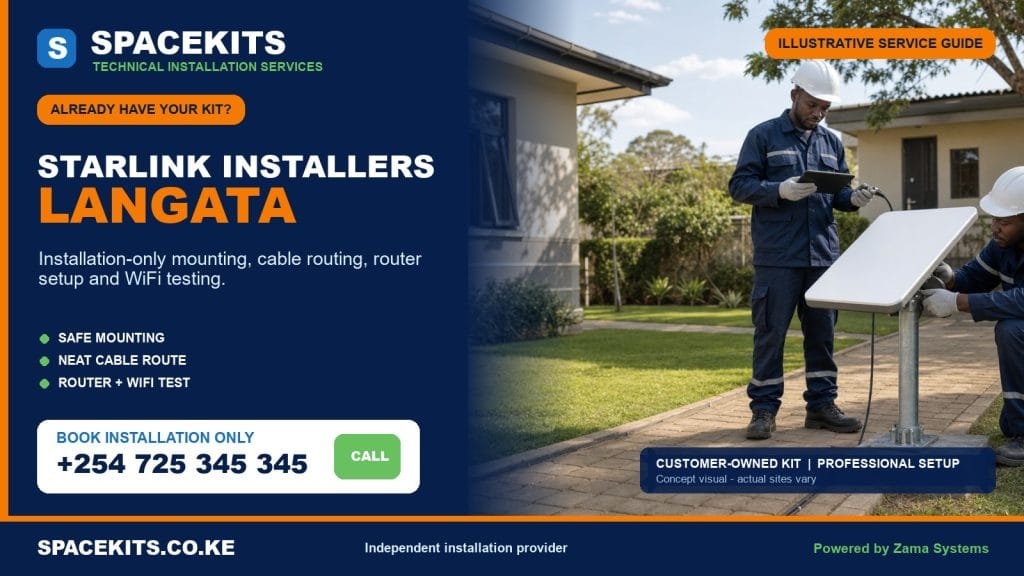
Starlink installation only Langata is for customers who have already bought their equipment and need the remaining work completed professionally. SpaceKits assesses the kit and property, recommends a compatible permanent mounting approach, routes the cable, positions the router and tests the agreed connection. The quote focuses on labour and any clearly identified missing materials instead of including another hardware package.
Talk to Spacekits
Need Starlink help for your home or business?
Talk to Spacekits before you buy or book installation. We help with kit supply, mounting, activation, router placement, WiFi coverage, and written quotes.
Customers searching for Starlink installers Langata may be in a Karen compound, an apartment in Nairobi West or South C, a property in Mugumoini, or a multi-storey development around Nyayo Highrise. The same dish can face very different trees, roof access, cable distances, building permissions and Wi-Fi requirements. This guide helps you prepare the evidence needed for an accurate scope.
SpaceKits operates as an independent installation provider. It is not affiliated with, endorsed by or sponsored by Starlink or SpaceX. Customers retain ownership of their hardware and full control of their account, passwords and payments.
Send your Langata kit and site photos on WhatsApp or call +254 725 345 345.
Already have the kit? Installation only keeps the quotation honest
An own-kit customer has already paid for the principal satellite equipment. The remaining project may include a permanent support, installation labour, protected routing, building entry, router placement and internal network work. SpaceKits separates these components so the customer can see what is already owned, what is needed for the property and what is optional.
Begin by photographing every component on a clean surface. Include the dish, router or power unit, supplied cable, mains lead, temporary stand, box label and both connector ends. Photograph any wall mount, pole adapter or bracket purchased separately. If the kit is used or moved from another site, disclose that and confirm whether you control the account.
Next, document the Langata property. Send the exact map pin, property type, number of levels, likely roof or wall position, surrounding sky and proposed router room. Show trees, tanks, adjacent buildings, parapets and detached structures. State who approves roof access and drilling. Large compounds should include a sketch or description of which buildings need internet.
Finally, define acceptance. A customer may want the dish online and Wi-Fi in the main house, while another wants coverage in a guest cottage, office and outdoor entertainment area. Those are different networks. The satellite installation can be completed without promising that one router covers an entire property. Mesh, wired links or outdoor access points are quoted only when the layout supports them.
Property patterns across Langata’s official wards
Langata Sub-County includes Karen, Nairobi West, Mugumoini, South C and Nyayo Highrise. Use the ward and familiar estate name in your enquiry, but always send a pin. Roads, gates and building names provide more useful dispatch information than a broad location alone.
Karen
Karen properties can have larger plots, mature trees, separate houses, staff areas, guest wings, offices, schools and hospitality uses. More space does not automatically make installation easier. The clearest dish location may be far from the room where the connection is needed. Trees can affect the view, and a long compound may require a deliberate network-distribution design.
The survey compares the main house, garage, guest building or a suitable freestanding support. A remote structure should not be chosen merely because its roof is clear. Cable limits, power, security and the route back to users must work. Sometimes a main-building mount with careful positioning is simpler than creating a second link across the compound.
Nairobi West
Nairobi West includes apartments, offices, shops, hospitality properties and older residential buildings. Shared-roof access and approved exterior routes are common concerns. The customer should secure landlord or management permission, identify the roof entrance and confirm working hours. Cable routes through occupied or common areas need neat protection.
South C
South C combines apartments, maisonettes, homes, offices and guest accommodation. A balcony may appear convenient but can be blocked by the floor above or neighbouring structures. Roof and wall alternatives should be compared. Multi-level homes may need Wi-Fi planning beyond the standard router, especially when the entry point sits at one end of the property.
Mugumoini
Mugumoini customers should provide precise access and property photographs. Compounds, institutions, homes and business sites can have very different roof forms and distances. Open-looking surroundings still require an obstruction check from the exact mounting point. A location near trees or a long internal route may change the support or network plan.
Nyayo Highrise
In high-rise or dense multi-unit settings, private equipment competes for controlled roof space. Approval, labelling and cable containment are important. The supplied cable must be measured against the real vertical and horizontal route. The building manager may specify a riser or prohibit exposed drops. These requirements should be available before a final quote.
Customers elsewhere can start from the Nairobi own-kit installation hub. Nearby western-city sites may use the Dagoretti North guide, while city-centre properties can use the Starehe installation-only guide.
How to plan Starlink for a large Langata compound
A large property should be treated as a site, not one room with a bigger garden. Mark the buildings and priority areas. Identify where power is available, where staff or guests work, which walls or trees block wireless paths and whether trenches or existing conduits connect buildings. The goal is to separate the external internet link from distribution around the property.
Selecting the dish building
The building with the clearest roof is not always the best host. If the dish sits on a remote guest house, the customer still needs to deliver connectivity to the main house. A long unsupported Wi-Fi hop may be unreliable. The survey compares sky view, cable compatibility, power security and the cost of linking buildings before choosing.
Working around mature trees
Trees should be evaluated for height, movement and future growth. A clear gap seen from the lawn may look different at the proposed mount. SpaceKits uses the official obstruction view with physical judgment. Rather than immediately recommending tree removal, the team can compare another wall, roof face or safe support. The final position should also remain accessible for inspection.
Distributing Wi-Fi beyond the main house
Mesh systems can help within a building, but they are not a magic answer for every detached structure. Distance, walls, terrain and outdoor exposure matter. A wired link, properly planned wireless bridge or additional access point may be more appropriate. The quote should identify which buildings and rooms are included in coverage testing.
Protecting outdoor routes
Cables across compounds face vehicles, gardening, animals, water and building work. Exposed ground-level routing is not acceptable. Use suitable existing ducts, protected building routes or a separately designed link. Routine installation should not silently include trenching or civil work; those tasks require their own method and scope.
Power continuity
If the site expects internet during an outage, list all equipment that needs power: Starlink hardware, router, switch and access points. Backup equipment should be sized for the actual load and desired runtime. Placing the dish on a detached building with unreliable power can undermine an otherwise good sky view.
Installation-only service for Langata apartments and maisonettes
Apartment customers should contact management before arranging labour. Ask whether a private dish is allowed, where it may be mounted, how a cable may travel and who opens the roof. Confirm whether the technician needs identification, an escort or a work permit. A building can have excellent roof access but prohibit the only route the supplied cable could use.
The team assesses candidate positions for neighbouring structures, tanks and other rooftop systems. Mounting should preserve drainage and maintenance walkways. The dish should not be placed where another contractor will remove it to reach a tank or solar panel. A label and completed photograph can help future building teams recognise ownership.
Inside, reinforced slabs and masonry can reduce Wi-Fi. A South C maisonette may require vertical coverage, while a Nairobi West apartment may have a long corridor and several closed rooms. Tell the installer where work, streaming and security devices depend on connectivity. The quote can then include basic router setup or a separately designed mesh solution.
Tenants should clarify restoration responsibilities. If cable containment is fixed to a common wall, management may require a particular colour or route. If the customer later moves, the removal scope should include safe disconnection and agreed restoration. Never pull a connector through a wall by force or leave an open entry.
Hospitality, schools and business properties need an operational plan
Hotels, serviced homes, restaurants and event properties sell an experience, so installation should not disrupt guests or expose tools in public areas. Identify quiet work windows, roof access and a service route. Agree which staff and guest areas will be tested. A link that works in reception does not prove coverage in remote rooms.
For guest networks, decide who manages passwords, access points and user separation. SpaceKits can scope distribution equipment, but account security and network policy should remain with the property. If Starlink is backup to another connection, define how staff switch links or how an existing firewall handles failover.
Schools and training facilities must protect cable routes from students and public movement. Administrative, classroom and outdoor coverage may require several access points. Content policy and user management are separate from the physical installation. The handover should identify which areas were tested and which future network improvements remain.
Offices should nominate an IT contact before installation. The dish and router can be mounted professionally while undocumented changes to a firewall cause operational problems. The scope states whether SpaceKits delivers standard Wi-Fi, Ethernet handoff, integration or only the physical link. Backup power should include essential downstream equipment, not just the Starlink router.
Compatibility checklist for a kit purchased elsewhere
Hardware labelled Starlink can belong to different generations and service applications. Connectors, cables, power equipment, router functions and mounting interfaces can differ. SpaceKits checks the exact physical equipment rather than assuming a generic bracket will fit.
- Identify the model. Share box and hardware labels without exposing unnecessary private identifiers.
- Lay out the components. Confirm dish, router or power unit, correct cable, mains lead and intended mount.
- Inspect the cable. Look for crushed sections, cuts, severe bends, moisture and damaged connectors.
- Inspect the housings. Cracks, corrosion, modified plugs or signs of water require caution.
- Check mount fit. Verify both the dish interface and the fixing method for the building.
- Confirm cable distance. Measure the actual planned route, not a straight line across the compound.
- Confirm account readiness. The customer should control a new or legitimately transferable kit.
- Define the network. Decide whether standard Wi-Fi, Ethernet, mesh or multi-building distribution is required.
SpaceKits cannot bypass ownership, billing, service-address or transfer controls. If a used kit remains linked to a seller, resolve that first. If a component is missing, a compatible replacement may be quoted. If the equipment appears defective, the physical installation may pause so the customer can use the seller’s warranty or appropriate support process.
The Langata technical plan: sky, support, route, power and coverage
Sky view
Evaluate the exact proposed position with the official obstruction tool and a physical inspection. Trees, towers, parapets and roof structures matter. A successful temporary test on the lawn does not prove the permanent wall position is clear.
Support
The support must fit the dish, attach to a sound surface and remain stable. Excessively flexible poles and improvised ballast can create movement. The installer chooses a position that balances view, exposure, appearance and safe future access.
Cable route
Plan the complete route before drilling. Protect outdoor sections, preserve bend limits, avoid heat and moving doors, and finish the building entry. A drip loop helps prevent water following the cable indoors. Shared routes need approval.
Power
Use a dry, ventilated location and suitable outlet. Avoid overloaded extensions and water-prone corners. Optional surge or backup arrangements should match the whole essential network load.
Coverage
Place the router for users or provide an agreed handoff to other equipment. Test named rooms and buildings. Separate satellite connection problems from local Wi-Fi weakness by comparing status and performance close to the router with results in distant areas.
Included work, separate additions and clear exclusions
A normal written scope may include site-position confirmation, mounting a compatible support, securing the customer-owned dish, routing the supplied cable, an agreed wall entry, indoor-equipment placement, customer-operated setup steps, connection checking and handover. The exact finish and test points should be named.
Separately quoted items can include the mount, pole, adapter, fixings, conduit, trunking, extended network hardware, mesh nodes, access points, switches, UPS equipment, special-height access, transport and civil work. Multi-building coverage is never assumed from the phrase “install my kit.”
Excluded items normally include subscription, official plan or capacity decisions, account-transfer bypass, repair or warranty for customer-supplied hardware, structural roof repair, tree work, unauthorised changes to common areas and a guaranteed fixed speed. SpaceKits is responsible for its agreed workmanship and any accessories it expressly supplies under the stated terms, not for equipment sold by another party.
If access is unsafe, permission absent, equipment incompatible or the account not ready, the team may pause. This protects the customer from paying for a permanent mount before knowing whether the system can be handed over legitimately.
What changes an installation-only quotation in Langata?
No fictional universal price appears here. The final amount follows the work. A straightforward accessible home with a suitable mount and short route differs from a wooded compound, high-rise, school or hospitality site. The quotation should list assumptions instead of hiding them.
- Building or compound size, height and safe access.
- Mount compatibility, support length, surface and exposure.
- Cable route length, containment, drilling and finish.
- Number of buildings, rooms and agreed Wi-Fi test points.
- Business integration, mesh, Ethernet or access-point requirements.
- Power protection and continuity needs.
- Travel, parking, gate access, work windows and return-visit risk.
Compare quotes by checking labour, materials, cable protection, entry finishing, network work, transport and taxes where applicable. A cheap headline can exclude the permanent mount or make every difficult step an on-site addition. SpaceKits aims to identify these items from evidence or a survey.
How the Langata booking and installation process works
- Send the pin, area, property use, kit photos and complete site views.
- Describe access, approvals, router location and coverage expectations.
- SpaceKits screens compatibility and decides whether a survey is needed.
- Review a written scope separating labour, materials, network additions and exclusions.
- Confirm the account owner, authorised contact and roof access for the appointment.
- The installer rechecks the sky, surface and route before any permanent work.
- The agreed mount, dish, cable and indoor equipment are installed.
- The customer controls account steps while connection status is checked.
- Agreed rooms, network handoff or buildings are tested.
- Handover records the work, limitations and any recommended next phase.
Inspect the result before accepting handover
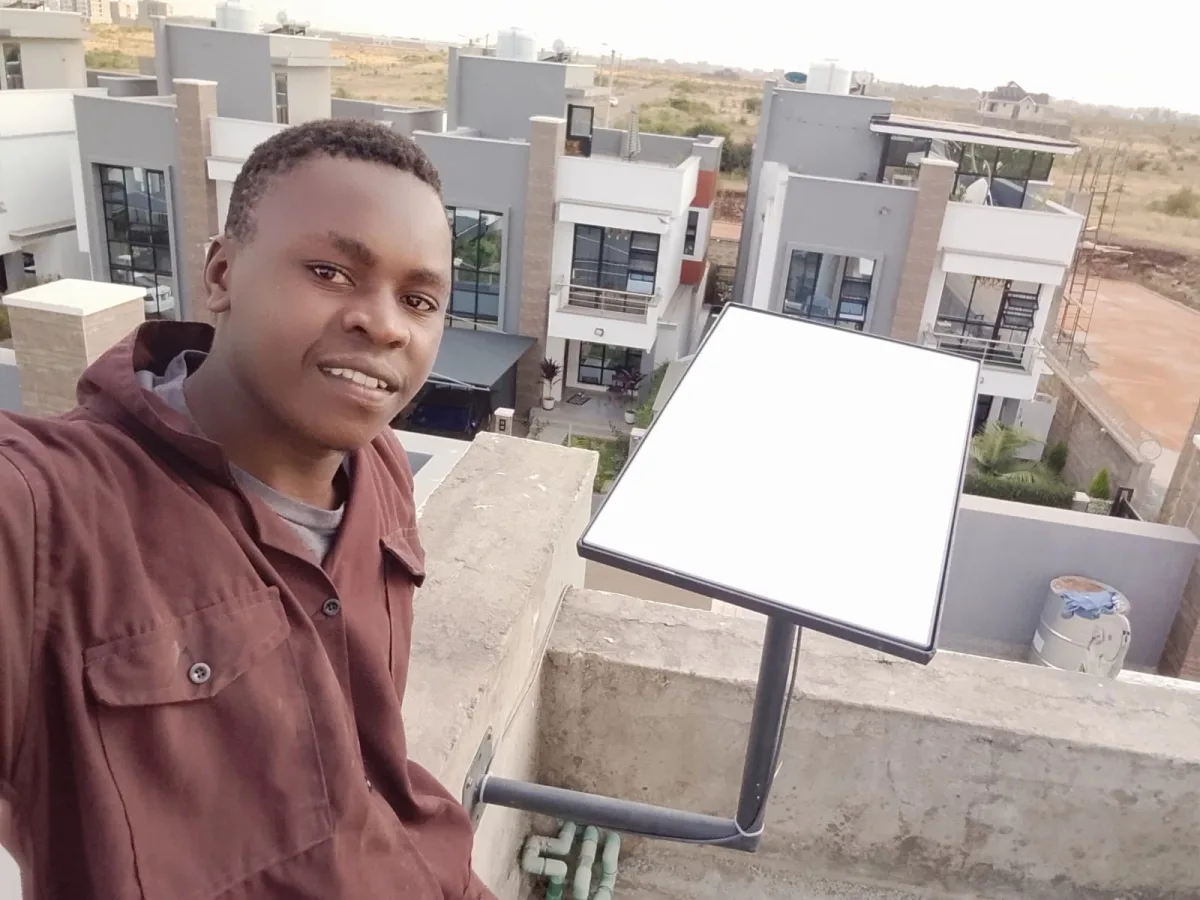
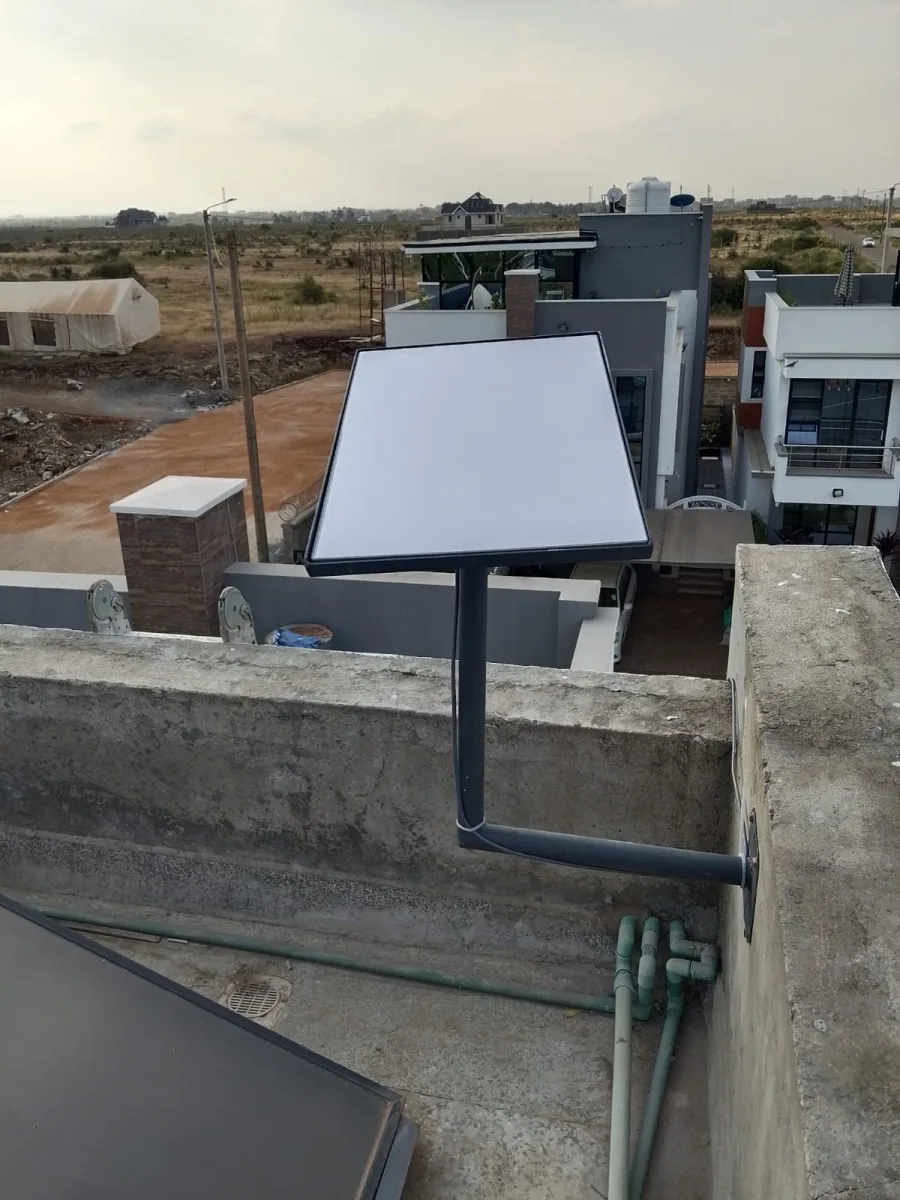
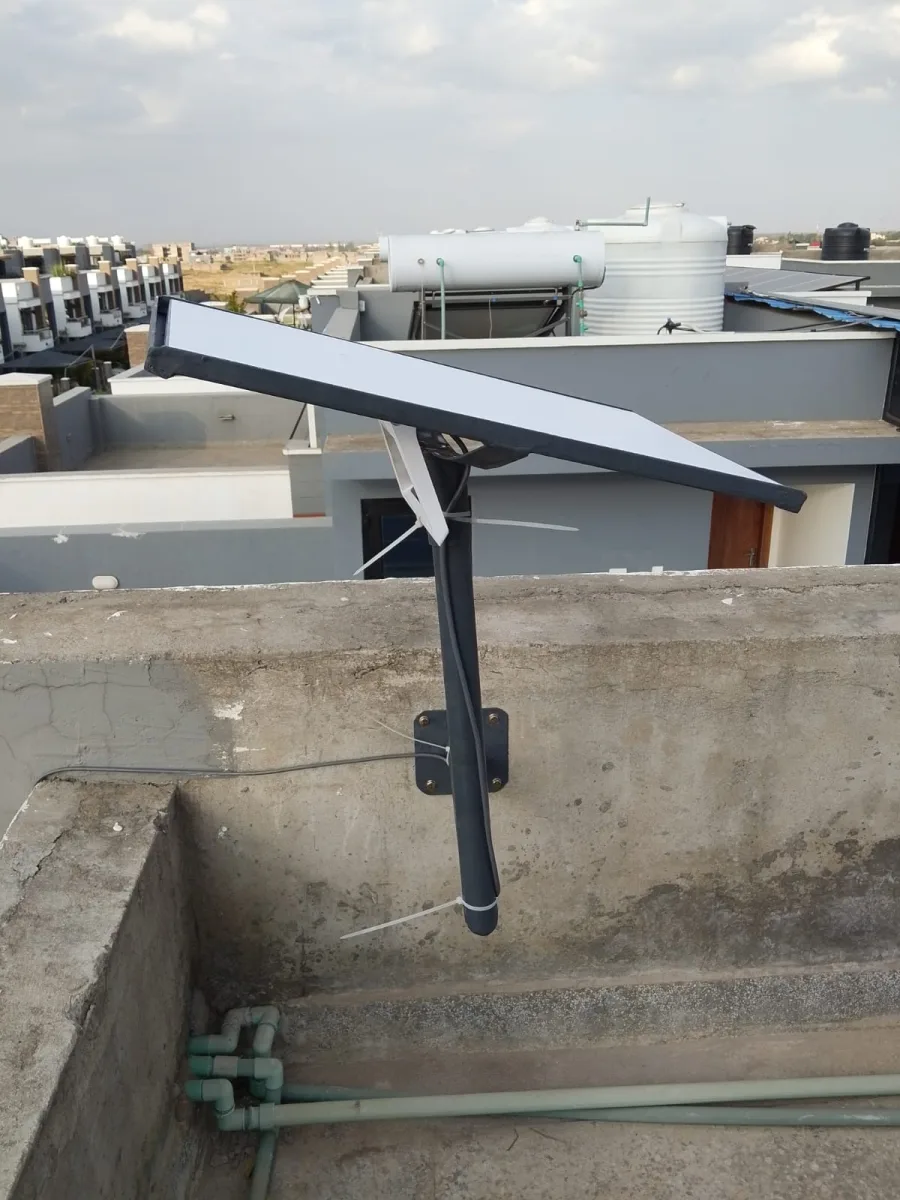
The mount should be stable and fixed to sound material. The dish should not block drainage or maintenance access. Follow the cable to confirm it is supported, protected and not pulled around sharp corners. The entry should be finished to resist water and dust. Indoors, power components need ventilation and cables should not create a hazard.
View status and obstruction information through your own app. Test the agreed rooms or network outputs. Keep photographs, the quotation and invoice. Confirm which accessories SpaceKits supplied and which equipment was yours. Record any seller-side defect, account limitation or untested area.
After handover, inform roof workers before they move equipment. Review the route following renovation or tree growth. If Wi-Fi weakens only in a distant room, investigate local coverage before remounting the dish. If the whole system reports a hardware or account problem, use the appropriate support route.
Five Langata own-kit scenarios and the decisions behind them
These are planning examples rather than claims about specific customers. They show why installation-only work should be scoped from the property instead of copied from a generic package.
A Karen home with a main house and guest cottage
The owner has a complete kit and would like both buildings connected. Roof photographs show a clear view from the guest cottage, but the main house contains the work areas and secure power. SpaceKits compares mounting on each building and examines the link between them. The final scope may place the dish on the main house with an agreed mesh or access-point design, or use the clearer guest building with a separately planned inter-building link. The quote does not promise whole-compound coverage from one router without testing distance and obstacles.
A South C maisonette with an edge-of-house entry
The roof has a suitable view, but the shortest cable route places the router at the far end of the ground floor. The home office is upstairs. Before drilling, the customer chooses between a longer compatible path to a more central point and a basic entry plus additional Wi-Fi equipment. Testing at the office desk becomes an acceptance requirement. This prevents the common result where the satellite is online but the person who needs it receives weak wireless coverage.
A Nairobi West apartment with controlled rooftop access
The tenant owns the hardware while the building controls every exterior change. Management asks for the proposed mounting zone and containment route. SpaceKits reviews the supplied cable distance and prepares the physical scope. Installation is scheduled when a caretaker can open the roof and riser. At handover, the dish and route are photographed and labelled. The tenant retains the account; the building receives only the information needed to identify the rooftop equipment.
A hospitality property near Mugumoini
The property wants Starlink to support operations and selected guest areas. The job is planned around quiet hours and secured service routes. A network map distinguishes reception, office, accommodation and outdoor spaces. The physical installation can be completed even if a later phase adds access points. The quote states exactly which zones are tested now, avoiding an unlimited promise of guest coverage.
A Nyayo Highrise customer relocating an active kit
The customer brings a dish, router and cable from another home. The old mount does not automatically fit the new building. SpaceKits inspects the cable for removal damage, checks the new roof permission and measures the approved route. The account owner handles any service-address step. Removal history, new mounting materials and new-building access are treated as separate facts rather than assuming a relocation is simpler than a new install.
Protecting people, buildings and customer-owned hardware
Roof work begins with access. A secure stair or hatch offers a different risk from a steep tiled roof or a high sheet surface. Customers should disclose height, fragile areas and access limitations. SpaceKits may require different equipment, another crew member or a revised position. If the conditions are unsafe, postponing is a professional decision.
Mounting should avoid weak finishes, waterproofing defects and hidden services. Customers should identify known leaks, electrical routes and surfaces that must not be drilled. Routine installation does not make SpaceKits responsible for an existing structural or waterproofing problem. The agreed fixing method and condition of the substrate should be recorded where risk is apparent.
Cable care protects expensive customer equipment. Never slam a connector in a door, pull the cable through a small hole by the plug or create a tight bend to hide excess. Protect exposed sections from sun, abrasion, vehicles, animals and gardening. Indoors, keep power equipment dry and ventilated. An attractive route is useful only when it also preserves the cable.
Account security protects the owner. The technician should not keep passwords, payment details or recovery codes. The customer operates private steps and verifies that the system remains registered under the correct account. If the owner cannot attend, designate a trusted representative without handing permanent credentials to an unknown person.
Aftercare for a Langata installation
Keep the final photographs, invoice and written scope. If another contractor works on the roof, show the route and ask them not to move the dish or crush the cable. After tree growth, construction or severe weather, check the physical installation and obstruction information before assuming the hardware has failed.
When a problem appears, isolate the layer. Test near the main router. If nearby service is healthy but a guest room is weak, investigate Wi-Fi distribution. If the entire system is offline and the app reports hardware or account status, follow that evidence. If a cable has been cut or a mount moved, request physical inspection.
For relocation, disconnect and pack components carefully. Protect connector ends and keep every adapter. Send new property evidence before moving day. A professionally installed kit can be reused, but the old sky view, support and cable path do not travel with it.
When to request a return visit
Contact SpaceKits when the mount has visibly shifted, a cable has been damaged, water is appearing near the entry, the router must be moved, or renovation changes the original route. Also request assessment before adding an improvised pole, generic extension or third-party connector. A photograph and short description can help determine whether the issue is physical, internal-network related or likely to need a platform support route.
A return visit should have a defined question. “Internet is slow” is not enough on its own. Note the time, app status, whether all devices are affected, results close to the router, recent power events and any roof or tree work. Better evidence shortens diagnosis and prevents unnecessary changes to a sound installation.
Frequently asked questions about Starlink installation only in Langata
Can you install a kit purchased from another seller?
Yes, when the kit is complete, compatible, in suitable physical condition and legitimately ready for use. Send component photos first.
Which Langata areas can request service?
SpaceKits can assess enquiries in Karen, Nairobi West, Mugumoini, South C and Nyayo Highrise. Share an exact pin for routing.
Can you cover a large Karen compound?
The dish installation and multi-building network should be assessed separately. Mesh, wired links or other distribution may be required beyond basic setup.
Do you install in apartments?
Yes, subject to safe roof or balcony feasibility, management permission and an approved cable route.
Is the permanent mount included?
Only when the written quote says so. A customer-supplied mount is checked, or the correct support is quoted separately.
Can you activate a used kit linked to someone else?
No installer can bypass ownership controls. The customer must resolve legitimate transfer and account readiness with the seller and relevant support channel.
Will one router serve a guest wing or detached office?
Not reliably in every property. Distance and walls may require a separately designed link or access point.
Can trees prevent installation?
Trees can obstruct some positions, but the survey compares alternative roof, wall or safe support locations before conclusions are made.
What determines the price?
Access, mounting, cable route, materials, property size, network coverage, travel and scheduling determine the written quotation.
Do you guarantee a fixed speed?
No. Professional work reduces preventable installation and Wi-Fi problems, while service performance also depends on external conditions and plan terms.
Who keeps the account credentials?
The customer. Remain present to operate the app and retain passwords, payment details and recovery access.
How do I book?
Need Starlink Installation or Network Optimization?
We help homes, offices, apartments, and businesses with Starlink installation, WiFi coverage improvement, and professional setup in Kenya.
Request Installation Chat on WhatsApp