Need Starlink Installation or Network Optimization?
We help homes, offices, apartments, and businesses with Starlink installation, WiFi coverage improvement, and professional setup in Kenya.
Request Installation Chat on WhatsAppInstallation-only support for equipment already purchased
Starlink Installation Only Roysambu: Installers for Customer-Owned Kits
Starlink installation only Roysambu is a focused service for customers who have the hardware but need professional work at the property. SpaceKits checks the supplied equipment, assesses sky visibility and access, agrees on a permanent mount, protects the cable route, positions the router and tests the connection. The customer does not have to purchase a duplicate kit.
Talk to Spacekits
Need Starlink help for your home or business?
Talk to Spacekits before you buy or book installation. We help with kit supply, mounting, activation, router placement, WiFi coverage, and written quotes.
Searches for Starlink installers Roysambu include high-occupancy apartments, student residences, shops, offices, family homes, schools and mixed-use buildings in Githurai, Kahawa West, Zimmerman, Roysambu and Kahawa. Shared roofs, landlord approval, dense neighbouring construction, cable exposure and concrete interiors make a site-specific plan essential.
SpaceKits is an independent installation provider. It is not affiliated with, endorsed by or sponsored by Starlink or SpaceX. The customer retains hardware ownership, the account, private credentials and payment control.
Request a Roysambu own-kit assessment on WhatsApp. Include a pin, kit photos, building photos, roof permission and coverage needs.
Send a complete brief before booking Starlink installers Roysambu
Start with the box. Arrange the dish, router or power equipment, supplied cable, mains lead, stand and separately purchased accessories. Take a wide photo and close images of the labels and cable connectors. If the kit was removed from another property, inspect the cable and explain whether you control the account.
Send a precise map pin and property description. State the ward or estate, building name where applicable, number of floors, roof access point, caretaker contact and parking or gate instructions. Show the whole building, roof edge, balcony, neighbouring towers, trees, tanks and likely external route. Do not climb an unsafe roof for a photograph.
Explain who approves the job. A tenant may own the kit but not the roof or external wall. A landlord, property manager, residents’ group, caretaker or institution may determine where equipment can sit. Confirm the route and work window. A same-day request is not ready when permission is still being debated.
Define who will use the connection. One apartment is different from a shared hostel, shop floor, school office or multi-tenant scheme. SpaceKits can quote the Starlink link and an agreed internal network, but installation does not grant a customer the right to resell or share service contrary to applicable terms or agreements. Ownership and network responsibility must be clear.
Roysambu’s five wards create different installation conditions
Githurai
Githurai contains dense rental blocks, shops, institutions and homes with active streets and tightly spaced structures. The installer needs a safe ladder area and an approved roof route. Exterior cables should avoid shutters, signs, public stairs and informal wiring. Work may need to be scheduled before trading or during a quieter period.
Kahawa West
Kahawa West includes homes, rental developments, businesses and institutions. Trees, neighbouring roofs and water tanks can narrow a candidate view. Property additions made over time may leave fragile or crowded roof sections. A wall or sound parapet position can sometimes be more maintainable than the highest sheet roof.
Zimmerman
Zimmerman has many apartments, hostels, shops and mixed-use blocks. Shared-roof approval, supplied cable distance and internal Wi-Fi are frequent issues. A router at one corner of a concrete building will not automatically cover several floors. Customers should state whether service is for one unit, office, common area or larger managed network.
Roysambu
Roysambu combines towers, estates, offices, hospitality and commercial properties. Nearby structures can affect balcony views. Building management may require a formal route or specific containment. Business clients should nominate an IT contact if Starlink connects to an existing firewall, access points or backup arrangement.
Kahawa
Kahawa sites can include homes, institutions, student housing and growing residential properties. Access and coverage vary widely. A compound may have several buildings, while a hostel may have many rooms and high device demand. The dish installation and user network should be designed as separate layers.
See the Nairobi installation-only hub for the full cluster. Adjacent enquiries can use the Kasarani own-kit guide or the Ruaraka installation-only guide.
A high-occupancy building needs more than one successful speed test
Student residences, hostels, apartment common areas and multi-room businesses can have many users and concrete barriers. The standard router may provide a connection but not equitable coverage. Before installation, identify the intended user group, priority zones and who manages the network. Do not promise internet to every tenant without a distribution and capacity plan.
Mesh nodes can extend coverage when placed with a good link to one another. Thick slabs, long corridors and metal doors can interrupt that link. Wired access points may be more dependable where the building permits cabling. Network switches, Ethernet interfaces, access points and management are separate from mounting the customer-owned dish.
A landlord or operator should decide how access is controlled, how passwords change, whether guests and administration are separated and who responds to misuse. SpaceKits can install defined equipment, but the site owner remains responsible for lawful use and service-plan terms. A physical installer does not become the building’s internet operator automatically.
Testing should occur at named points and under understood conditions. The router, office, corridor or selected rooms may be included. A single phone beside the router proves only that local Wi-Fi works there. Record the agreed acceptance areas in the quotation.
Compatibility checks protect a customer-owned kit
Different hardware generations can use different connectors, routers, power methods and mounting interfaces. A generic online listing may not distinguish them. SpaceKits reviews the physical kit and proposed accessories before making permanent changes to the property.
- Identify: photograph labels and every main component.
- Count: confirm dish, router or power unit, data cable, mains lead and stand.
- Inspect: look for cracks, corrosion, water, crushed cable, cuts and bent connectors.
- Match: verify the dish-to-mount interface and building fixing method.
- Measure: calculate the real cable path through approved shared areas.
- Control: establish that the equipment is new, active under you or legitimately transferable.
- Power: choose a dry, ventilated outlet and list backup needs.
- Distribute: decide whether basic Wi-Fi, mesh, Ethernet or managed access points are required.
Account passwords and payment data remain with the customer. SpaceKits cannot override ownership, transfer, billing or service-address controls. A defective kit remains subject to the seller or relevant warranty route. Missing compatible accessories may be quoted separately.
Technical decisions that create a durable Roysambu installation
Obstruction and position
Check the official obstruction view at each candidate point. Nearby towers, roof structures and trees can block part of the sky. Future construction visible around a dense property is also worth considering. The selected point should combine a suitable view with sound support and safe access.
Mount and surface
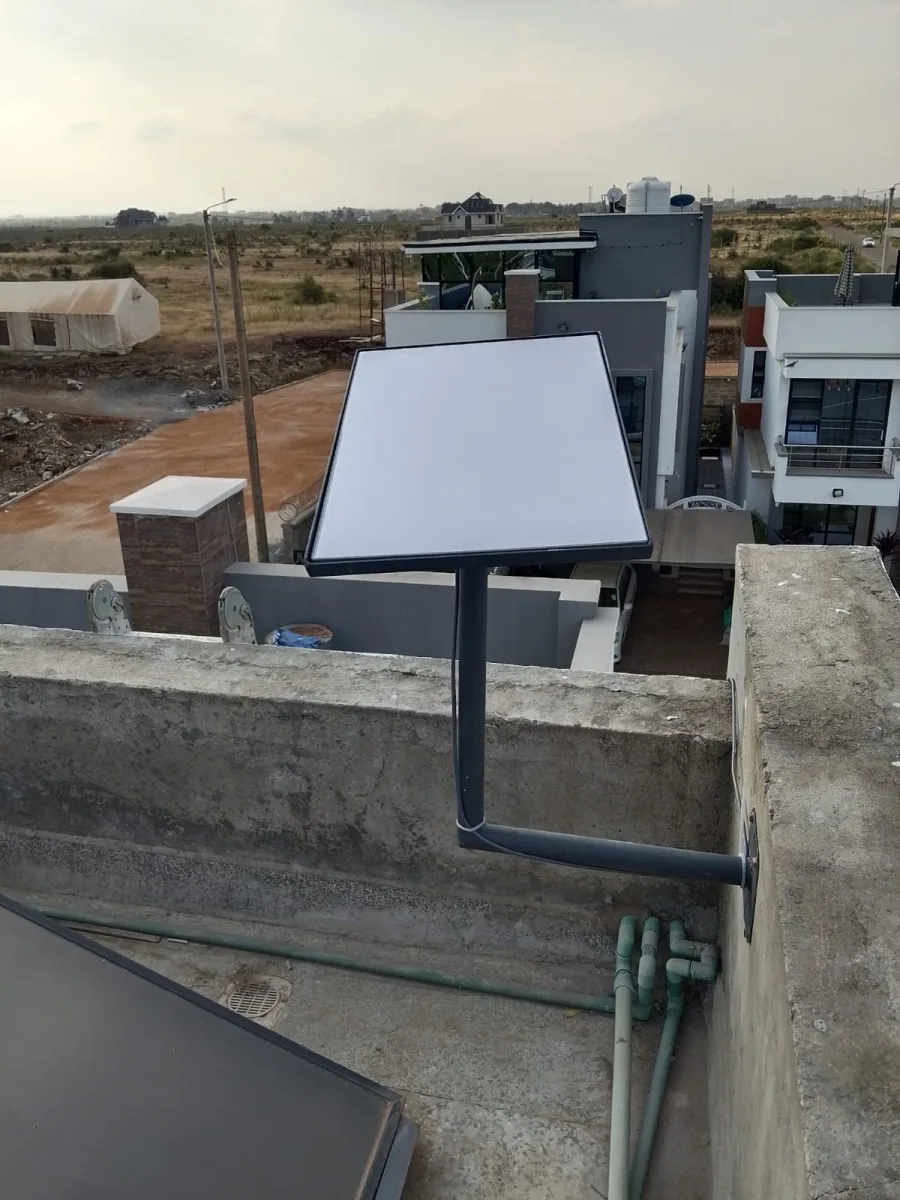
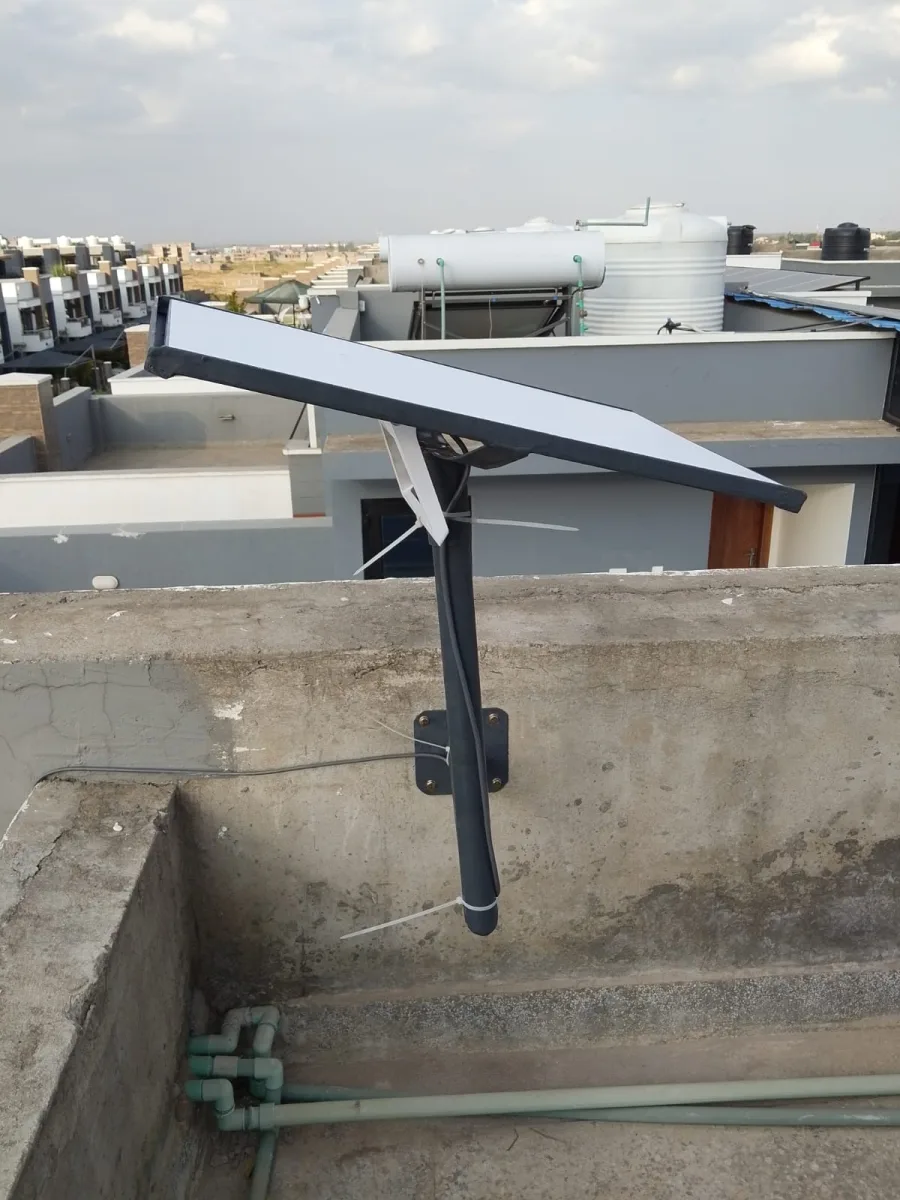
The mount must fit the exact dish and attach to sound material. Loose ballast, thin fascia, damaged masonry and flexible improvised poles are poor choices. SpaceKits can assess a customer mount or separately quote a compatible bracket, pole, adapter and fixings.
Cable and entry
Plan the whole route before drilling. Preserve bends and connectors. Avoid gates, hot surfaces, public movement and water. Support vertical runs and use protection suited to exposure. Finish the entry with attention to water, dust and building appearance.
Router and network
Place indoor equipment in a dry, ventilated position that serves the agreed users or hands off to the existing network. Avoid metal cabinets and overloaded extensions. Test priority areas. Add mesh or access points only from a defined design.
Power continuity
A backup link needs power for the Starlink equipment and all essential downstream devices. List the router, firewall, switch and access points. Size a UPS or inverter solution from the actual load and required runtime as a separate scope.
Installation-only scope, optional additions and exclusions
A standard agreed scope can include site confirmation, fitting a compatible mount, securing the customer-owned dish, routing the supplied cable, creating and finishing the approved entry, positioning indoor equipment, guiding customer-operated setup, checking status and handing over the system.
Additional quoted items may include the permanent mount, pole, adapter, fixings, conduit, trunking, mesh equipment, Ethernet interfaces, access points, switches, backup power, special access, transport and network configuration. The customer sees who supplies each item.
Routine installation excludes the hardware price, subscription, plan availability, account-transfer bypass, structural repairs, unauthorised common-area changes, warranty on customer-supplied equipment and guaranteed fixed performance. SpaceKits is responsible for its agreed workmanship and expressly supplied accessories under their terms.
Work may pause if access is unsafe, permission is missing, a bracket is incompatible or the kit is account-locked. This avoids damaging the property or completing an unusable mount.
What determines the installation-only quotation in Roysambu?
No fabricated one-price promise can cover every Roysambu building. The amount depends on roof height and access, permission procedures, mount, surface, cable route, protection, indoor coverage, business integration, travel and scheduling. A simple home differs from a tower, hostel or mixed-use block.
Review whether labour, mount, fixings, route materials, wall entry, testing, network extras, travel and taxes where applicable are included. Ask what happens if access or the supplied parts differ from the brief. A clear quote describes assumptions and return-visit conditions.
The customer can reduce uncertainty with complete photographs, a caretaker contact and honest coverage requirements. If the route cannot be judged remotely, a survey can prevent the wrong materials and a failed appointment.
Five Roysambu own-kit planning examples
A Zimmerman apartment
The resident owns the kit, while management controls the roof. A caretaker confirms an approved parapet and riser. SpaceKits measures the route, quotes the mount and tests the home-office and living areas. The customer retains the account.
A Githurai shop
The work is scheduled during a quiet period. A service-wall route avoids the shutter and customer entrance. Cable protection and the till-area test are written into the scope. Shared service for other tenants is not assumed.
A Kahawa West family home
Trees and tanks make the first roof edge unsuitable. The survey finds a sound wall position with a better view and a maintainable route. Router placement is adjusted toward the rooms the family uses.
A Roysambu hostel
The owner wants managed coverage across several floors. Dish installation is phase one; wired access points and user management are a defined network scope. The handover tests named zones rather than claiming unlimited room coverage.
A Kahawa institution
The kit is procured centrally and asset-tagged. Facilities approves the mount, while IT receives an Ethernet handoff. Account ownership, physical workmanship and network administration remain clearly separated.
Installation day, quality checks and aftercare
The authorised person meets the team with the kit and roof access ready. The installer verifies the final position, support, route and indoor endpoint before drilling. Changes from the photo assessment are discussed and approved.
During work, ladders and tools are controlled around residents and customers. The cable is handled by its body rather than pulled by connectors. Shared routes are kept tidy. Account steps are operated by the customer.
At handover, inspect mount stability, route support, entry finishing and indoor power. View status and obstruction information. Test the named rooms or network outputs. Keep the scope, invoice and photographs and understand which warranty belongs to SpaceKits workmanship versus hardware purchased elsewhere.
After building work, tree growth or a power event, gather evidence before changing the installation. Test near the router and compare affected areas. Contact SpaceKits if the mount, cable or route has changed. Use the relevant account or seller support route when the evidence is not physical.
Questions to ask before choosing a Roysambu installer
Ask whether the installer will review your exact kit and mount before arrival. Ask who is responsible if the bracket does not fit. Ask how the cable will be protected and the entry finished. Ask which areas are tested. Ask whether the quote distinguishes basic installation from mesh or business-network work.
Do not accept claims that every used kit can be activated, every balcony works, or one router covers every floor. Do not hand over permanent credentials. A trustworthy response may include conditions, a survey or a decision to pause. Precision is more valuable than certainty invented for a quick sale.
Request a written scope and invoice. Keep before-and-after photographs. A future caretaker, landlord or technician should be able to understand where the equipment belongs and what was installed.
A practical permission workflow for apartments and hostels
Begin with a short written request to the property decision-maker. State that you own the equipment, propose professional installation and need permission to inspect a rooftop or balcony position. Ask for the person who controls access, the allowed work hours and any rules for drilling, exterior appearance or service risers. Do not ask the installer to negotiate ownership of common areas after arriving.
Provide management with a simple description rather than an exaggerated promise. The final mount depends on inspection; the cable will follow an approved route; the customer accepts responsibility for their equipment; and SpaceKits will avoid interfering with drainage and other services. Where the building requests identification, insurance information, a method statement or a facilities escort, share that with SpaceKits before the date.
During the site review, include the caretaker. Mark candidate positions and explain how maintenance teams use the roof. A position beside a tank may look open but be unacceptable because plumbers need that space. A route along a parapet may be neat but cross an area scheduled for waterproofing. Facilities knowledge helps avoid future removal.
After approval, record the chosen mount zone and route in the quotation. Confirm who supplies trunking, who opens locked doors and who restores decorative finishes. At completion, give management a photograph if appropriate. When the tenant moves, follow the building’s removal and restoration requirement instead of abandoning cable and fixings.
Plan Wi-Fi for people, floors and rooms rather than a marketing claim
Roysambu and Zimmerman apartment users often need connectivity for work, study, streaming and smart devices across rooms divided by concrete. A hostel or institution can have many simultaneous users. The first design question is who the connection serves. One privately occupied unit has a different security and coverage model from a landlord-managed common network.
For one apartment, identify the work desk, living space and any bedroom where stable service matters. If the cable enters at the far exterior wall, compare moving the router toward the centre with adding an appropriate node. Avoid hiding the router in a metal cabinet, behind large electronics or on the floor beside power clutter. Small placement changes can matter.
For several floors, a row of wireless nodes is not automatically reliable. Each node needs a good upstream link. Reinforced slabs, stair cores and utility spaces can weaken it. Wired access points can provide a stronger backbone when the owner permits cabling. SpaceKits should state the number and location of devices, while the customer understands that expanded network hardware is separate from basic Starlink installation.
High user counts require management. The owner should decide password policy, guest access, administrative priority and responsibility for devices. An independent installer can configure agreed equipment but cannot guarantee every user’s experience when the network has no capacity or access policy. Testing should include priority areas and realistic device use, with results documented.
Businesses should treat security separately. If Starlink connects to an office firewall, IT controls addressing, virtual private networks and failover. A technician mounting the dish should not reset a managed router simply to make a quick test. Agree the handoff and keep a backup of network settings.
Materials and safety standards for a dense Roysambu property
The correct support is determined by the dish interface, mounting surface and exposure. A wall bracket fixed to sound concrete differs from one attached through loose render. A pole must be stiff enough for the application and secured properly. A temporary stand weighted with random objects is not a permanent roof installation.
Fasteners, adapters and containment materials should appear in the quote. Installation only means the customer owns the main Starlink kit, not that property-specific materials disappear. If the customer has purchased a mount, SpaceKits checks it. If it is unsuitable, the team explains why and offers a compatible option rather than altering it without approval.
Cable routes in busy buildings need deliberate protection. Avoid low common stair rails, washing areas, doors, shop shutters and vehicle paths. Support vertical drops so the connector and cable do not carry their own weight. Keep bends gentle and do not squeeze the cable behind a window. Where conduit or trunking is used, maintain a route that can be inspected and serviced.
Safety also covers the work zone. Ladders on a busy pavement or narrow courtyard require control. Residents should be informed before tools pass through common areas. High or fragile roofs may need special access or a different position. SpaceKits can pause when conditions are unsafe. A customer deadline does not make an unstable ladder or weak roof acceptable.
Indoor power should be dry, ventilated and free from overloaded extensions. If backup power is required, include every essential network device in the load. A Starlink router running while the connected firewall and access points are off will not deliver the intended continuity.
Diagnose problems in the right order after installation
First check power and the official app status. If the complete system is offline, note any message and recent outage. Second, inspect the physical route from a safe position for obvious movement or damage. Third, test a known device close to the main router. Fourth, compare results at distant rooms or access points. This sequence separates external link, hardware, power and internal Wi-Fi issues.
If service is healthy beside the router but weak in one room, moving the dish is unlikely to help. Review router position, walls and access-point design. If every device drops and the app reports obstruction, compare recent construction, tank changes or tree growth. If the app reports an account or billing condition, roof work is not the first response.
Call for physical support when the mount has shifted, fixings loosen, the cable is cut or crushed, water appears at the entry, or renovation changes the route. Send photographs and the original installation details. Do not repair a data cable with an electrical twist or unknown coupler. Protect connectors while waiting.
Account and seller boundaries remain important. A customer-owned kit that develops a hardware fault may be covered by its seller or manufacturer terms. SpaceKits can document symptoms and inspect workmanship, but it cannot convert another seller’s warranty into its own. Keep purchase evidence and serial information securely.
Relocation, renovation and growing buildings
When moving, schedule safe removal. Disconnect power, release components without pulling connectors and protect every cable end. Keep the mount hardware together. The new Roysambu property needs fresh permission, sky and route assessment; a bracket that suited the old wall may not suit the new surface.
Before adding a floor, tank, solar system or new roof structure, show the contractor where Starlink equipment sits. Ask SpaceKits whether temporary removal or relocation is needed. Building over the sky view or enclosing the router can create problems that look like service faults later.
Landlords planning a managed connection should define the user network before construction closes walls and ceilings. Approved conduit and access-point cabling can be easier to install during renovation than after finishes are complete. This is a separate network design opportunity, not an excuse to oversell a simple tenant installation.
Final readiness check
You are ready to request a firm next step when the kit is photographed, the account is under legitimate control, the roof decision-maker is identified, the property pin and access are clear, the desired coverage is stated and the account owner can attend. SpaceKits can then respond with a realistic survey or quotation instead of guessing.
If any of those items is unknown, send what you have and say what is missing. Honest uncertainty is easier to solve than an appointment built on assumptions.
Frequently asked questions about Starlink installation only in Roysambu
Can you install a kit purchased elsewhere?
Yes, when it is complete, compatible, in suitable condition and legitimately ready for use.
Which areas do you cover?
Enquiries can be assessed in Githurai, Kahawa West, Zimmerman, Roysambu and Kahawa.
Do you install in apartments and hostels?
Yes, subject to permission, safe access, suitable sky view and an approved route.
Can one router cover every hostel room?
Not necessarily. Multi-floor coverage often needs separately designed mesh or wired access points.
Is a mounting bracket included?
Only when stated in the quote. Customer mounts are checked or compatible hardware is quoted.
Can you unlock a used kit?
No. Ownership and account restrictions must be resolved legitimately.
Can I use a balcony?
Only if it has the required view, safe mount and building permission.
Do you guarantee speed?
No fixed speed is guaranteed. Professional work reduces preventable mounting and Wi-Fi issues.
What affects the quotation?
Access, mount, route, materials, network scope, travel and scheduling affect it.
What should I send?
Send kit, connector, mount, building, roof, sky, route and router-area photos plus your pin.
Who controls the account?
The customer retains passwords, payment details and recovery access.
How do I book?
Need Starlink Installation or Network Optimization?
We help homes, offices, apartments, and businesses with Starlink installation, WiFi coverage improvement, and professional setup in Kenya.
Request Installation Chat on WhatsApp