
Need Starlink Installation or Network Optimization?
We help homes, offices, apartments, and businesses with Starlink installation, WiFi coverage improvement, and professional setup in Kenya.
Request Installation Chat on WhatsAppMeasured Wi-Fi coverage for homes, offices, hospitality sites and compounds
Talk to Spacekits
Need Starlink help for your home or business?
Talk to Spacekits before you buy or book installation. We help with kit supply, mounting, activation, router placement, WiFi coverage, and written quotes.
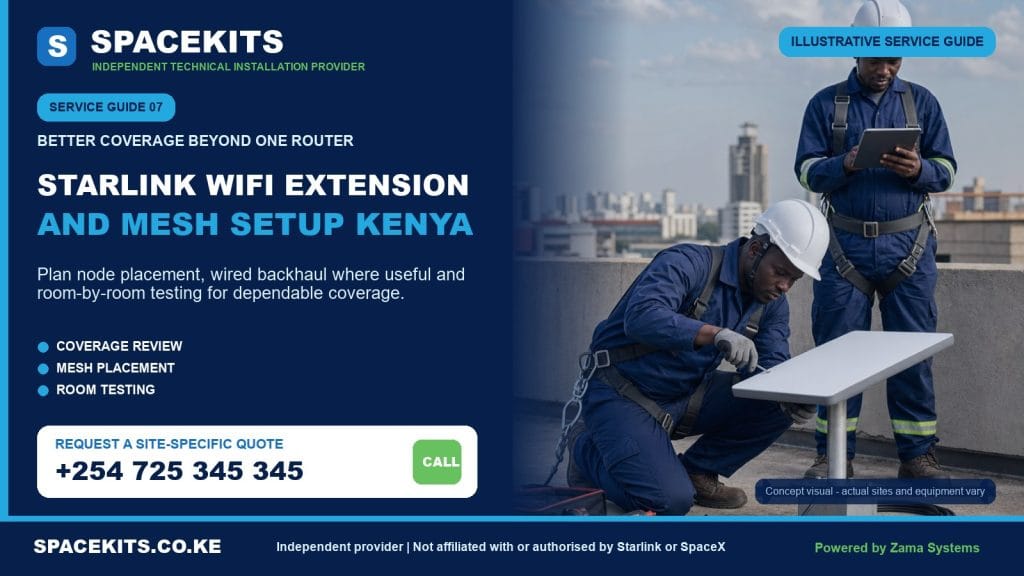
Starlink WiFi Extension and Mesh Setup Kenya
Starlink WiFi Extension and Mesh Setup Kenya is for customers whose Starlink connection works near the main router but becomes weak, slow or unreliable in other rooms, floors or buildings. SpaceKits separates the satellite link from the local wireless network, maps the places that need service, then recommends a proportionate mix of router positioning, compatible mesh nodes, Ethernet backhaul, access points or building-to-building links. The result should be coverage designed around the property, not a pile of repeaters bought without a plan.
This distinction matters in Kenya because reinforced concrete, stone walls, mabati partitions, multiple floors, long corridors, courtyards and detached buildings all affect Wi-Fi. A fast reading beside the router does not guarantee a stable video call in an upstairs office, point-of-sale connection at reception, lesson in a classroom or camera stream at a gate. The correct design begins with the tasks and locations that matter, not with a promise that one device covers an entire compound.
To request a coverage assessment, send your county or Nairobi estate, exact pin, property type, number of floors, a simple floor plan or room video, the current Starlink router model, and a list of weak areas. Book a location-aware Wi-Fi assessment on WhatsApp or call +254 725 345 345.
Independent-provider notice: SpaceKits is an independent Kenyan installation and networking provider. We are not Starlink or SpaceX and do not claim their endorsement or accreditation. Starlink subscriptions, account support, official equipment warranty and platform decisions remain with Starlink and the account owner.
First determine whether Starlink or Wi-Fi is causing the complaint
Customers often use “the internet is slow” to describe several different experiences. The Starlink dish may be obstructed. The service may be interrupted. The main router may be too far away. A phone may be clinging to a weak node. A crowded wireless channel may reduce performance. An old laptop may be the only device affected. A speed test without context cannot identify which part needs work.
Compare the satellite link and the device link
The official Starlink app includes diagnostic information and, on supported setups, an advanced speed test that helps separate router-to-internet performance from device-to-router performance. If the router has a healthy connection but the phone link is poor in a distant room, adding or repositioning local network equipment may help. If the router itself has poor internet performance, covering the house with more nodes will repeat the underlying problem rather than solve it.
Review obstruction and equipment status
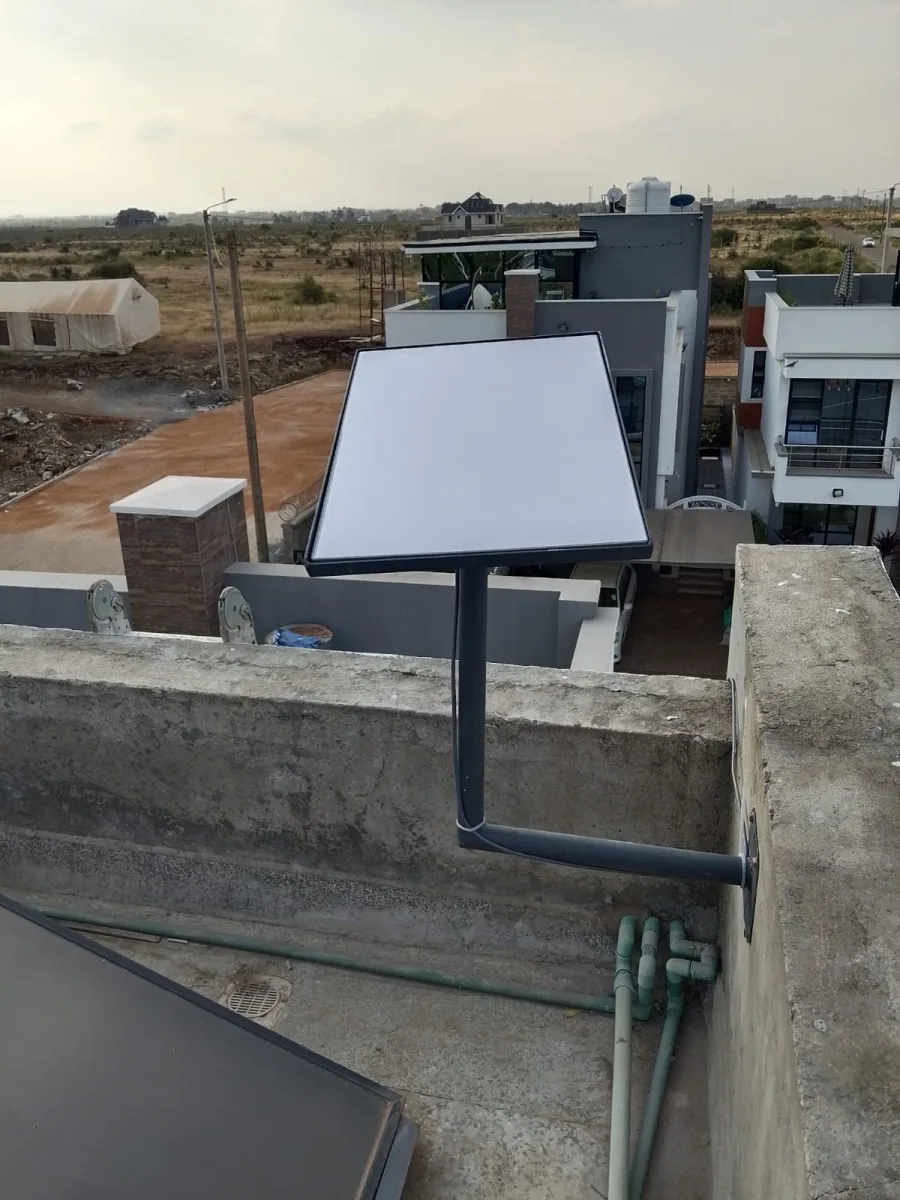
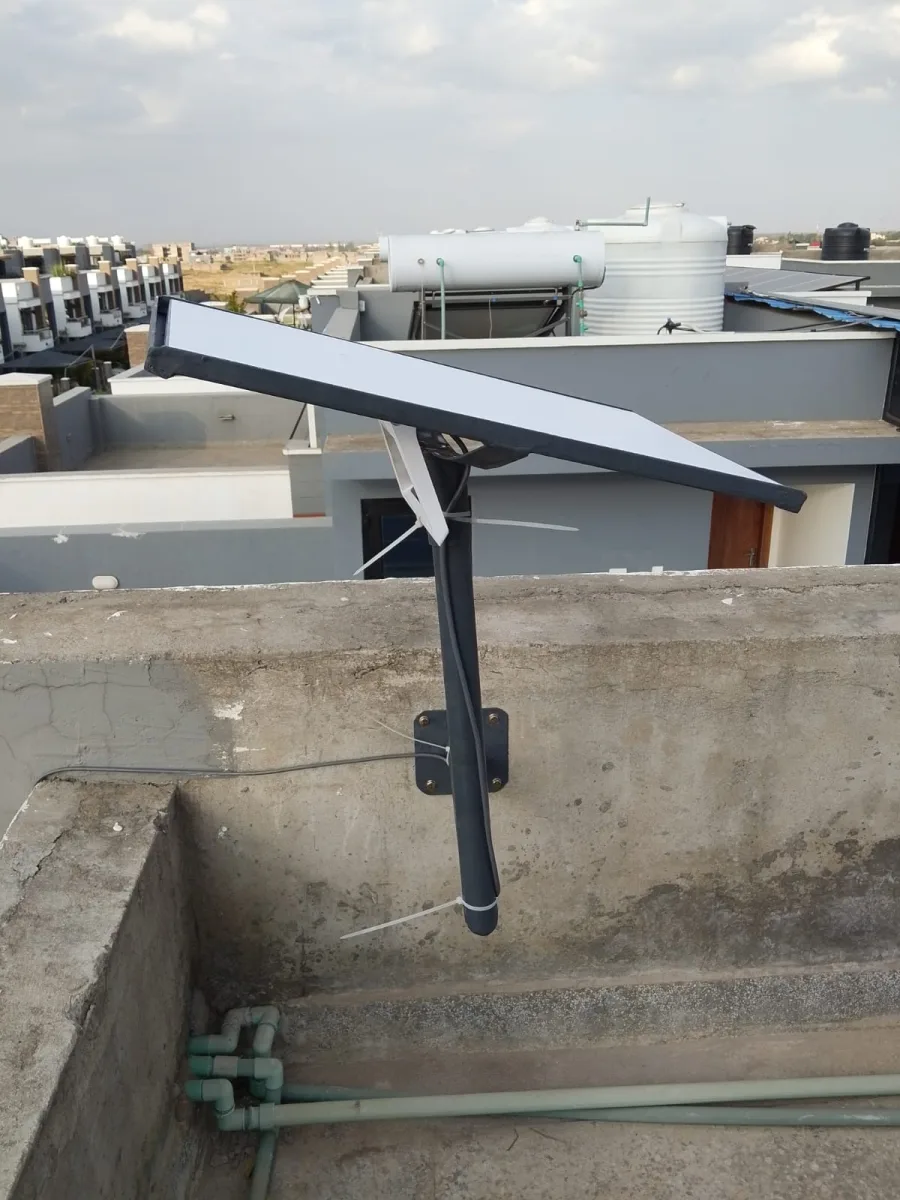
Before designing mesh, confirm that the dish has a suitable sky view, the cable and connectors are healthy, and the app does not show an unresolved hardware alert. A mount that moves in wind or a damaged cable can create interruptions throughout the property. SpaceKits can review the installation or direct the client to Starlink cable replacement and routing when physical-link evidence points there.
Test close to the main router
A controlled test close to the router establishes a baseline. Use a modern device, pause avoidable heavy downloads, record time and position, and compare more than one attempt. The goal is not to advertise the largest number observed; it is to understand whether the local wireless path changes as the tester walks through the building. Results should be interpreted alongside signal, latency, device capability and the application the customer needs.
Record the real failure, not only the test result
A home worker may care about stable video calls in one study. A hotel needs guest coverage in rooms and common areas without exposing management devices. A shop needs point-of-sale reliability. A school may need controlled classroom access. A farm may need connectivity between an office and a packing shed. The design begins with these outcomes and the expected number of users, not a generic claim that every corner must show maximum bars.
What a useful Wi-Fi coverage assessment should examine
A professional assessment is more than walking around until the phone loses bars. It combines the building layout, construction materials, current equipment, radio environment, wired opportunities, user load and operational importance. A small apartment and a multi-building lodge can both report a dead zone, but they should not receive the same equipment list.
Walls, floors and construction materials
Reinforced slabs, stone, concrete block, mirrors, metal doors, water tanks and large appliances weaken or reflect radio signals. A node cannot magically send a strong signal through several heavy barriers if its own link to the main router is poor. Stairwells and open corridors can sometimes provide better paths than the straight line on a floor plan. A walkthrough identifies these practical opportunities.
Distance and vertical separation
Wi-Fi must travel in three dimensions. A router in a ground-floor corner may be physically close to an upstairs room but separated by a reinforced slab, plumbing and furniture. Placing a mesh node directly inside the dead zone is often too late; the node needs a good upstream connection first. It may work better in a landing, corridor or room between the main router and the target area.
Interference and competing networks
Nairobi apartments and commercial centres can contain many neighbouring networks. Automatic channel selection helps, but congestion and non-Wi-Fi interference can still affect performance. Microwave ovens, wireless cameras, poorly placed electronics and crowded 2.4 GHz space may matter. SpaceKits reviews the environment but does not promise an interference-free spectrum that no installer controls.
Device mix and frequency bands
Modern phones and laptops can take advantage of faster bands at shorter range, while older devices and some smart equipment may depend on 2.4 GHz. Separating bands can help diagnose compatibility in some setups, but it is not automatically the best permanent configuration. The design should account for televisions, phones, printers, cameras, payment devices and IoT equipment rather than testing with only one premium handset.
Existing cabling and power
A working Ethernet route can transform the design because wired backhaul removes the wireless hop between nodes. New cable may be practical through ceiling spaces, trunking or service ducts. Each powered node also needs a suitable, secure outlet. A perfect radio position without power or landlord permission is not a usable position.
Security and user separation
A household may need one trusted network and a guest network. A business may need separation between staff, guests, cameras, point-of-sale and management systems. This is more than signal extension. It can require managed network equipment, firewalls, switches and documented credentials. SpaceKits defines whether the project is basic Starlink mesh pairing or a broader network implementation.
Choosing between mesh, wired access points and simple repositioning
The word “mesh” is sometimes used for any Wi-Fi extender, but the designs are not identical. A compatible mesh system coordinates several nodes under one network, while a basic repeater may rebroadcast a signal with limited awareness. A wired access point connects back through Ethernet. A third-party router system can add network controls but may require different configuration. SpaceKits chooses from the available options based on the building and client objective.
Improve the main router position first
A router hidden at floor level behind a television, inside a metal cabinet or beside thick external walls starts at a disadvantage. Moving it to a central, elevated, ventilated position can improve coverage without buying multiple nodes, provided the Starlink cable and power route permit it. This step should be evaluated before equipment is added. The official Starlink Mini Wi-Fi troubleshooting guidance similarly emphasises central placement and avoiding major barriers.
Wireless Starlink mesh
Compatible Starlink mesh routers can pair through the official app after the main kit is online. Official setup guidance advises suitable node placement, generally close enough to maintain a strong link and away from several concrete walls or large appliances. Wireless mesh is convenient where new cabling is not allowed, but every wireless hop shares radio conditions. More nodes are not automatically better; poorly placed units can add complexity without improving the client experience.
Wired mesh backhaul
Where supported hardware and Ethernet routes are available, a wired connection between the main router and mesh node can improve consistency. It avoids asking the same radio path to carry both client traffic and backhaul through difficult walls. The route must use appropriate cable, termination and protection. For a Mini connection exposed outdoors, the applicable official accessory and water-resistance guidance matter; a random plug can change the assembly’s protection.
Dedicated wired access points
Large homes, offices, schools and hotels may benefit from ceiling or wall access points connected to a central switch. This architecture supports deliberate placement, power over Ethernet where appropriate, guest policies and managed roaming. It is a network project rather than basic mesh pairing. The scope may include a cabinet, patching, switch, controller, cable testing and documentation.
Third-party mesh systems
Customers may already own TP-Link, Ubiquiti, MikroTik, Asus, Netgear or another system. Brand names alone do not prove suitability; model capability, port availability, software support and topology matter. Some designs use the Starlink router normally, while others use bypass mode and make the third-party router responsible for the network. Changing routing mode can interrupt service and may require a factory reset to reverse, so the owner should understand the configuration.
Building-to-building connections
A mesh node in a distant guest house cannot create a strong link when several walls and a courtyard separate it from the main router. Options may include outdoor-rated Ethernet within distance limits, fibre, or a correctly aligned point-to-point wireless bridge. Electrical grounding, surge exposure, trenching and lightning conditions need appropriate design. The standard Starlink dish cable should not be stretched between buildings as a substitute for distribution networking.
Mesh node placement: the difference between coverage and disappointment
A node must hear the upstream network well before it can help downstream devices. Placing it at the furthest weak bedroom because that is where service is wanted often means the node repeats a weak connection. Start closer to the main router, test the link, then move toward the target in small steps. Hallways, landings and open doorways can provide better paths than closed corners.
Keep nodes elevated and open
Shelves or approved wall positions are generally better than the floor. Avoid enclosing a node in a cabinet, placing it behind a large television, stacking it with power equipment or hiding it inside a ceiling without considering heat and access. The customer should be able to reach the power supply for troubleshooting while children and the public should not tamper with it.
Avoid too many barriers
Official Starlink guidance for supported mesh hardware recommends keeping routers within a manageable number of rooms and avoiding multiple cement walls and metal appliances. This is a starting principle, not a universal metre guarantee. Kenyan layouts vary. One thick stone wall can have more impact than several light partitions. On-site testing validates the position.
Use wired links where the building fights wireless
If a reinforced floor or long corridor consistently weakens backhaul, moving nodes repeatedly may not solve it. A cable route to the upper floor or remote wing can create a stable foundation for the next access point. The quotation should compare the disruption and cost of cabling with the limitations of an all-wireless design.
Plan for power cuts
During an outage, a UPS on the Starlink router alone will not preserve coverage if remote mesh nodes and switches lose power. A continuity plan identifies every powered component. Required runtime, battery capacity, ventilation and safe electrical installation should be assessed rather than assuming one small backup unit supports a full business network.
Test roaming between nodes
Devices decide when to leave one access point for another, and older devices may hold a weak connection longer than expected. Walk tests should include calls or real applications, not only stationary speed readings. A managed network can offer roaming controls, but no installer can force every client device to behave identically. The handover should identify any device-specific limitation discovered.
Starlink Wi-Fi solutions for common Kenyan properties
One- and two-bedroom apartments
A small apartment may not need mesh at all. Centralising the router, moving it above furniture or reducing an avoidable barrier can be enough. If a concrete wall isolates a study or bedroom, one well-placed compatible node may help. Building management approval is needed before new common-area or exterior cabling. SpaceKits avoids selling an oversized system where placement solves the need.
Maisonettes and multi-storey homes
Vertical coverage is often the challenge. The main router may serve the ground floor well but struggle through the slab. A landing node can help if it receives a strong link; wired backhaul to an upstairs access point is more dependable in difficult structures. The design considers bedrooms, study areas, smart televisions, cameras, outdoor seating and any detached domestic quarters separately.
Large compounds and rural homes
A main house, guest house, gate and farm office should not be treated as one open room. Outdoor distance, trees, walls and weather exposure require a distribution plan. A point-to-point bridge or fibre link may carry connectivity to a remote building, where a local access point serves users. Outdoor equipment must be rated and mounted for the environment. Ordinary indoor mesh routers should not be left under an eave and assumed to be weatherproof.
Airbnbs, lodges and hotels
Hospitality coverage should reflect rooms, reception, restaurant areas, staff zones and outdoor guest spaces. Guests expect simple access, but management systems and cameras should not share an uncontrolled network. A proper design can separate users, apply sensible limits and preserve management access. The client should also define who changes passwords and supports guests after handover.
Schools and training centres
Coverage is only one concern. The network may need user control, content policy, separate administration, device limits and scheduled access. Classrooms can become dense wireless environments when many learners connect at once. A handful of home mesh nodes may not meet that operational need. SpaceKits can scope structured access points and switches, while the institution retains responsibility for acceptable-use and safeguarding policies.
Clinics, shops and professional offices
Reliable access at a till or consulting room matters more than maximum signal in a corridor. Staff and guest traffic should be separated where sensitive systems are used. A backup connectivity design may also be relevant. SpaceKits treats Starlink as the internet source and the internal network as a distinct system that should be tested against the client’s daily applications.
When a mesh request is really a business network project
A business enquiry may begin with “add two extenders,” but further questions reveal a larger requirement: twenty staff, guest Wi-Fi, CCTV, VoIP, cloud software, a server, several floors and a need to fail over between Starlink and fibre. Basic mesh pairing cannot replace network architecture. The company needs a written inventory, topology, security roles, addressing plan, equipment list and acceptance tests.
Primary link or backup link
If Starlink is the primary internet connection, the network should distribute it reliably and plan for power. If it is a backup, the router or firewall must detect failure and switch traffic according to policy. Automatic failover, load balancing and application persistence are separate from Wi-Fi coverage and should be quoted as such. The client’s IT contact should approve any changes to existing firewalls or managed switches.
Guest and staff separation
Hotels, offices and clinics should not hand every visitor the same trusted network credential used by internal equipment. Guest networks, VLANs and firewall rules can reduce exposure, but their design depends on the equipment. SpaceKits will not claim that a basic consumer mesh feature provides enterprise security without reviewing it.
Capacity and expectations
Adding access points improves radio coverage, not the total satellite capacity purchased. If many users start large downloads, every node ultimately shares the upstream connection. User policies, traffic prioritisation and a suitable Starlink service plan may matter. Current plan terms should be confirmed through official Starlink channels because they can change.
Documentation and support ownership
A business handover should state device locations, cable labels, administrator ownership, network names, test points and restart order. Passwords should be transferred securely to the authorised client contact. Ongoing monitoring or support is not automatically included in a one-time setup. Defining responsibility prevents confusion when a future platform outage, power fault or device problem occurs.
How SpaceKits delivers a Wi-Fi extension or mesh project
- Outcome brief. The customer lists the rooms, work areas, buildings, applications, users and devices that need dependable access.
- Remote screening. SpaceKits reviews the floor plan, kit model, current router position, existing equipment, power and cable options.
- Baseline testing. The satellite link and close-range Wi-Fi are checked so a dish, cable or account issue is not disguised as a coverage project.
- Coverage survey. Existing signal and real application behaviour are observed at agreed points across floors or buildings.
- Design options. The client receives a proportionate proposal: repositioning, wireless mesh, wired nodes, access points or building links, with limitations explained.
- Equipment confirmation. Compatibility, quantity, ports, cable, power and mounting accessories are confirmed before installation.
- Implementation. Nodes or access points are placed, cabling is installed where included, and configuration is completed with the authorised account owner.
- Security setup. Network names, credentials, guest access and routing mode are configured only to the agreed scope.
- Acceptance testing. The team tests agreed locations and applications, records remaining constraints and makes reasonable placement adjustments.
- Handover. The client receives operating guidance, equipment locations and clear boundaries between SpaceKits workmanship and Starlink account or service support.
The implementation should be staged on larger sites. Cover the highest-priority area first, validate the architecture, then expand. This prevents the client from buying many devices before knowing whether wireless backhaul can cross the building. A staged design also makes it easier to separate essential business coverage from desirable outdoor or guest-area additions.
What can be included in the service?
- Review of the existing Starlink installation and main router position.
- Basic app status and advanced speed-test interpretation where supported.
- Room-by-room or area-by-area Wi-Fi observations.
- Design for compatible Starlink mesh or an agreed third-party system.
- Placement, pairing and basic configuration of supplied mesh nodes.
- Ethernet backhaul, trunking and termination when separately specified.
- Access-point, switch and router implementation for a broader network scope.
- Guest-network or basic segmentation configuration where supported.
- Testing at agreed locations and client handover.
- Recommendations for UPS, failover or later expansion.
Limitations and promises SpaceKits will not make
SpaceKits does not guarantee one fixed speed in every room, because Starlink service conditions, the selected plan, network load, weather, obstructions, device capability and radio interference change. A coverage project improves the local network within the agreed design; it cannot manufacture upstream capacity or eliminate every external source of interference.
The service does not automatically include mesh routers, access points, switches, cable, UPS units, electrical outlets, subscriptions, civil works, decorative repair or ongoing management. These must appear in the quote. A customer-supplied device may be used only after compatibility and condition are assessed. An installer cannot guarantee vendor support for obsolete or unlicensed equipment.
Account passwords should remain under the client’s control. SpaceKits may guide the owner through pairing or bypass settings, but official account recovery, warranty replacement and platform support remain with Starlink. A factory reset can erase network configuration; the client should understand and approve it when required.
Unsafe roof access, unapproved drilling, exposed electrical faults and inaccessible ceiling routes can stop work. In a rented property, written permission may be required for cabling or wall-mounted nodes. Outdoor and high-risk electrical work must use appropriately rated equipment and qualified trades.
What affects the price of Starlink mesh and Wi-Fi extension in Kenya?
A one-room correction and a hotel network are not the same product. SpaceKits quotes from the target coverage, building, hardware and finish rather than inventing a national flat fee. The customer can reduce uncertainty by sending a floor plan and listing all critical areas before a survey.
Survey size and property layout
More floors, rooms, detached structures and outdoor areas require more measurement and design. Thick walls can change the solution from wireless nodes to wired access points. Complex sites may need a paid survey before a final bill of materials.
Number and type of network devices
A compatible mesh node, managed access point, switch and point-to-point bridge serve different purposes and have different costs. The quote should identify models and quantities. Buying the cheapest extender repeatedly can cost more than a correctly sized design.
Cabling and containment
Wired backhaul improves many difficult sites but introduces route, labour, trunking, termination and testing costs. Concealed office routes differ from surface trunking in a utility area. Any wall repair or repainting should be stated rather than assumed.
Configuration and security
Pairing one home mesh node is simpler than creating VLANs, guest policies, failover and managed monitoring. Businesses should budget for documentation and authorised IT coordination. The quote should distinguish initial installation from an ongoing support agreement.
Power continuity
Keeping a distributed network online during power cuts can require backup for the Starlink, router, switch and remote nodes. Runtime requirements and safe installation determine the solution. A UPS is not “free with mesh” unless listed.
Travel and access
Remote counties, secure commercial buildings, after-hours appointments and repeated access visits affect logistics. A clear scope and available contact person reduce avoidable return trips. SpaceKits will state travel assumptions in the quotation.
How to test the network before accepting handover
Agree on test points before installation: for example, the home office desk, upstairs bedroom, reception till, two guest rooms, boardroom and gatehouse. At each point, confirm connection to the intended network, practical signal quality and the application that matters. A single speed test at the easiest location is not acceptance evidence for a whole property.
Test movement where roaming matters. Walk during a voice or video call from one coverage area to another and note any device-specific behaviour. Test both modern and essential older devices. Confirm printers, televisions or payment terminals reconnect where their configuration is included. Record equipment that remains outside scope.
Power-cycle the network in the documented order if agreed. Confirm that mesh nodes return and that the client knows where each unit is powered. For business systems, verify failover or guest separation only if those features were included. Do not assume that seeing multiple network names proves a designed system.
Store administrator credentials securely and remove temporary installer access. Keep a device list, cable map and support boundary. If a later issue affects every point simultaneously, check Starlink and power first. If it affects one area only, check the local node, cable or device. This simple distinction shortens future troubleshooting.
Turn weak rooms into a measured coverage plan
Send SpaceKits your location, floor plan, router model and weak areas. We will help identify whether the next step is placement, compatible mesh, wired backhaul or a broader network design.
WhatsApp +254 725 345 345 or start with the main Starlink installation service if the kit is not yet mounted and online.
Frequently asked questions about Starlink Wi-Fi extension and mesh setup
How do I know if I need Starlink mesh?
You may need mesh or another access point when Starlink works well near the main router but important rooms have weak device-to-router performance. First improve router placement and rule out dish, cable, service and power problems. A survey determines whether one node, wired access point or different design fits.
Will a mesh node increase my Starlink internet speed?
A well-placed node can improve the local Wi-Fi link in a weak area. It does not increase the capacity of the Starlink service itself. If upstream performance is poor, adding nodes will not fix the dish, plan, obstruction or network condition causing it.
Where should a Starlink mesh router be placed?
Place it where it still receives a strong connection from the main router and can reach the target area, usually between the two rather than inside the deepest dead zone. Keep it elevated, open and away from several concrete walls, metal appliances and enclosed cabinets.
Can SpaceKits install third-party mesh with Starlink?
Yes, subject to model compatibility, available ports and the agreed topology. The project may retain the Starlink router or use bypass mode with a third-party router. SpaceKits explains the implications and does not assume every device marketed as mesh is suitable.
Is wired mesh better than wireless mesh?
Wired backhaul is often more consistent where concrete floors, stone walls or distance weaken wireless links. Wireless mesh is less disruptive where cabling is impossible. The best option depends on building permission, cable routes, equipment support and budget.
Can one mesh system cover two separate buildings?
Sometimes nearby buildings with clear paths can connect, but ordinary indoor mesh is not a dependable assumption across a compound. A point-to-point bridge, outdoor-rated cable or fibre may be more appropriate. SpaceKits surveys distance, walls, power and weather exposure.
How many mesh nodes do I need?
The number depends on layout, materials, target areas and whether backhaul is wired. More nodes can create unnecessary overlap or poor paths. SpaceKits starts with the minimum proportionate design and validates placement before recommending expansion.
Can mesh improve Wi-Fi in a maisonette?
Yes, but reinforced floors can weaken wireless backhaul. A landing node may work when it has a strong upstream link. For difficult slabs, Ethernet to an upstairs node or access point can provide a more stable result.
Can you create guest Wi-Fi for a hotel or Airbnb?
Yes, where the selected equipment supports the required guest features. Hospitality sites may also need separation from management devices, sensible user policies and multiple access points. Those items should be designed as a network project, not assumed in basic pairing.
Will mesh continue working during a power cut?
Only powered equipment stays online. Backing up the main Starlink router while remote nodes and switches switch off will reduce coverage. A continuity plan must include every critical powered component and use safely sized backup equipment.
Do I need to give SpaceKits my Starlink password?
No account password should be sent in advance. The authorised owner can enter sensitive credentials and approve app prompts during setup. Network administrator access can be transferred securely at handover where configuration is included.
Does SpaceKits guarantee full speed in every room?
No honest installer can guarantee a fixed speed everywhere. SpaceKits designs and tests coverage at agreed points, but Starlink service, interference, devices, plan conditions, obstructions and user load also affect results. The quotation states the acceptance approach and limitations.
Need Starlink Installation or Network Optimization?
We help homes, offices, apartments, and businesses with Starlink installation, WiFi coverage improvement, and professional setup in Kenya.
Request Installation Chat on WhatsApp