
Need Starlink Installation or Network Optimization?
We help homes, offices, apartments, and businesses with Starlink installation, WiFi coverage improvement, and professional setup in Kenya.
Request Installation Chat on WhatsAppStarlink Installation Only Kibra: Professional Setup for a Kit You Already Own

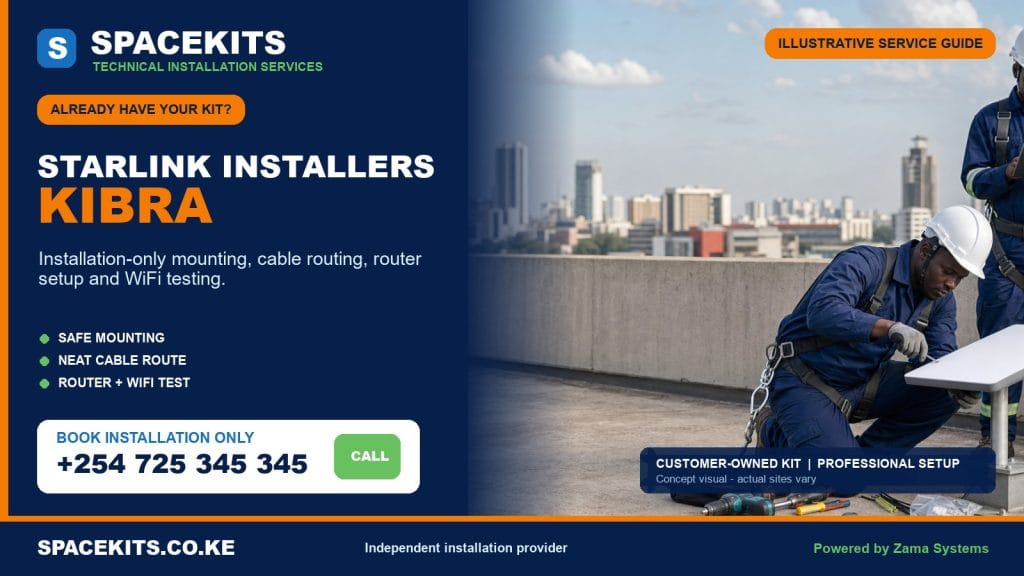
Starlink installation only Kibra is for a customer who has already purchased a genuine Starlink kit and now needs the physical work completed correctly. SpaceKits provides an installation-only service across Kibra Sub-County, including Laini Saba, Lindi, Makina, Woodley/Kenyatta Golf Course and Sarangombe wards. We assess the proposed mounting point, confirm that the supplied kit and accessories are suitable, mount the dish safely, route the original cable carefully, help with customer-led activation, position the router, test WiFi in the rooms that matter and explain the completed setup.
Talk to Spacekits
Need Starlink help for your home or business?
Talk to Spacekits before you buy or book installation. We help with kit supply, mounting, activation, router placement, WiFi coverage, and written quotes.
This is not a new-kit sales package disguised as labour. You remain the owner of the equipment and account. The quote separates installation labour from any missing mount, pole, fastener, weatherproof entry accessory, network cable, mesh unit or other material that your site genuinely requires. That clarity is especially important in Kibra, where an installation may involve anything from a compact corrugated-roof home or shared compound to a Woodley apartment, school, clinic, office, church or multi-room property around Jamhuri and Olympic.
Already Have the Kit? Book a Kibra Installation Assessment
Send SpaceKits your Kibra location pin, ward or estate, clear photos of the complete kit, a photo of the proposed roof or wall, the number of floors and the rooms that need WiFi. We will review the information before confirming the labour scope.
WhatsApp SpaceKits for Starlink installation only in Kibra: +254 725 345 345
What Installation Only Means
An installation-only booking begins after you have obtained the Starlink kit. It covers skilled site work and setup rather than the retail supply of the main kit. The installer checks the dish, router, power equipment and proprietary cable that you present, then compares them with the planned mounting and cable route. If the kit is complete and the site is ready, the work can proceed according to the agreed scope. If an essential part is missing or incompatible, SpaceKits explains the issue before drilling, cutting, climbing or promising a completed connection.
The service normally includes a practical obstruction review, selection of an appropriate position, installation of an agreed mount, secure dish placement, careful cable routing, connection of the supplied equipment, basic activation assistance while the customer controls the account, router placement, WiFi checks and a handover. Roof repairs, electrical rewiring, fabrication, civil work, large structured networks and the supply of extra hardware are not silently bundled into labour. They are either excluded or quoted separately after the requirement is understood.
Kibra Areas Covered by This Guide
The ward references in this guide follow the official Nairobi City electoral mapping published by the Independent Electoral and Boundaries Commission. Kibra comprises Laini Saba, Lindi, Makina, Woodley/Kenyatta Golf Course and Sarangombe wards. Customers may describe their location by an estate, road, landmark or building name rather than a ward, so an accurate pin remains the best way to plan a visit. SpaceKits can review enquiries from Olympic, Jamhuri, Woodley, Makina, Lindi, Laini Saba, Sarang’ombe, Ayany and nearby Kibra addresses.
Those names do not imply that every roof or building is the same. Woodley and Jamhuri may present apartment roofs, tiled maisonettes, institutions and planned estates. Other parts of Kibra may involve compact plots, closely spaced corrugated roofs, shared access or buildings where a safe cable route needs more discussion. A school, worship centre or clinic has different user and network requirements from a single home. The quotation must therefore be tied to the actual address, roof, access arrangement and expected users.
Who This Service Is For
This service suits a homeowner who bought a kit directly, a tenant who has written roof permission, a landlord connecting a management office, a small business adding a reliable link, a school improving administrative connectivity, a clinic that needs dependable online access or an organisation installing equipment donated or purchased elsewhere. It also helps a customer who transported a kit from another property and wants a fresh assessment before reuse. The installer should know whether the equipment is new, previously activated, transferred, refurbished or of uncertain history.
It is not a promise that every customer-supplied unit can be activated. Account ownership, service availability, transfer eligibility, subscription terms and hardware status remain subject to Starlink’s systems and policies. SpaceKits can assist with the physical setup and show you where to complete normal steps, but the customer should retain control of the email address, password, payment method and service account.
Send a Complete Kit Photo Before Booking
A useful first photo shows every item placed separately in good light: the dish, stand or base supplied with the kit, router, power supply or power cable, proprietary dish cable, plugs, adapters and any mount that you purchased. Include a clear photo of the product label or model information without publishing account credentials. Different kit generations use different connectors, power arrangements and compatible accessories. A pole, adapter or cable advertised for one model should not be assumed to fit another.
Also disclose damage, deep cable bends, crushed sections, bent connectors, missing covers, improvised joins, water exposure or previous repair attempts. A neat photograph can prevent a wasted visit. It allows the technician to identify obvious gaps and ask the right questions about the mounting plan. A photo cannot prove that electronics work internally, but it is an efficient compatibility screen before the team travels into Kibra.
Customer-Owned Kit Completeness Checklist
- The Starlink dish matches the router and power arrangement supplied for that kit generation.
- The original proprietary cable is present, undamaged and long enough for the proposed route.
- The router, power cable and any separate power supply are available.
- Connector ends are clean, straight and free from visible burning, corrosion or broken pins.
- The customer can access the email address and account intended for activation or transfer.
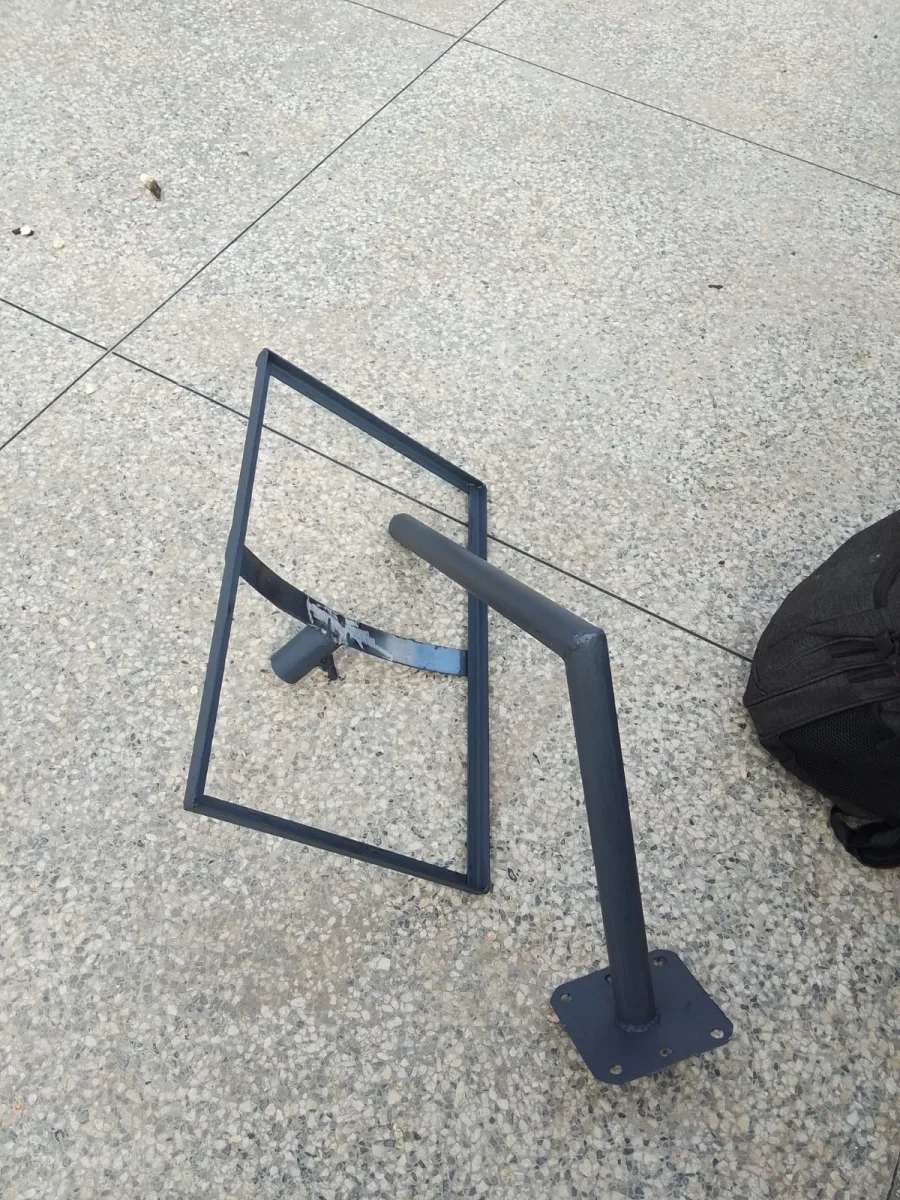
- A suitable mount, pole adapter or bracket is available, or the quote clearly adds one.
- The building owner or authorised manager has approved the mounting point and cable path.
- There is a safe, stable power point near the planned router position.
- The installer has been told which rooms, floors or offices require usable WiFi.
- Roof access can be provided safely at the agreed time.
If a checklist item is missing, the booking does not automatically fail. It means the requirement should be resolved before or during quotation. The installer may recommend a compatible accessory, a safer route or a separate network scope. SpaceKits does not represent an unverified part as compatible merely to win a labour job.
Compatibility Comes Before Drilling
Compatibility has three layers. First, the hardware items must work together. Second, the mount must suit both the dish model and the building surface. Third, the proposed layout must fit the available cable length and power position. A customer may have a complete kit but an unsuitable universal clamp. Another may have the correct dish and router but a damaged cable. A third may have everything required outdoors yet expect one router to cover multiple concrete buildings.
SpaceKits reviews these layers before permanent work. Where a point cannot be confirmed from photos, the technician checks it on site. No hole should be drilled simply because a bracket is present. The base material, edge distance, fastener type, roof condition, wind exposure, water flow and maintenance access all influence whether that bracket belongs there. This approach protects the customer’s building and avoids turning an installation-only visit into a rushed experiment.
What the Labour Scope Can Include
Site and obstruction assessment
The technician reviews the roof, wall, courtyard or pole options and checks for nearby buildings, trees, water tanks and other objects that may interrupt the dish’s view. The best point balances clear sky, safe access, secure fixing, acceptable cable distance and future maintenance. The easiest point to reach is not always the best signal position, while the tallest point is not automatically the safest.
Mounting the customer-owned dish
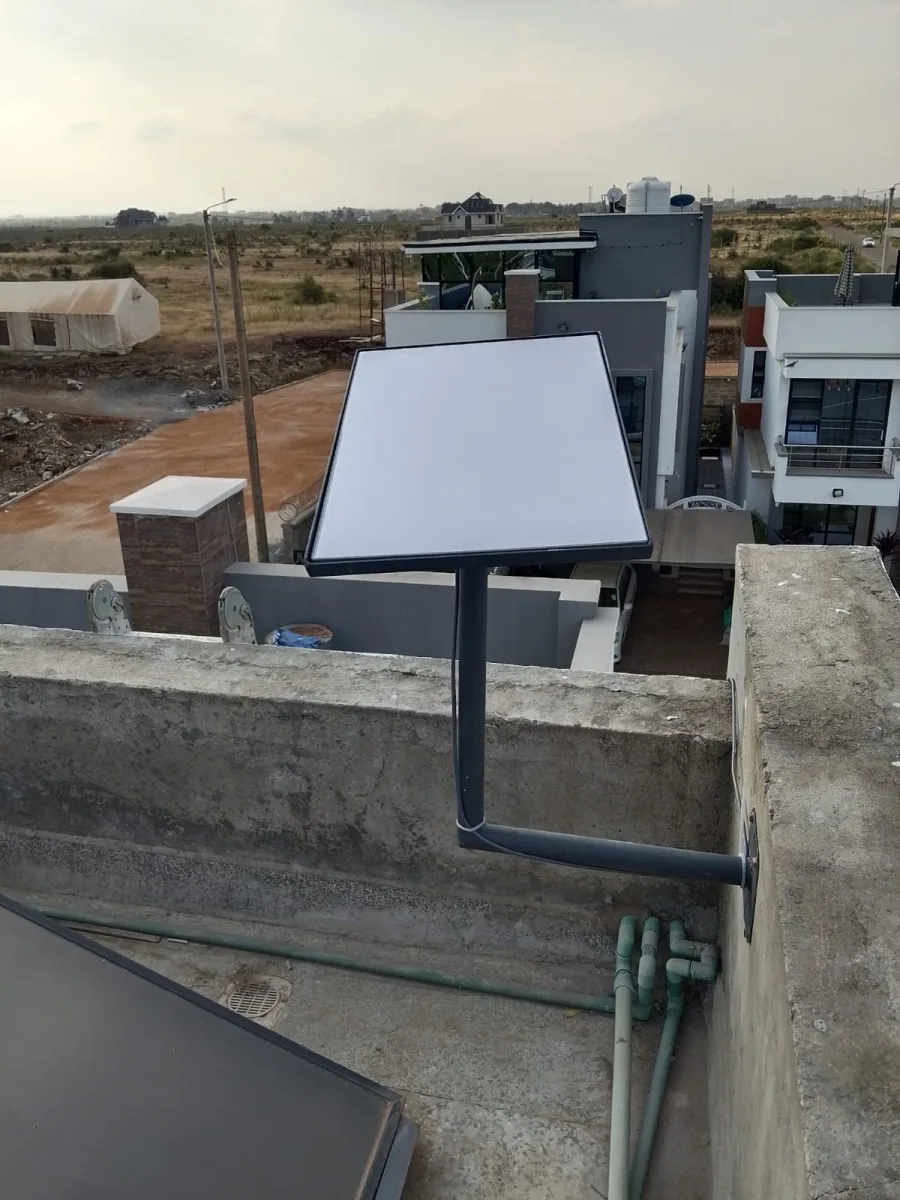
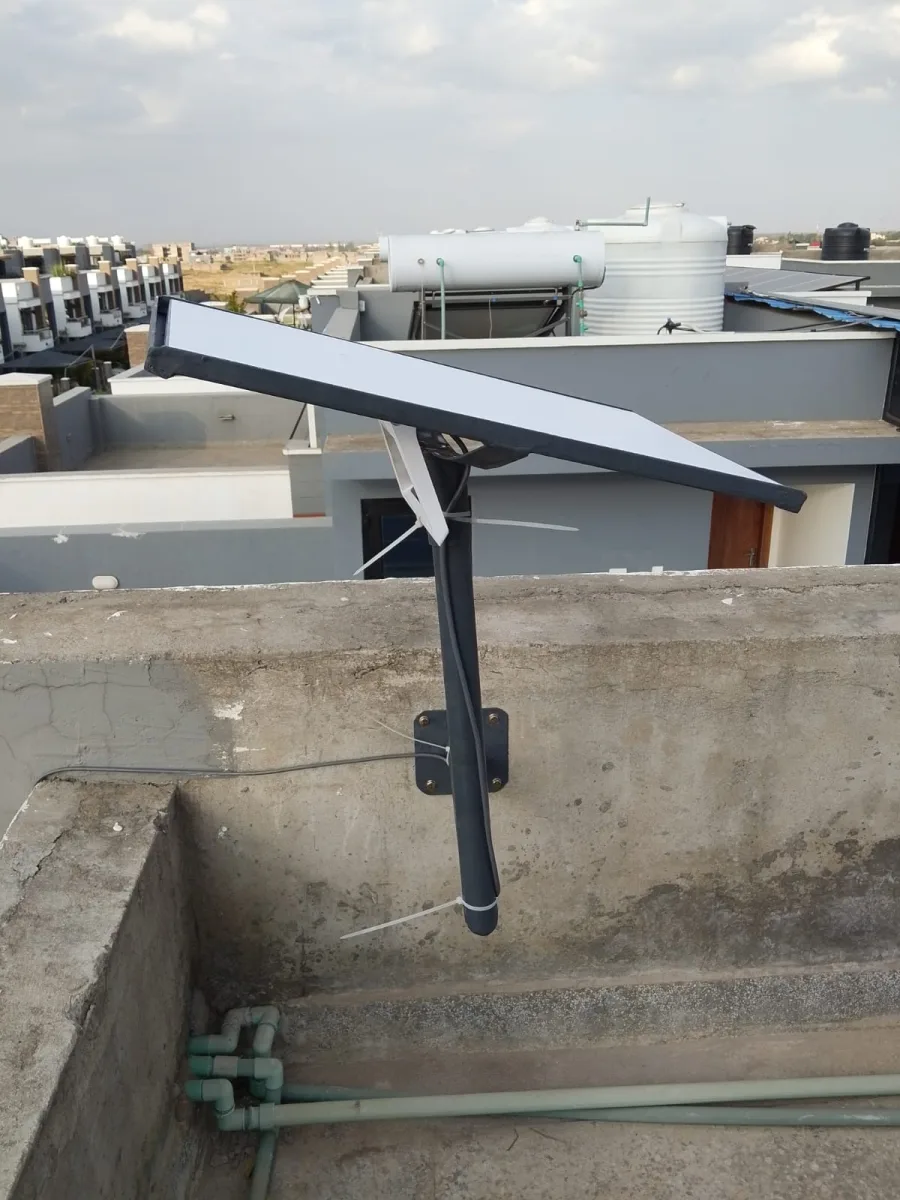
Once the position and suitable hardware are agreed, the installer secures the mount to an appropriate structural surface and seats the dish correctly. The method changes with concrete, masonry, timber, tile or metal roofing. SpaceKits does not treat a temporary ground base as a permanent rooftop mount unless the manufacturer designed the complete arrangement for that use and the site conditions support it.
Routing the proprietary cable
The cable route is planned to avoid sharp bends, crushing, standing water, exposed walkways, hot surfaces and unprotected entry points. In a shared Kibra compound, the route also needs protection from routine movement and unauthorised handling. Where an entry is created, the aim is a tidy, weather-conscious finish without pretending that installation labour includes major wall reconstruction or roof repair.
Router placement and basic activation support
The router should be placed around the users and rooms that matter, not hidden behind metal, deep inside a cabinet or at the far end of the building just because power is nearby. The customer signs in and retains the credentials. The technician can assist with normal connection steps, network naming and basic checks without taking ownership of the subscription.
WiFi testing and handover
Testing covers the satellite connection and practical indoor coverage. A strong result beside the router does not prove that an office, classroom or bedroom is served. SpaceKits checks agreed priority areas, explains any weak zones and records whether an additional mesh unit, wired access point or separate network design should be considered. The handover includes basic care, account-control and support guidance.
What Installation Labour Does Not Automatically Include
Installation labour does not automatically include a wall bracket, pole, mast, adapter, fasteners, conduit, trunking, extra network cable, switch, access point, mesh system, surge device, backup power system or replacement proprietary cable. It also does not include landlord approval, roof replacement, waterproofing an already leaking roof, repairing unsafe electrical wiring, removing hazardous materials, fabricating large steel structures or rebuilding a wall. If the job requires one of these items, it should be discussed and priced separately.
The boundary protects both sides. A customer receives a realistic description instead of a low labour figure that expands after work begins. The technician avoids using the wrong part or hiding a material cost inside an unexplained charge. If a minor compatible item is available and the customer approves it, the quote can show that line separately. Where specialist construction or electrical work is needed, SpaceKits may recommend that it be completed before the Starlink visit.
Faults, Locked Accounts and Warranty Boundaries
A technician can observe symptoms and test normal connections, but installation labour cannot turn defective equipment into working equipment. If a dish, router, power unit or cable supplied by the customer is faulty, the diagnosis and replacement path may involve the seller, previous owner or manufacturer. SpaceKits does not provide a manufacturer’s warranty on hardware it did not sell, and accepting an installation booking does not transfer that warranty responsibility to the installer.
The same boundary applies to accounts. A kit tied to another account, restricted from transfer, associated with unpaid obligations or unavailable for activation at the intended address may not become usable simply because it is mounted. Customers should resolve ownership and transfer questions through official channels. SpaceKits can stop the work at a sensible stage, document the observed condition and explain the physical work already completed. Any return visit should be agreed separately.
Kibra Site Survey Priorities
Kibra’s building density makes pre-installation planning valuable. Nearby roofs, upper floors, trees and water tanks can affect the available view. Compact compounds may offer few safe ladder positions. Some rooftops are shared, so the person booking the work may not have unilateral permission to drill or route a cable. The installer needs to know who controls access, whether a caretaker will be present and whether the cable crosses any common area.
Site photographs should show more than a small patch of roofing. Send wider views from ground level, the likely cable entry and the indoor router area. If safe roof photos cannot be taken, do not climb simply to prepare a quote. Explain the building type and let the technician assess access. A professional survey never asks an untrained customer to take an unnecessary height risk.
Installation Planning in Laini Saba and Lindi
Laini Saba and Lindi enquiries can involve compact residential buildings, small commercial premises, community facilities and shared compounds. The practical challenge is often finding a secure position that has useful sky visibility without putting the dish or cable in the path of daily activity. A mount may need to raise the dish above a nearby roof edge, but height should be added only through a stable, suitable system. A long improvised pole fixed to weak sheeting is not a professional shortcut.
Cable security matters as much as cable appearance. An exposed loop can be caught, pulled or damaged. The route should avoid sharp metal edges and should not block a doorway, stair or drainage path. If the building has several occupants, agree the path in advance. Indoors, the router position should serve the paying customer’s rooms rather than being selected solely around the outdoor entry point.
Installation Planning in Makina
Makina sites may include homes, shops, offices, schools and community organisations. A business may need connectivity for cloud systems, communication, CCTV viewing or point-of-sale support, while a household may prioritise study, streaming and remote work. Those uses influence the indoor network. The same satellite dish can feed very different user environments, so the booking should state the number of users, critical devices and busiest rooms.
Where several businesses or offices share a building, clarify whether the installation serves one tenant or a managed network. Sharing a password from one consumer router is not the same as designing a secure multi-user system. If guest access, staff separation, usage controls or wired devices are required, that networking work should be assessed as an additional scope rather than squeezed into basic installation labour.
Installation Planning in Woodley and Kenyatta Golf Course
Woodley/Kenyatta Golf Course ward can present planned-estate homes, apartments, offices, institutions and properties with tiled or concrete roofs. Access permissions, waterproofing and appearance may be prominent concerns. A building manager may require a named route, a defined fixing method and confirmation that common areas will be left tidy. Send those conditions before the visit so the installer arrives with the right plan.
Some larger homes and institutions have multiple wings, thick walls or detached rooms. The Starlink router may not cover the whole property from a convenient cable entry. In such cases, SpaceKits can identify the gap during assessment and discuss mesh or wired access points. The customer can still book the basic installation first, but expectations should be clear: a working internet link and whole-property WiFi are related yet separate outcomes.
Installation Planning in Sarangombe
Sarangombe includes varied residential and institutional settings around areas such as Olympic and parts of Ayany. A suitable design may need to account for multi-room homes, apartment blocks, schools, churches or busy compounds. Roof access and the movement of people below the work area should be controlled during installation. Tools and hardware must not be left where they can fall or create a hazard.
For a school or organisation, identify the rooms that require connectivity and who will administer the network after handover. A router in an open public area can be unplugged or reset. A locked cabinet may protect it but can weaken WiFi or trap heat if poorly chosen. The solution is a secure, ventilated location plus correctly planned access points where coverage must extend beyond that room.
Safe Mounting on Common Building Surfaces
Concrete and masonry can provide strong fixing points when sound material, appropriate anchors and safe edge distances are used. Corrugated metal roofing requires a method that avoids weak-sheet loading and unmanaged leaks. Tiled roofs need careful access and a mount that does not rely on cracking or crushing tiles. Timber elements must be checked for condition and structural value. A parapet can be useful, but its thickness and integrity still matter.
The installer also considers wind exposure and leverage. Adding height increases forces on the fixing point. A mount must remain serviceable, because the dish or cable may need inspection later. It should not force a future technician to step on an unsafe roof section. SpaceKits explains the proposed mounting approach and any site limitation before permanent work begins.
Roof Access and Worksite Safety
A confirmed booking assumes that safe access is possible. Rain, strong wind, unstable roofing, unsafe ladders, overhead electrical hazards or uncontrolled public movement can require postponement or a different method. The desire for same-day completion does not override safety. Customers should clear the working area, keep children and bystanders away, arrange authorised access and tell the technician about known weak roof sections.
SpaceKits may decline a mounting point that places people or property at unreasonable risk. That is not a refusal to help; it is part of professional installation. An alternative wall, pole position or future access arrangement may solve the problem. Where specialist height equipment or structural work is required, it should be identified as a separate need.
Clean Cable Routing in Dense Properties
The proprietary Starlink cable should not be cut, spliced or sharply folded to make a difficult route look easy. Connector size influences the entry point, and excess cable should be managed without tight coils or stress. External sections need support and protection. Internal sections should avoid door hinges, hot equipment, wet areas and places where furniture will crush them.
In a multi-tenant Kibra building, the route may pass through a corridor, stairwell or roof space controlled by another person. Obtain consent and agree how it will be protected. Conduit or trunking may be recommended where exposed cable is likely to be touched. Those materials are separate from the main kit unless listed in the quote. A clean route is a designed route, not merely a cable hidden wherever possible.
Router Placement for Kibra Homes and Workplaces
Router placement should reflect the actual floor plan. Central and elevated positions usually distribute WiFi better than a corner near the roof entry, but the exact choice depends on walls, metal, floors and power. Avoid enclosing the router behind dense materials or placing it beside equipment that creates heat or interference. Keep it where an authorised person can see indicators and restart it when proper support guidance calls for that step.
Tell the installer which devices are fixed and which move. A television, desktop, CCTV recorder or office printer may benefit from a wired link if the equipment supports it and compatible networking hardware is available. Phones and laptops need coverage where people actually work. The test plan should therefore list priority points rather than relying on one speed reading.
When Mesh or Wired Access Points Are Needed
Mesh can help distribute WiFi across rooms or floors, but it is not magic. Each node needs sensible placement and a strong connection to the rest of the network. Placing a wireless node inside an existing dead zone simply repeats a weak signal. Wired access points can provide more predictable performance in larger buildings, though they require compatible equipment and a planned cable route.
Basic Starlink installation only does not automatically include a whole-building WiFi project. SpaceKits can test the supplied router, identify weak areas and quote an extension separately. This separation is useful for a customer with a limited immediate goal: first establish a stable satellite link, then expand the indoor network based on measured needs.
Testing the Completed Installation
Handover testing checks that the dish is communicating, the router is online, the cable is seated properly and agreed priority areas have usable WiFi. The technician may review the system’s obstruction information after it has had enough time to collect data. Immediate tests are valuable, but some performance information develops over normal operation. Weather, network conditions, plan management, local obstructions and device capability can affect results.
SpaceKits does not promise a fixed internet speed that an independent installer cannot control. Instead, the team verifies the physical work, checks for obvious setup problems and records any coverage limitation found at handover. Customers should test with a suitable device and understand the difference between the satellite link, WiFi quality and the performance of a particular website or application.
Account Control and Digital Security
The customer should create or access the account using an email address and phone details they control. Do not give a permanent password to a casual third party. If assistance is required, enter sensitive information yourself and change any temporary credential after handover.
Apartment, Rental and Shared-Roof Approval
A tenant should obtain permission before permanent mounting or common-area cabling. The approval should identify the roof or wall area, access route, cable path and responsibility for later removal. Verbal permission from someone without authority can create conflict after the work is complete. Ask the landlord, caretaker or management office what documentation is required.
Shared roofs also need coordination. The dish should not obstruct maintenance routes, drainage, water equipment or another tenant’s installation. The cable should be identifiable without exposing account information. If roof access is restricted to certain hours or requires a caretaker, state that when booking so labour time is planned honestly.
Schools, Clinics, Churches and Community Organisations
Institutional connectivity should begin with a user plan. An administrative office may need email and cloud systems, a classroom may need controlled learning access, a clinic may rely on online records, and a church or community centre may support events and staff work. List critical rooms, expected concurrent users and existing network equipment. This helps distinguish a basic installation from a broader deployment.
SpaceKits can connect the customer-owned kit and assess integration, but security policies, content controls, complex firewall rules, managed switches and large access-point deployments require their own scope. The institution should designate an authorised contact for account control and handover. Avoid sharing one unrestricted password across an uncontrolled group merely because the first connection test succeeded.
How the Kibra Quotation Is Prepared
There is no honest fixed labour price for every Kibra building. The quote depends on the roof or wall, height, access, selected mount, cable path, required protection, kit completeness and whether extra networking is requested. SpaceKits asks for photos and a pin so the first estimate reflects the real site. If critical details cannot be confirmed remotely, a site assessment may be recommended.
The written scope should distinguish labour from materials and optional work. It should state what the customer supplies, what SpaceKits supplies, what must be ready before arrival and what happens if the kit proves defective or incomplete. This approach avoids invented online prices and reduces surprises on installation day.
How to Prepare Before the Installer Arrives
- Confirm that you control the kit and can access the intended account.
- Place every kit component together and photograph it clearly.
- Send the exact Kibra pin, building name, ward or estate and an accessible landmark.
- Provide wide photos of the building and proposed cable entry without climbing unsafely.
- Obtain written landlord or management approval where required.
- Arrange roof access and identify known weak or restricted areas.
- List the rooms, floors and devices that require connectivity.
- Confirm a safe power point and disclose any known electrical problem.
- Ask for a written labour and materials breakdown.
- Keep account credentials private and available for customer-led activation.
Why Use SpaceKits for an Own-Kit Installation?
Customers comparing Starlink installers Kibra need more than a person willing to drill holes. SpaceKits starts with the supplied equipment, the building and the intended users. We make kit completeness, accessory compatibility, site safety, cable protection, router position and testing part of the conversation. If something is missing or uncertain, we say so before it becomes an avoidable site problem.
SpaceKits is an independent installation and connectivity service provider. We are not affiliated with, endorsed by or officially authorised by Starlink or SpaceX. Product availability, account approval, subscriptions, service capacity, manufacturer support and official warranty decisions remain with the relevant seller or manufacturer. Our role is to provide a careful physical installation, clear scope and practical network handover.
Frequently Asked Questions
Can SpaceKits install a Starlink kit I bought somewhere else?
Yes. Send photos of every component, the model information, the Kibra location and the proposed building before booking. SpaceKits checks visible completeness and compatibility, then quotes installation labour and any required site materials separately. Hardware condition and account eligibility cannot be guaranteed from a photo.
Does installation-only labour include a mount?
Not automatically. If you already have a compatible and structurally suitable mount, it can be assessed for use. If the site needs a bracket, pole adapter, stand or additional fasteners, those items appear separately in the quotation. The installer will not use an unsuitable mount merely because it was supplied.
Can you install in a Kibra apartment?
Yes, where the dish can obtain a suitable view and the owner or building manager permits safe roof access, mounting and cable routing. Send the approval conditions and building photos before confirming the appointment. Whole-building or shared-user networks require a broader scope than one apartment connection.
What if my Starlink cable is damaged?
Disclose the damage before the visit and send close photographs without forcing the connector. A damaged proprietary cable may need replacement through an appropriate source. Installation labour does not include cable repair by unsafe splicing, and SpaceKits cannot provide a manufacturer warranty for customer-supplied equipment.
Will you activate the account for me?
SpaceKits can guide normal connection and activation steps, but the customer should control the email, password, payment method and subscription. A locked, non-transferable or otherwise ineligible kit may require resolution through official Starlink support before it can operate at the new location.
Can one Starlink router cover every room?
Not always. Concrete walls, metal, distance and multiple floors can produce weak zones. The installer tests agreed priority areas and can recommend a separately quoted mesh or wired access-point solution. Basic dish installation and whole-property WiFi design are distinct scopes.
Do you promise a particular speed?
No independent installer can honestly guarantee a fixed internet speed. SpaceKits verifies mounting, cabling, connection and local WiFi conditions. Actual performance can vary with obstructions, service conditions, plan management, weather, device capability and the application being used.
Can the work be completed on the same day?
Completion depends on a complete compatible kit, safe access, suitable weather, permission, available mounting materials and an activation-ready account. SpaceKits confirms scheduling after reviewing the location and photos. We do not trade safety or correct mounting for an unsupported same-day promise.
Who handles a faulty dish or router?
The seller, previous owner or manufacturer normally handles hardware warranty or replacement according to their terms. SpaceKits can document observed symptoms and verify normal installation connections, but installation labour does not make us the warrantor of equipment purchased elsewhere.
What should I send on WhatsApp for a quote?
Send the exact Kibra pin, ward or estate, building type, roof and wall photos, all kit components, model details, number of floors, priority WiFi rooms, account status and preferred date. Do not send passwords or payment credentials. Clear information produces a more accurate labour scope.
Related Nairobi Installation-Only Guides
Request Starlink Installation Only in Kibra
Already have the dish, router and cable? Send the complete-kit photos, Kibra pin, building and roof photos, access details and rooms that need WiFi. SpaceKits will review the installation scope and identify missing materials before the visit.
WhatsApp +254 725 345 345 to request a Kibra own-kit installation quote
Need Starlink Installation or Network Optimization?
We help homes, offices, apartments, and businesses with Starlink installation, WiFi coverage improvement, and professional setup in Kenya.
Request Installation Chat on WhatsApp