
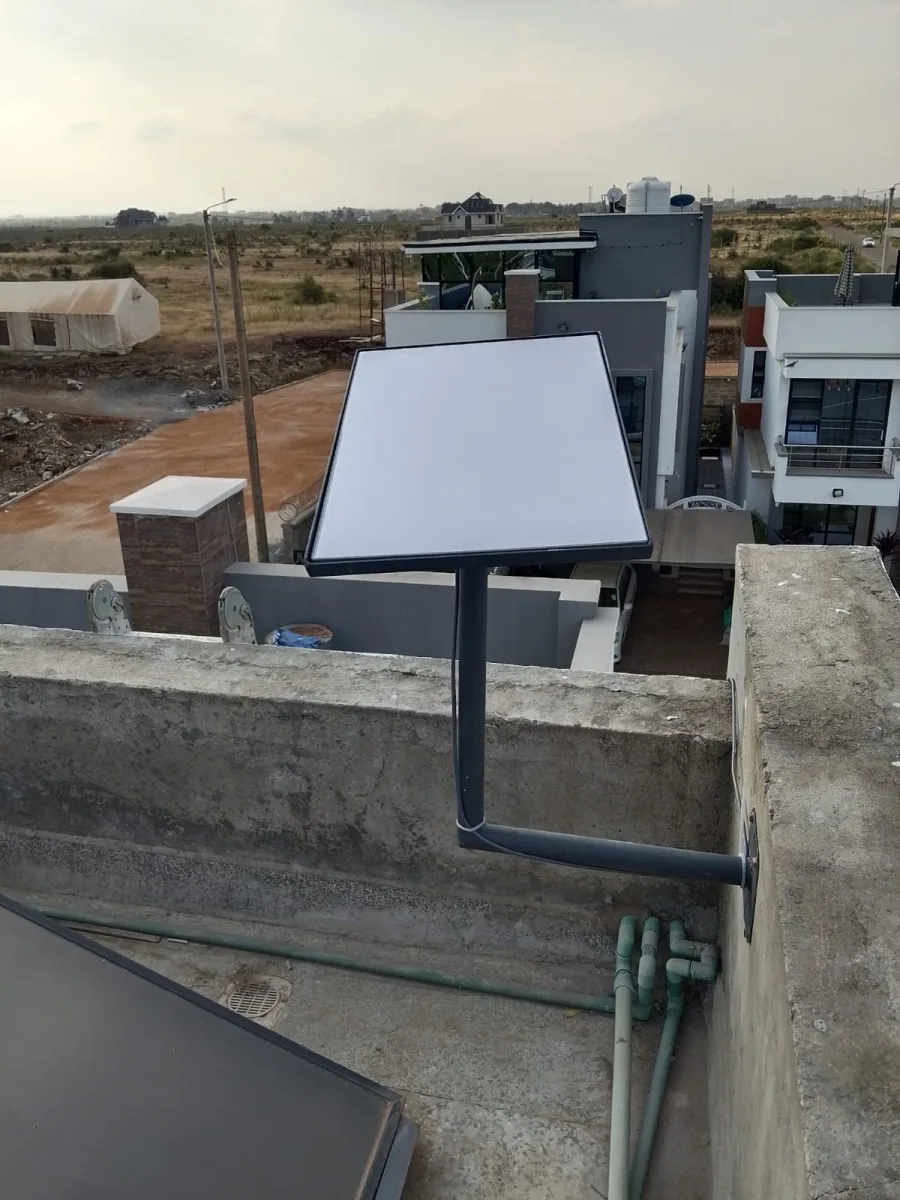
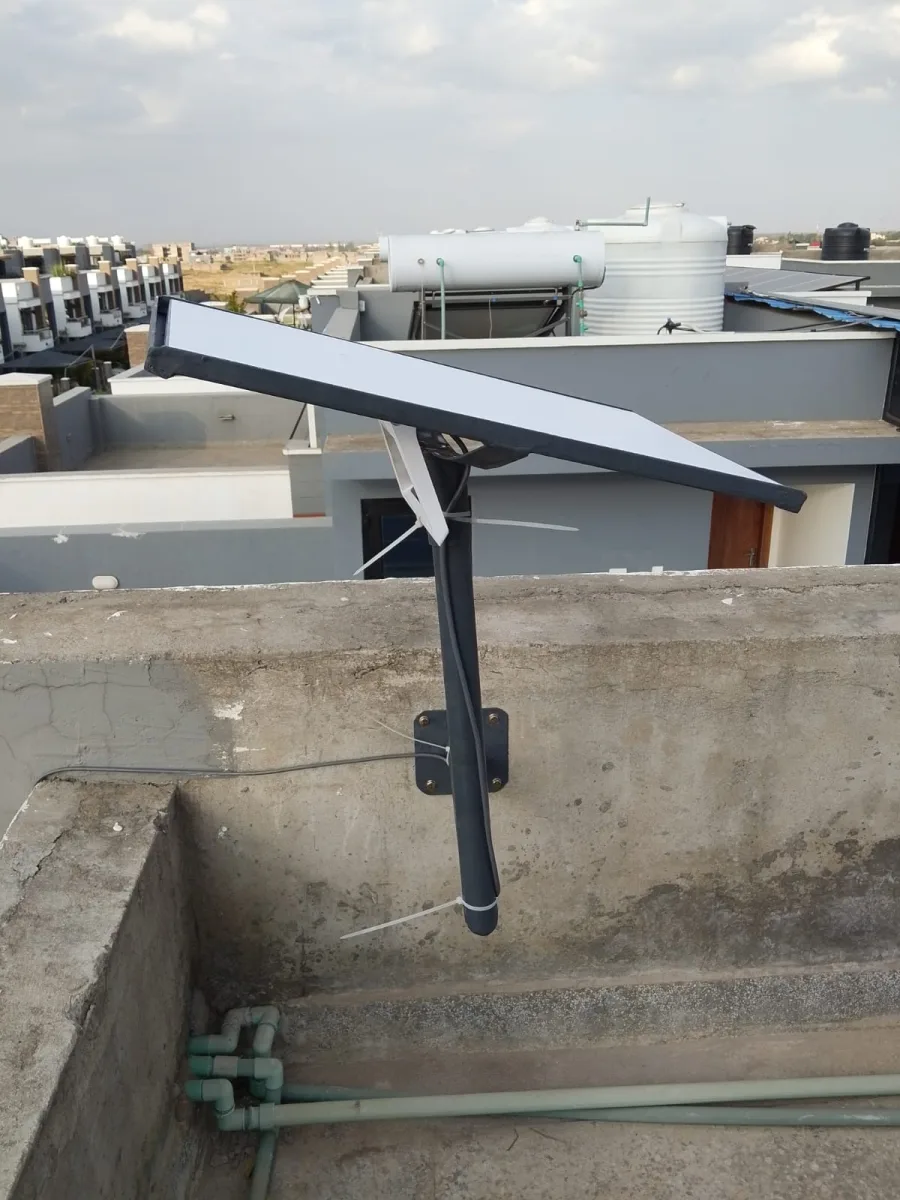
Need Starlink Installation or Network Optimization?
We help homes, offices, apartments, and businesses with Starlink installation, WiFi coverage improvement, and professional setup in Kenya.
Request Installation Chat on WhatsApp
Is your internet fast when you are sitting next to the router but frustratingly slow in your bedroom, upstairs, kitchen, balcony, home office, servant quarters or outside the house?
Talk to Spacekits
Need Starlink help for your home or business?
Talk to Spacekits before you buy or book installation. We help with kit supply, mounting, activation, router placement, WiFi coverage, and written quotes.
You are not alone.
One of the most common home internet problems in Kenya is not actually slow internet—it is poor WiFi coverage inside the property.
You may have a fast fibre, Starlink, 5G or other broadband connection coming into your home, but if your router cannot distribute that connection properly throughout the building, some rooms will still experience weak signals, buffering, dropped video calls and complete WiFi dead zones.
Fortunately, this problem can be fixed.
At SpaceKits Kenya, we help homeowners identify WiFi dead zones and design practical solutions using better router placement, mesh WiFi systems, indoor access points, outdoor access points, Ethernet cabling and professional WiFi network planning.
If your WiFi is not reaching all rooms, this guide explains what causes the problem and the best ways to fix it.
What Is a WiFi Dead Zone?
A WiFi dead zone is an area of your house where the wireless signal from your router becomes extremely weak or disappears completely.
You may notice that your phone shows four WiFi bars in the sitting room but only one bar—or none at all—when you enter a particular bedroom.
Other signs of WiFi dead zones include:
- Videos buffering in particular rooms
- WhatsApp calls disconnecting
- Zoom or Google Meet calls freezing
- Smart TVs losing internet
- Slow downloads upstairs
- CCTV cameras frequently going offline
- Phones switching from WiFi to mobile data
- WiFi disappearing outside the main house
- Internet working near the router but not in bedrooms
- Smart home devices randomly disconnecting
- Gaming latency increasing in distant rooms
These problems usually indicate a WiFi coverage issue, rather than a problem with the internet connection itself.
Before changing your ISP or buying a faster internet package, it is therefore important to determine whether your actual problem is internet speed or WiFi coverage.
Why Is My WiFi Not Reaching All Rooms?
There are several reasons why WiFi may fail to cover your entire home.
1. Your Router Is in the Wrong Position
Router placement is one of the biggest causes of poor WiFi coverage.
Many homes have routers installed wherever the internet cable enters the building rather than where the router can provide the best wireless coverage.
For example, your router may be located:
- In one corner of the house
- Behind a television
- Inside a cabinet
- On the floor
- Near thick concrete walls
- In the garage
- Inside a utility room
- Next to electrical equipment
WiFi signals spread outward from the router. If the router starts from one extreme end of your house, the signal has to travel through many walls before reaching rooms on the opposite side.
A centrally positioned router generally has a better chance of covering more rooms.
However, large houses often need more than one wireless access point.
2. Thick Concrete and Stone Walls Block WiFi
Building materials have a major effect on WiFi performance.
This is especially important in Kenya, where many residential properties use reinforced concrete, stone and masonry walls.
A wireless signal that works perfectly through an open doorway can become significantly weaker after travelling through several solid walls.
Common obstacles include:
- Reinforced concrete
- Stone walls
- Metal doors
- Large mirrors
- Tinted windows
- Steel structures
- Concrete floors
- Water tanks
If your router is downstairs while your bedroom is upstairs behind several concrete walls, simply buying a more expensive router may not completely solve the problem.
You may need strategically positioned WiFi access points or a mesh WiFi system.
3. Your House Is Too Large for One Router
A single router may work well in a small apartment but struggle in a:
- Large bungalow
- Maisonette
- Duplex
- Multi-storey home
- Villa
- Large apartment
- Compound with several buildings
- Home with detached guest rooms
- Home with servant quarters
- Farmhouse
The larger the property, the more difficult it becomes for a single wireless router to reach every area effectively.
This is where professional WiFi extension becomes useful.
SpaceKits can assess your house and recommend whether you need mesh WiFi, wired access points or another network design.
Learn more about our WiFi extension and mesh setup services.
4. Your Router Is Downstairs but You Need WiFi Upstairs
Multi-storey homes frequently experience this problem.
Your WiFi might be excellent downstairs while upstairs bedrooms have poor connectivity.
Concrete floor slabs can greatly reduce the signal travelling between floors.
Instead of attempting to force one router to serve the entire house, a better solution may be installing another access point upstairs.
With proper configuration, devices can connect to the access point providing the strongest signal.
This provides much more reliable coverage than depending solely on a router downstairs.
5. Too Many Devices Are Using the Network
Modern homes can have dozens of internet-connected devices.
These may include:
- Smartphones
- Laptops
- Tablets
- Smart TVs
- CCTV cameras
- Gaming consoles
- Smart speakers
- WiFi printers
- Smart bulbs
- Doorbells
- Home automation equipment
- Security systems
A basic router that was initially serving five devices may struggle once the household grows to 20, 30 or more connected devices.
Network planning should therefore consider both coverage and capacity.
Simply having a WiFi signal does not automatically mean the network can handle all the devices using it.
6. WiFi Interference from Nearby Networks
If you live in an apartment, gated estate or densely populated area such as Nairobi, Kiambu, Ruiru, Syokimau, Kilimani, Kileleshwa, Westlands or similar locations, you may have many neighbouring WiFi networks operating around you.
Wireless networks can compete for available radio channels.
That can result in:
- Unstable speeds
- High latency
- Frequent disconnections
- Poor streaming performance
- Weak performance during busy hours
Professional network configuration can help determine better WiFi placement, channels and access point positioning.
7. Your WiFi Extender Is Positioned Incorrectly
A common mistake is placing a WiFi extender directly inside the dead zone.
The extender then receives an already weak signal and repeats that weak connection.
For example:
Router → very weak signal → extender → bedroom
The bedroom may display stronger WiFi bars, but the underlying connection between the router and extender remains poor.
WiFi extenders should generally be placed where they can still receive a useful signal from the main network.
For larger properties, however, mesh WiFi or wired access points are usually worth considering rather than adding multiple basic repeaters.
How to Fix WiFi Dead Zones in Your Home
There is no single solution suitable for every house.
The correct solution depends on:
- Property size
- Number of floors
- Wall construction
- Router location
- Number of users
- Number of connected devices
- Areas requiring coverage
- Available Ethernet cabling
- Internet connection type
- Budget
Here are the most effective options.
Solution 1: Reposition Your WiFi Router
Start with the simplest solution.
Move your router to a more central and open location if possible.
Avoid putting your router:
- Inside cabinets
- Behind televisions
- Under furniture
- On the floor
- In corners
- Inside metal cabinets
- Directly next to large appliances
A higher, open and central position can dramatically improve wireless coverage in some homes.
This is particularly useful if your house is relatively small and the current router location is simply poor.
However, router repositioning cannot overcome every structural limitation.
If your home has several floors, thick concrete walls or distant rooms, additional access points may still be necessary.
Solution 2: Install Mesh WiFi
A mesh WiFi system uses multiple WiFi nodes positioned around your home to create broader wireless coverage.
Instead of relying on one router trying to reach the entire property, several coordinated WiFi points cover different sections of the house.
For example:
Main Router → Mesh Node 1 → Mesh Node 2
A properly designed mesh network can cover:
- Sitting rooms
- Bedrooms
- Upstairs areas
- Home offices
- Kitchens
- Balconies
- Guest rooms
- Entertainment rooms
- Home gyms
- Outdoor sitting areas
Mesh WiFi is particularly suitable for larger homes where seamless WiFi roaming is important.
You can walk from your sitting room into your bedroom while remaining connected to the same network.
Is Mesh WiFi Better Than a WiFi Extender?
In many larger homes, mesh WiFi provides a better overall experience than a basic WiFi repeater.
Mesh systems are designed to work as a coordinated network rather than simply repeating a wireless signal.
However, mesh WiFi still needs good planning.
A mesh node placed too far from another node can suffer from the same weak-backhaul problem as an extender.
Where possible, wired Ethernet backhaul can provide an even stronger connection between network points.
SpaceKits can evaluate whether wireless mesh or wired access points make more sense for your property.
Learn more about professional WiFi extension and mesh setup in Kenya.
Solution 3: Install Wired WiFi Access Points
For homes where reliable performance is important, professionally installed WiFi access points can be one of the best solutions.
An Ethernet cable connects each access point back to the main router or network switch.
For example:
Internet → Router → Network Switch → Access Points
You could have:
- Access Point 1 – Sitting room
- Access Point 2 – Upstairs
- Access Point 3 – Home office
- Access Point 4 – Outdoor area
Because each access point has a wired connection to the main network, performance can be more predictable than relying entirely on wireless repeaters.
Wired access points are especially useful for:
- Large houses
- Multi-storey buildings
- High-speed internet connections
- Home offices
- CCTV-heavy properties
- Smart homes
- Airbnbs
- Guest houses
- Offices
- Schools
Solution 4: Extend WiFi Outside Your House
Sometimes indoor WiFi coverage is good, but the signal disappears immediately after stepping outside.
This can affect people who need internet in:
- Gardens
- Gazebos
- Swimming pool areas
- Parking areas
- Security gates
- Workshops
- Outdoor kitchens
- Staff quarters
- Guest houses
- Farm compounds
An outdoor WiFi access point can be installed to provide coverage beyond the main building.
Outdoor access points are designed for this purpose and can provide a much better solution than trying to force an indoor router to cover an entire compound.
SpaceKits can assess the property and determine the appropriate position for outdoor WiFi equipment.
Solution 5: Connect Your Main House to a Guest House
Another common request is:
“How can I extend WiFi from my main house to another building?”
For example:
- Main house to guest house
- Main house to SQ
- House to gate
- House to workshop
- House to office
- Farmhouse to store
- Lodge reception to cottages
Different methods can be used depending on the distance and building layout.
Possible options include:
Ethernet Cable
If the buildings are relatively close and cabling is practical, an Ethernet connection may be installed between them.
Fibre Connection
For some larger properties or longer distances, fibre networking may be appropriate.
Point-to-Point Wireless Link
Where running a cable is difficult, two outdoor wireless devices can create a dedicated connection between buildings.
The second building can then have its own WiFi access point.
The correct solution should be chosen after considering distance, line of sight, power availability and required speed.
Solution 6: Carry Out a WiFi Heatmap Survey
For larger or complicated properties, guessing where to install access points can lead to unnecessary equipment and poor results.
A WiFi heatmap survey helps identify areas where wireless coverage is strong and where it becomes weak.
A network survey can help assess:
- Current router coverage
- WiFi dead zones
- Signal strength
- Wall interference
- Access point placement
- Outdoor coverage
- Network capacity requirements
Read our guide to WiFi heatmap surveys in Kenya.
This is especially useful for:
- Large homes
- Offices
- Hotels
- Schools
- Hospitals
- Apartment buildings
- Warehouses
- Lodges
- Multi-floor buildings
Should I Buy a WiFi Booster?
A WiFi booster can sometimes improve coverage, but it should not automatically be your first solution.
A cheap repeater may be sufficient if:
- The dead zone is small
- The router signal is still reasonable near the extender
- Only basic browsing is required
- There are few connected devices
However, a basic booster may disappoint if you have:
- Several floors
- Thick concrete walls
- Many rooms
- Many users
- High-speed internet
- Smart TVs
- CCTV cameras
- Gaming systems
- Home offices
- Multiple buildings
- Large outdoor areas
Instead of purchasing several random WiFi extenders, it may be cheaper in the long term to design the network correctly from the beginning.
Why Full WiFi Bars Can Still Mean Slow Internet
Seeing full WiFi bars does not always mean you have a fast internet connection.
The WiFi icon mainly represents the wireless connection between your device and the access point.
You could have a strong connection to an extender while the extender itself has a weak connection to the main router.
This is why customers sometimes say:
“My phone shows full WiFi but the internet is still slow.”
The entire connection path must be considered.
For example:
Internet → Router → Mesh/Access Point → Your Device
Every part of this chain affects performance.
Starlink Is Fast Near the Router but Slow in Bedrooms
This is another issue we regularly see with home Starlink installations.
Your Starlink dish may be receiving a good connection while the router cannot adequately cover the whole house.
This means the problem may not be Starlink itself.
The issue could simply be the local WiFi network.
If Starlink performs well when you stand near the router but becomes slow in distant rooms, consider:
- Better router placement
- Mesh WiFi
- Additional access points
- Ethernet cabling
- Outdoor WiFi
- Professional WiFi coverage assessment
SpaceKits provides dedicated Starlink WiFi extension and mesh setup in Kenya.
You can also read our Starlink repair and troubleshooting guide if you are unsure whether the problem is Starlink itself or your indoor WiFi network.
WiFi Solutions for Multi-Storey Homes
If you have a two-storey, three-storey or larger home, placing one router downstairs and expecting perfect WiFi everywhere may not produce the best result.
A better design could include:
Ground Floor: Main router/access point
First Floor: Additional WiFi access point
Second Floor: Additional WiFi access point
Outdoor Area: Outdoor access point
All access points can be configured to provide coordinated wireless coverage across the property.
This makes it easier for people to use WiFi in bedrooms, offices and entertainment areas without constantly changing networks.
WiFi for Home Offices
Working from home makes proper WiFi coverage more important than ever.
If your office is located in a bedroom, upstairs room, converted garage or separate building, weak WiFi can affect:
- Zoom meetings
- Google Meet
- Microsoft Teams
- Cloud applications
- VPN connections
- File uploads
- Software development
- Online classes
- VoIP calls
For important work areas, a wired Ethernet connection or professionally installed WiFi access point may be preferable to depending on a basic extender.
WiFi for CCTV Cameras Around Your Home
WiFi-powered CCTV cameras can also expose coverage problems.
A camera installed at the gate, back of the building or outside wall may disconnect because the indoor router signal is too weak.
Professional WiFi planning can extend network coverage to areas where CCTV cameras, intercoms and smart security equipment operate.
Where possible, wired networking or dedicated outdoor access points may provide better reliability.
How Many WiFi Access Points Does My House Need?
There is no fixed answer.
One large house may require two access points while another house of similar size may require four.
The number depends on:
- Floor plan
- Construction materials
- Number of floors
- Room arrangement
- Router position
- Number of users
- Device density
- Required speeds
- Outdoor areas
- Internet applications
This is why WiFi installation should ideally begin with understanding the property instead of simply deciding to purchase a particular number of boosters.
How Much Does WiFi Extension Cost in Kenya?
WiFi extension costs vary depending on the solution required.
Factors that affect the quotation include:
- Number of access points
- Mesh system selected
- Property size
- Ethernet cable requirements
- Outdoor access points
- Network switches
- PoE equipment
- Installation labour
- Number of floors
- Cable routing difficulty
- Distance between buildings
- Network configuration
A small home requiring one additional WiFi point will naturally cost less than a large maisonette requiring multiple access points and outdoor coverage.
For a deeper breakdown, read our guide on WiFi installation prices in Kenya.
Professional Home WiFi Installation in Nairobi and Kenya
SpaceKits provides WiFi network solutions for customers who need stronger and more reliable coverage.
We can help with:
- WiFi dead zone assessment
- Router repositioning
- WiFi extension
- Mesh WiFi installation
- Indoor WiFi access points
- Outdoor WiFi access points
- Ethernet cabling
- Wired backhaul
- WiFi heatmap surveys
- Starlink WiFi extension
- Home network optimization
- Guest WiFi
- Multi-building WiFi
- Network troubleshooting
We support homes, offices, apartments, lodges, schools, farms and other properties across Kenya.
Areas Where You May Need WiFi Extension
WiFi extension is useful anywhere the main router cannot adequately cover the required space.
Examples include:
Bedrooms
If the router is in the sitting room and bedrooms have poor coverage, an additional network point can improve the signal.
Upstairs Rooms
Multi-storey houses may need an access point on each floor.
Home Offices
Reliable WiFi or wired networking can improve video calls and cloud-based work.
Servant Quarters
WiFi can be extended from the main house depending on the distance and property layout.
Guest Houses
A separate building can be connected to the main internet connection.
Balconies and Rooftops
Outdoor access points may provide better coverage.
Gardens
Outdoor WiFi can extend connectivity into recreational areas.
Security Gates
Point-to-point or outdoor networking can help connect cameras, intercoms or internet users near the gate.
Garages and Workshops
WiFi can be extended to work areas outside the main living space.
How SpaceKits Fixes Home WiFi Dead Zones
A professional WiFi improvement project typically follows several steps.
Step 1: Understand the Problem
We identify the rooms or areas where connectivity is poor.
For example:
- Sitting room – good
- Kitchen – good
- Master bedroom – weak
- Upstairs bedroom – no signal
- Balcony – no signal
- SQ – no signal
Step 2: Check Router Position
We determine whether router relocation could improve overall coverage.
Step 3: Understand the Building
We consider walls, floors, distances and obstacles affecting wireless signals.
Step 4: Choose the Right Technology
The solution may include:
- Router repositioning
- Mesh WiFi
- Wired access points
- Outdoor access points
- Ethernet cabling
- Point-to-point wireless links
Step 5: Install and Configure
Equipment is positioned and configured according to the planned network layout.
Step 6: Test the Rooms That Matter
WiFi should be tested where people actually use it—not only beside the router.
That includes bedrooms, offices, TVs, upstairs rooms and outdoor areas where coverage is required.
Common Home WiFi Mistakes to Avoid
Buying Several Cheap Extenders
Adding multiple repeaters without planning can create an unreliable network.
Hiding the Router
Routers should not be buried inside cabinets simply because cables look untidy.
Installing the Router at One Extreme End of the House
Central placement can often improve coverage.
Assuming Faster Internet Fixes WiFi Coverage
Upgrading from a 50 Mbps package to a 200 Mbps package will not automatically make a dead zone disappear.
Ignoring Ethernet
Wireless networking is convenient, but Ethernet remains extremely useful for access points, TVs, computers and other fixed devices.
Installing Access Points Too Close Together
More WiFi equipment does not automatically mean better WiFi.
Proper positioning and configuration matter.
Frequently Asked Questions About WiFi Dead Zones
Why does my WiFi work in the sitting room but not the bedroom?
The bedroom may be farther from the router or separated by several walls. Router repositioning, mesh WiFi or an additional access point can improve coverage.
How do I extend WiFi to another room?
Depending on your house, you can use better router placement, a mesh WiFi node, a wireless extender or a wired WiFi access point.
Can I extend WiFi upstairs?
Yes. Multi-storey houses can use mesh WiFi or an additional access point upstairs.
Can WiFi be extended outside my house?
Yes. Outdoor wireless access points can provide connectivity to gardens, parking areas, gates, workshops and other outdoor sections.
Can I extend WiFi to a guest house?
Yes. Depending on the distance, the buildings can be connected using Ethernet, fibre or a point-to-point wireless link before installing WiFi in the second building.
Is mesh WiFi better than an extender?
Mesh WiFi can provide better coordinated coverage across larger homes, while a basic extender may be sufficient for one small weak area. Building layout and performance requirements should determine the solution.
Why is my Starlink fast near the router but slow in another room?
The Starlink internet connection may be working correctly while your indoor WiFi signal is weak. Mesh WiFi, access points or better router placement may solve the problem.
Can SpaceKits check my home’s WiFi coverage?
Yes. SpaceKits provides WiFi coverage planning, WiFi extension, mesh setup, access point installation and network troubleshooting for homes and businesses.
Do I need to replace my current router?
Not necessarily. Sometimes the existing router can remain in place while additional access points or mesh equipment are installed.
How many mesh WiFi units do I need?
It depends on your property size, walls, floors, node placement and required coverage. A site assessment is preferable to guessing.
Stop Living With WiFi Dead Zones
You should not have to stand next to your router every time you need a stable video call.
You should not have to move from your bedroom to the sitting room just because the WiFi disappears.
And you should not automatically buy a new internet connection simply because some rooms have poor coverage.
If your internet works well near the router but fails in other areas, you probably need to improve your home WiFi network design.
SpaceKits can help you extend WiFi coverage to:
- Bedrooms
- Upstairs rooms
- Home offices
- Kitchens
- Balconies
- Gardens
- Guest houses
- Servant quarters
- Garages
- Security gates
- Outdoor entertainment areas
Our solutions can include mesh WiFi, indoor and outdoor access points, Ethernet cabling, router optimization and professional WiFi coverage planning.
Need WiFi in Every Room? Contact SpaceKits Kenya
If your WiFi is not reaching all rooms, send SpaceKits your location and tell us which areas have weak or no WiFi.
For a faster assessment, share:
- Your location
- Type of property
- Number of floors
- Approximate number of rooms
- Where the router is currently installed
- Rooms with weak WiFi
- Whether you need outdoor coverage
- Whether you use Starlink, fibre, 5G or another internet connection
Call/WhatsApp: +254 725 345 345
Website: https://spacekits.co.ke
For professional WiFi extension, visit:
https://spacekits.co.ke/starlink-wifi-extension-mesh-setup-kenya
For WiFi coverage assessment:
https://spacekits.co.ke/blog/wifi-heatmap-survey-kenya/
For WiFi installation cost guidance:
https://spacekits.co.ke/blog/wifi-installation-price-kenya/
SpaceKits helps homes and businesses across Kenya turn weak, unreliable WiFi into properly planned connectivity that reaches the places where people actually need to use the internet.
Need Starlink Installation or Network Optimization?
We help homes, offices, apartments, and businesses with Starlink installation, WiFi coverage improvement, and professional setup in Kenya.
Request Installation Chat on WhatsApp