
Need Starlink Installation or Network Optimization?
We help homes, offices, apartments, and businesses with Starlink installation, WiFi coverage improvement, and professional setup in Kenya.
Request Installation Chat on WhatsAppStarlink installers in Karen should begin with a map of the places that need connectivity. A property may contain a main house, detached office, guest cottage, staff area and garden spaces, yet the initial enquiry may simply ask for home WiFi. The dish supplies an internet connection at one point; reaching the places people use requires a separate local-network plan suited to the property.
Talk to Spacekits
Need Starlink help for your home or business?
Talk to Spacekits before you buy or book installation. We help with kit supply, mounting, activation, router placement, WiFi coverage, and written quotes.
This guide is for owners and authorised managers planning a Starlink installation across a Karen compound. It focuses on practical decisions about buildings, trees, routes, power, guest access and ongoing support. The scenarios are examples for planning, not claims that SpaceKits has completed work at a named property. An exact pin, site assessment and written scope are needed before promising a particular arrangement or installation date.
Use the eighteen checks below when comparing Starlink installers in Karen. Start with the essential activities, then decide which areas should be included in the first phase. SpaceKits can assess mounting and network requirements and prepare a proposal. Hardware suitability, provider availability, account authority and any specialist electrical or building work should each have a clear owner. That approach makes a large-property installation easier to budget, test and maintain after the team leaves.
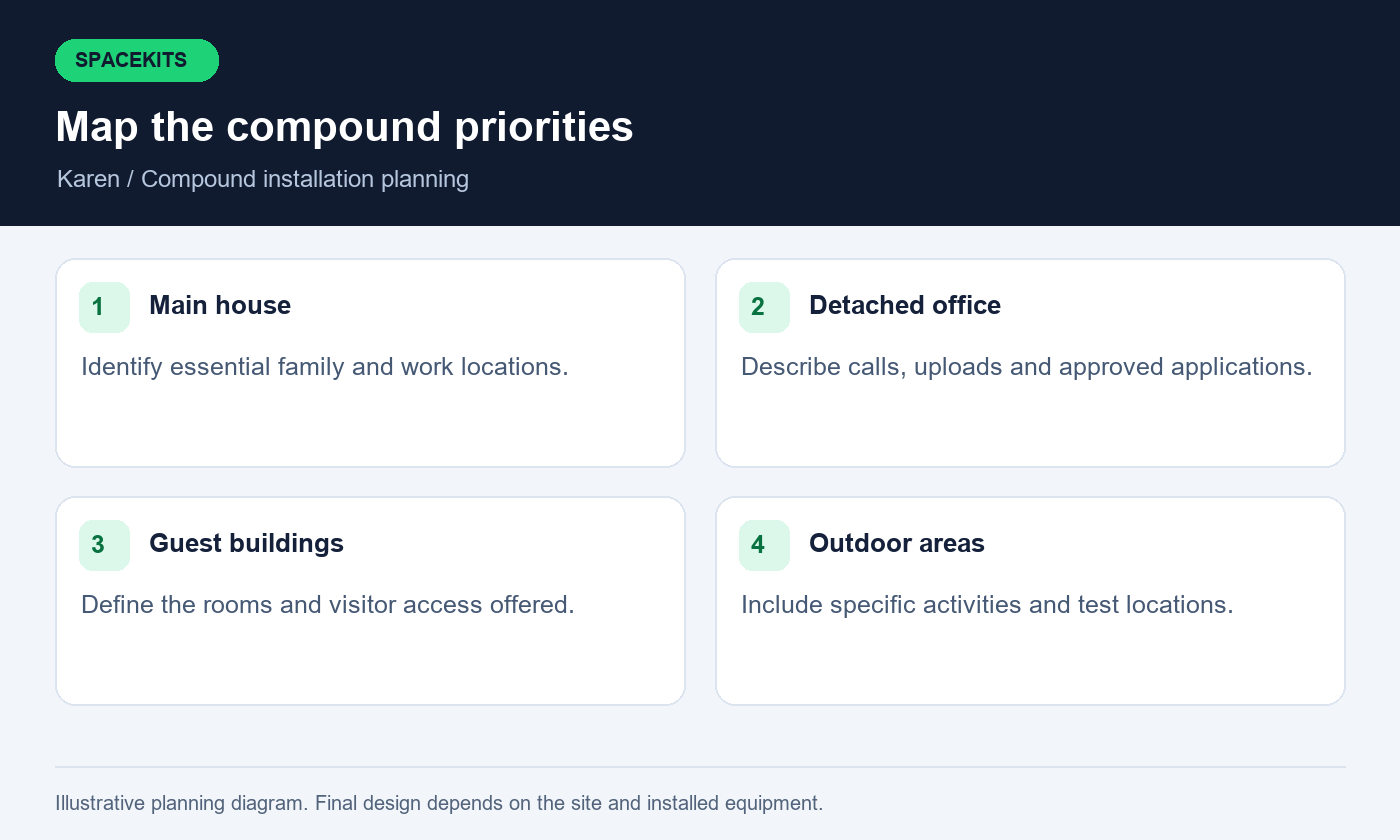
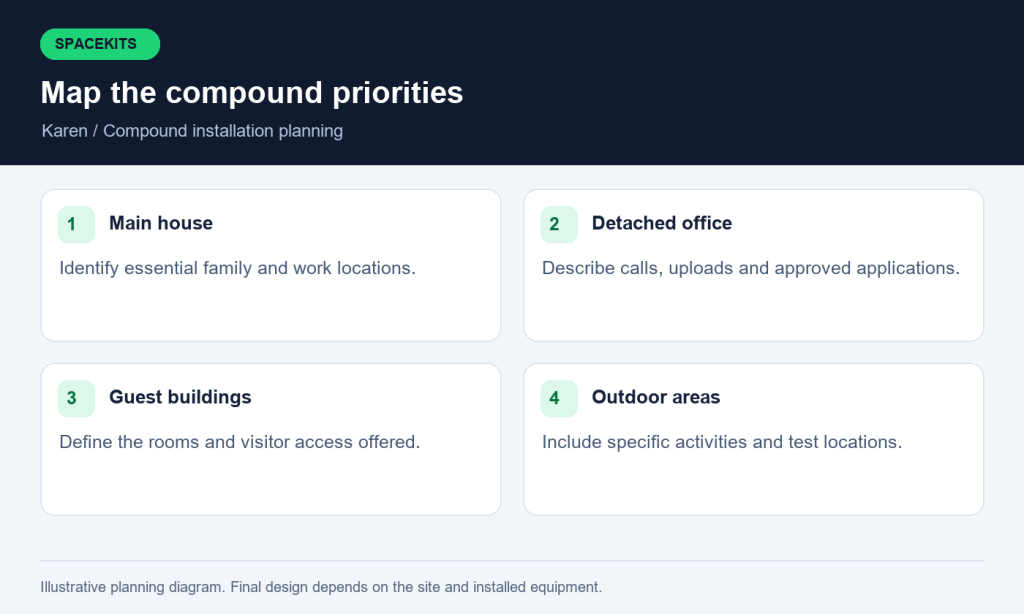
1. Give Starlink installers in Karen a building map
Draw a simple plan showing the main house, detached rooms, office, gatehouse and other buildings relevant to the enquiry. The drawing does not need survey precision to begin a conversation, but approximate distances and important obstacles are helpful. Mark existing paths, accessible service routes and the places where equipment could be powered and protected.
Beside each building, write who uses it and what they need to do online. A guest cottage used occasionally has different priorities from an office occupied throughout the working week. A gatehouse may have a specific device requirement that needs its supplier's input. Avoid treating every part of the property as one identical coverage area.
Ask Starlink installers in Karen to convert the map into a proposed scope with named test locations. Indicate which areas are essential now and which could be considered later. That distinction lets the installer explain a phased design without implying that the initial installation covers everything. Keep one authorised person responsible for approving changes. Where different family members or staff suggest additions, record those requests and assess them against the agreed priorities before more equipment or work is added to the project.
2. Prioritise activities before trying to cover every corner
It can be tempting to request internet everywhere, but a useful brief is more specific. Identify the work desk, study area, living space and guest accommodation that matter most. Explain whether outdoor connectivity is required for a regular activity or simply desirable. This helps distinguish a necessary design feature from an expensive addition with little day-to-day value.
Starlink installers in Karen should ask about simultaneous use across the compound. A video meeting in a detached office may overlap with guests streaming in a cottage and family devices in the main house. The plan must consider the local path to each building as well as the shared upstream connection. Adding an access point to every room does not increase the capacity of the service itself.
Choose an acceptance task for each priority location. Starlink installers in Karen can then demonstrate whether the agreed design supports those tasks under representative conditions. For example, a small file transfer and meeting test may be appropriate for the office, while ordinary guest browsing is sufficient for another area. Keep the objectives realistic and measurable. The resulting proposal is easier to compare and avoids a vague coverage promise that neither the customer nor the installation team can evaluate clearly at handover.
3. Confirm account and service readiness for the property
Check current availability and plan options for the exact address through Starlink before finalising the physical installation. Offers can vary by location and account. A working connection elsewhere in Karen is not a substitute for checking your own site. If you already own equipment, confirm its account status and suitability for the intended arrangement.
Starlink installers in Karen can guide the equipment setup, but the owner or authorised organisation should control the provider account. Use an email and recovery process that remain available when household staff or property managers change. Keep passwords, payment details and recovery codes out of a shared installation group. Sensitive account actions should be completed directly by the authorised person.
Separate the hardware purchase, subscription and local installation responsibilities. Starlink installers in Karen should make clear which services are included in their proposal and which questions require the provider or another seller. If a used kit or an account transfer is involved, resolve the relevant eligibility and ownership issues before scheduling a complete installation visit. A compound design may involve substantial local-network work, so it is particularly useful to establish that the underlying service and equipment arrangements are ready before approving further materials and labour.
4. Assess trees and sky view without rushing the decision
A leafy property can offer several attractive mounting positions that differ considerably in their operating view. Assess the actual candidate locations using the relevant Starlink app tools and the correct hardware selection. Nearby trees, roof features and other structures can affect suitability. The manufacturer's guidance makes clear that objects blocking the required view can cause interruptions.
Ask Starlink installers in Karen to compare appropriate positions and explain the trade-offs. A location closer to the house may simplify cable routing, while another may offer a better view but need a different route or mounting assessment. Do not assume that the tallest available structure is automatically the best or safest choice. Access, structural suitability and future maintenance also matter.
Tree cutting should not be an automatic response to an installation challenge. Starlink installers in Karen should first explain the evidence and potential alternatives within the property's permissions and practical constraints. Any tree, structural or elevated-access work needs appropriate professional assessment. Keep initial scan findings and later operating observations distinct in the handover record. This provides a basis for future reviews if vegetation or nearby construction changes, rather than leaving the owner with only a photograph and an unsupported statement that the view was clear.
5. Select a maintainable mounting arrangement
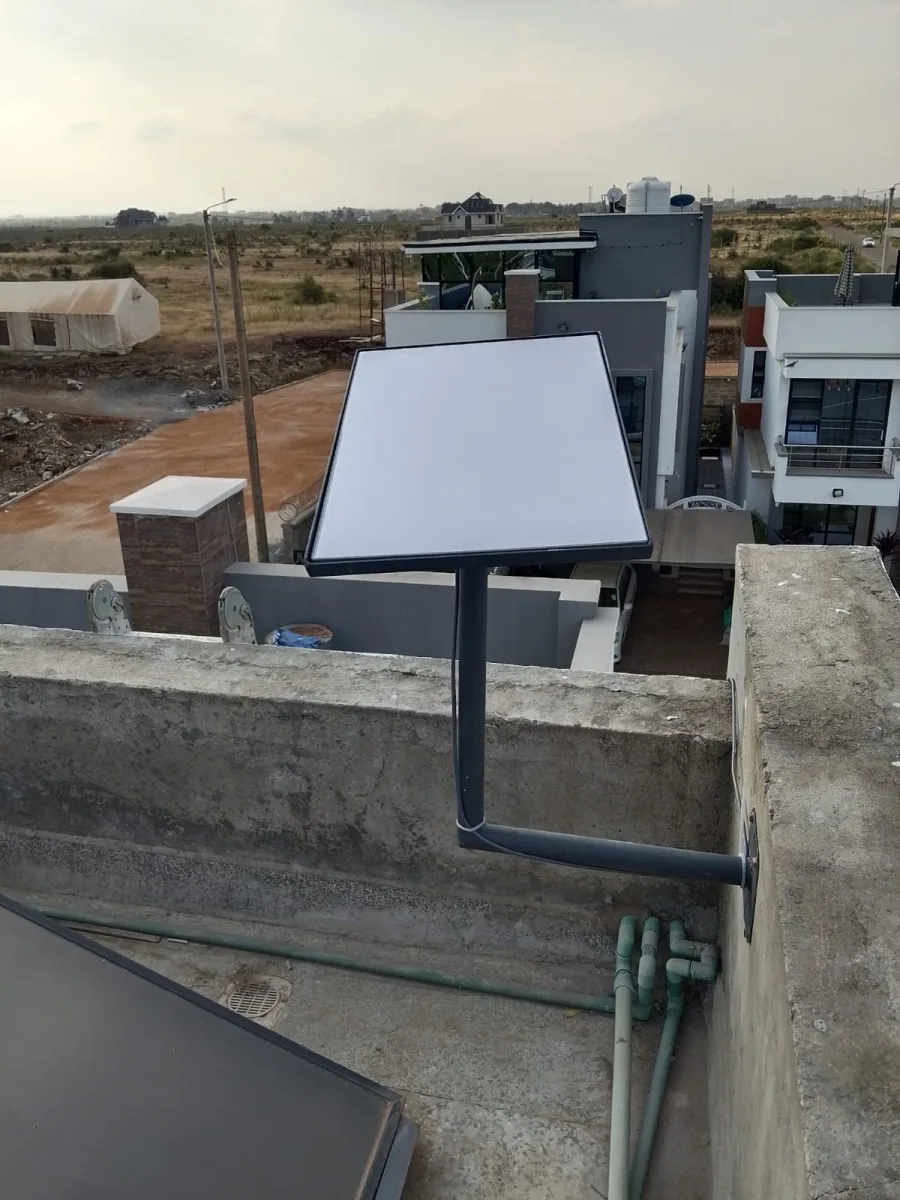
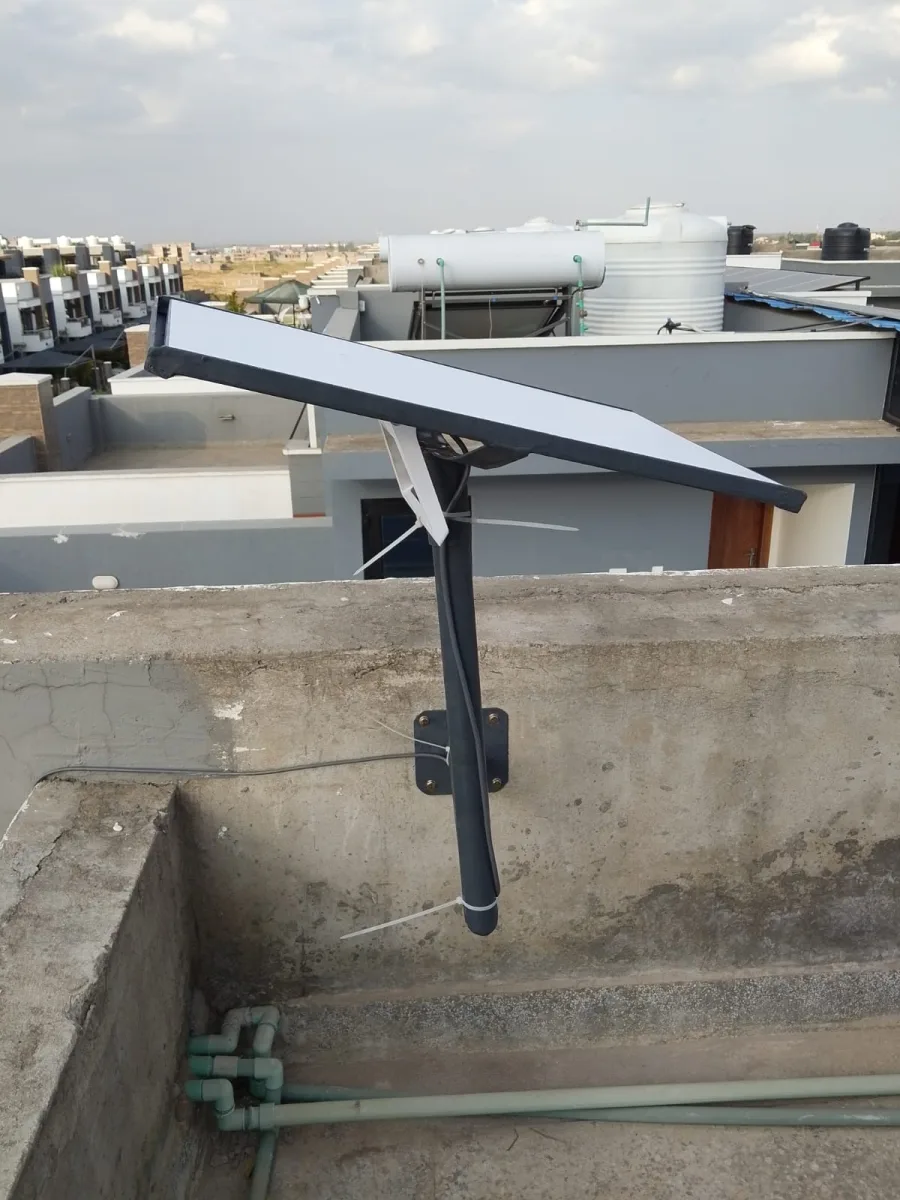
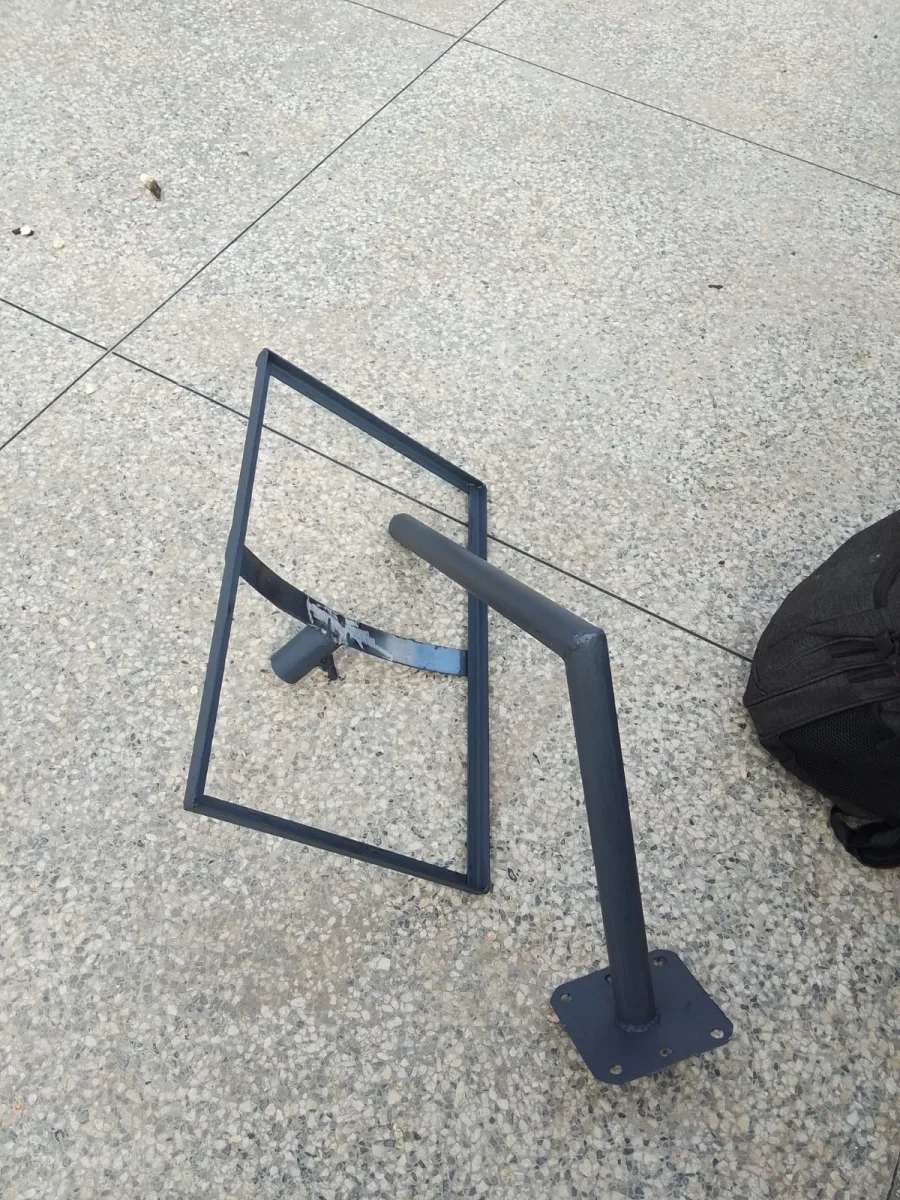
The mount should suit the exact hardware, the chosen surface and the conditions assessed at the property. Identify the kit model before buying accessories. A bracket that worked on another roof or another generation of equipment should not be assumed suitable without inspection. Ask who supplies the mount and what relevant installation guidance will be followed.
Starlink installers in Karen should explain how the proposed position can be accessed for future maintenance by appropriately equipped people. A design that is difficult to inspect may create unnecessary expense later. At the same time, convenient access must not override the need for a suitable operating view or appropriate structural assessment. These considerations belong in the survey and quotation stage.
Record the final approved position and any limitations. Starlink installers in Karen should distinguish mounting work from specialist roof, structural or electrical tasks that need another competent professional. If the design changes during installation, obtain approval before proceeding. Photographs and a simple description of the completed arrangement will help future contractors understand the site. Keep the equipment secure from ordinary accidental disturbance without making it impossible for authorised support to inspect connections and assess a reported problem when maintenance is needed.
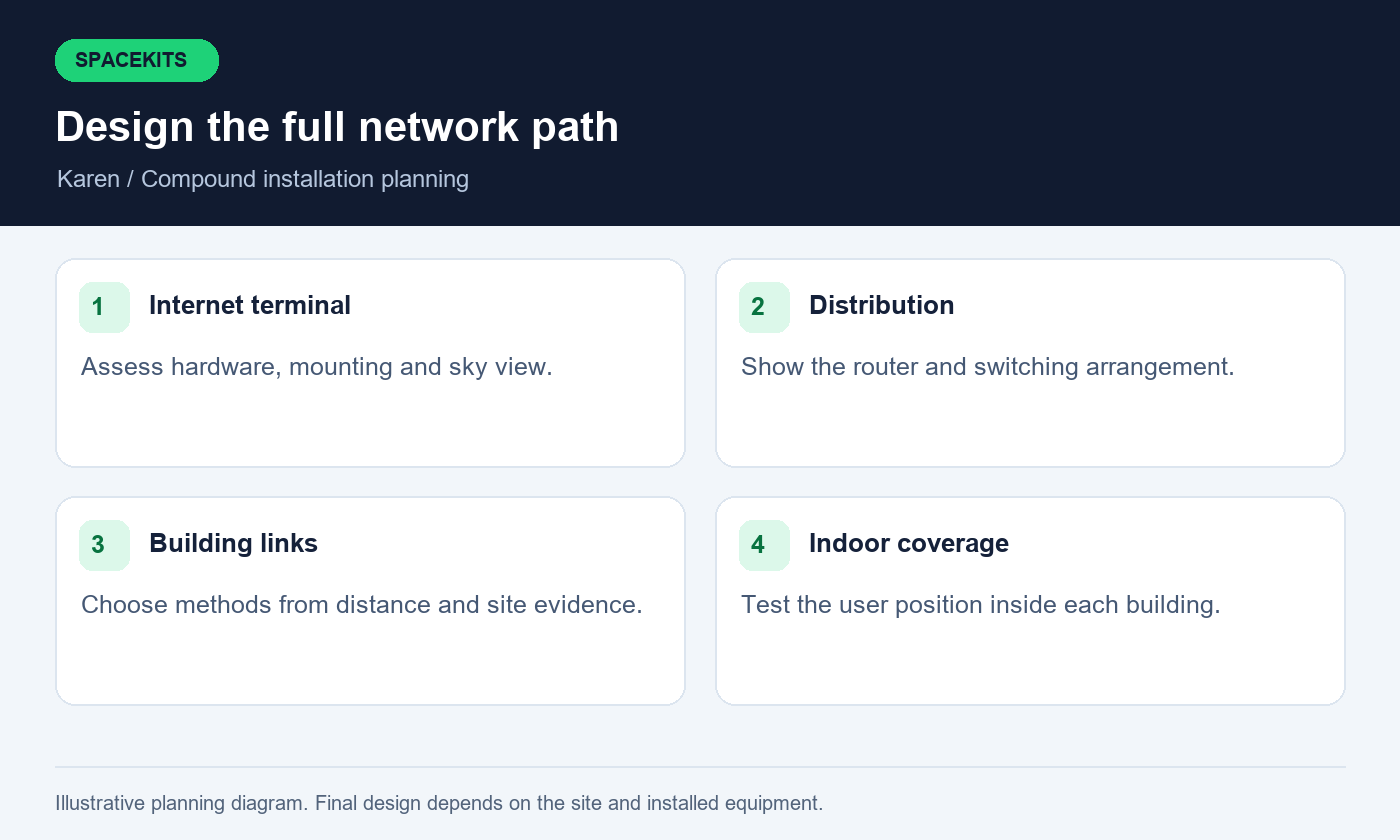
6. Separate the dish cable from the wider property network
The connection between the dish and its associated indoor equipment is one part of the system. Links from that equipment to other buildings are another. Treating the whole property as one long cable problem can lead to unsuitable materials or unrealistic assumptions. Start with the manufacturer's supported arrangement for the exact kit, then design the local distribution network around the site's needs.
Ask Starlink installers in Karen to show the complete connection path in a simple diagram. It should identify the dish, router, switches, access points and any links between buildings. Mark where power is required. This makes it easier to understand why a particular device or route is proposed and which part of the system would be affected if it failed.
Measure actual routes before selecting materials. Starlink installers in Karen should consider access, protection, distance and the conditions of each section rather than relying on a straight-line estimate. Where external cabling, inter-building electrical considerations or other specialist issues arise, involve the appropriate professionals. The final design should make clear which components are included in the quote and which future extension points are merely planned. An understandable network drawing is a practical maintenance tool, especially on a property where equipment is spread across several separate structures.
7. Choose building links from site evidence
A detached office or cottage may be served through an appropriate wired or wireless link, depending on the site's distances, routes, obstacles and requirements. No single method is automatically right for every compound. The design should consider installation feasibility, maintenance, environmental exposure and the tasks expected at the destination building.
Starlink installers in Karen should explain why the proposed link suits the site. If a wireless arrangement is considered, the relevant path and mounting requirements need assessment. If a cable route is proposed, permissions, protection and specialist considerations need attention. Ask for an explanation in ordinary language rather than choosing based only on the most impressive equipment description.
Include the destination building's internal coverage in the scope. A working link to a cottage does not prove that the bedroom desk or far room has adequate WiFi. Starlink installers in Karen should test the full path from the upstream connection through the building link to the actual user device. Record the conditions and any limitations. If the link passes but one room remains weak, the next step may be a local coverage improvement rather than replacing the connection between buildings or changing the provider plan.
8. Give the detached office its own acceptance plan
A garden office can be a small building with demanding connectivity needs. Ask the person who works there to list ordinary tasks, such as video meetings, approved remote access and file transfers. Note whether the office must remain useful while the main house is busy. The design should support the actual work pattern rather than simply show a strong WiFi indicator on a phone.
Starlink installers in Karen should test from the desk with the usual equipment and doors in their normal state. If the work device is managed by an employer, keep its policies in place and involve the authorised IT team for application-specific questions. The installer should not need to disable security controls or receive private credentials to demonstrate ordinary connectivity.
Check power at every active device serving the office, including equipment located elsewhere on the property. Starlink installers in Karen should explain the consequence of an outage at each point. A powered laptop in the office may still lose internet if a switch in the main house is off. Record the working arrangement, any backup priorities and the support contact. This gives the home worker a clearer operating plan than a general promise that internet reaches the garden building.
9. Treat guest accommodation as a distinct requirement
Decide what connectivity will be offered to guests and where. A cottage may need coverage in a sitting area and a desk, while an outdoor terrace may be optional. State the intended service clearly so the network design and any guest information match what has been tested. Avoid making a broad property-wide promise based on a result collected in the main house.
Ask Starlink installers in Karen how guest access will be separated from household resources where the equipment and design support that requirement. A guest network should be configured and checked according to the agreed access policy. A different network name alone does not establish isolation. Keep household administrator credentials and provider account access separate from the instructions given to visitors.
Prepare a simple joining guide and a contact for problems. Starlink installers in Karen should explain what the property host can safely check and which issues require technical support. Test the guest experience with an authorised device that has not already been configured by the technician. This catches practical problems such as unclear joining instructions or a weak connection in the promised room. Record any limitations before the accommodation is advertised with claims that the actual installation has not yet demonstrated.
10. Scope outdoor WiFi by the activity and location
Outdoor coverage can mean a work table on a veranda, a regular seating area or a larger gathering space. Those are different requirements. Identify the intended locations and typical number of users. Include seasonal or occasional activities only if you want them considered in the quote. A precise brief avoids turning an ordinary home installation into an undefined request for internet across every boundary of the property.
Starlink installers in Karen should assess suitable equipment, placement, protection and power for any outdoor network components. Equipment intended for indoor use should not be assumed suitable simply because it can be placed under a roof edge. Environmental conditions and the manufacturer's requirements need to guide the design, along with the property's appearance and access preferences.
Test at the actual outdoor location with representative use. Starlink installers in Karen should distinguish a successful nearby connection from demonstrated coverage of the intended area. Ask how guests or household members will join and whether the access arrangement differs from indoor networks. Record what is included and any boundary where performance has not been assessed. Clear scope lets you decide whether the benefit of extending coverage justifies the additional equipment, installation and maintenance obligations for your particular property.
11. Keep specialist devices within their supplier's requirements
Some properties include cameras, access systems, alarms or other devices that use a network connection. List these during planning, but do not assume that installing internet automatically provides the desired remote access or operating behaviour. Each device and application may have requirements that need confirmation from its supplier or authorised administrator.
Starlink installers in Karen should state whether their scope includes connecting specific equipment or only providing the local network path. Where another supplier is responsible, arrange a joint test or a clear handover between parties. Keep account access limited to authorised people and avoid exposing device administration publicly as a shortcut to remote support.
Test approved functions with the relevant owner present. Starlink installers in Karen should document what was demonstrated without making unsupported claims about continuous monitoring, emergency response or security outcomes. A device may remain powered but lose its cloud connection, or record locally while remote viewing is unavailable; the supplier should explain its actual behaviour. Understanding those dependencies is more useful than treating every connected device as proof that the compound is protected against all interruptions. Keep specialist system responsibilities distinct from the ordinary internet installation and support agreement.
12. Plan power for every active building link
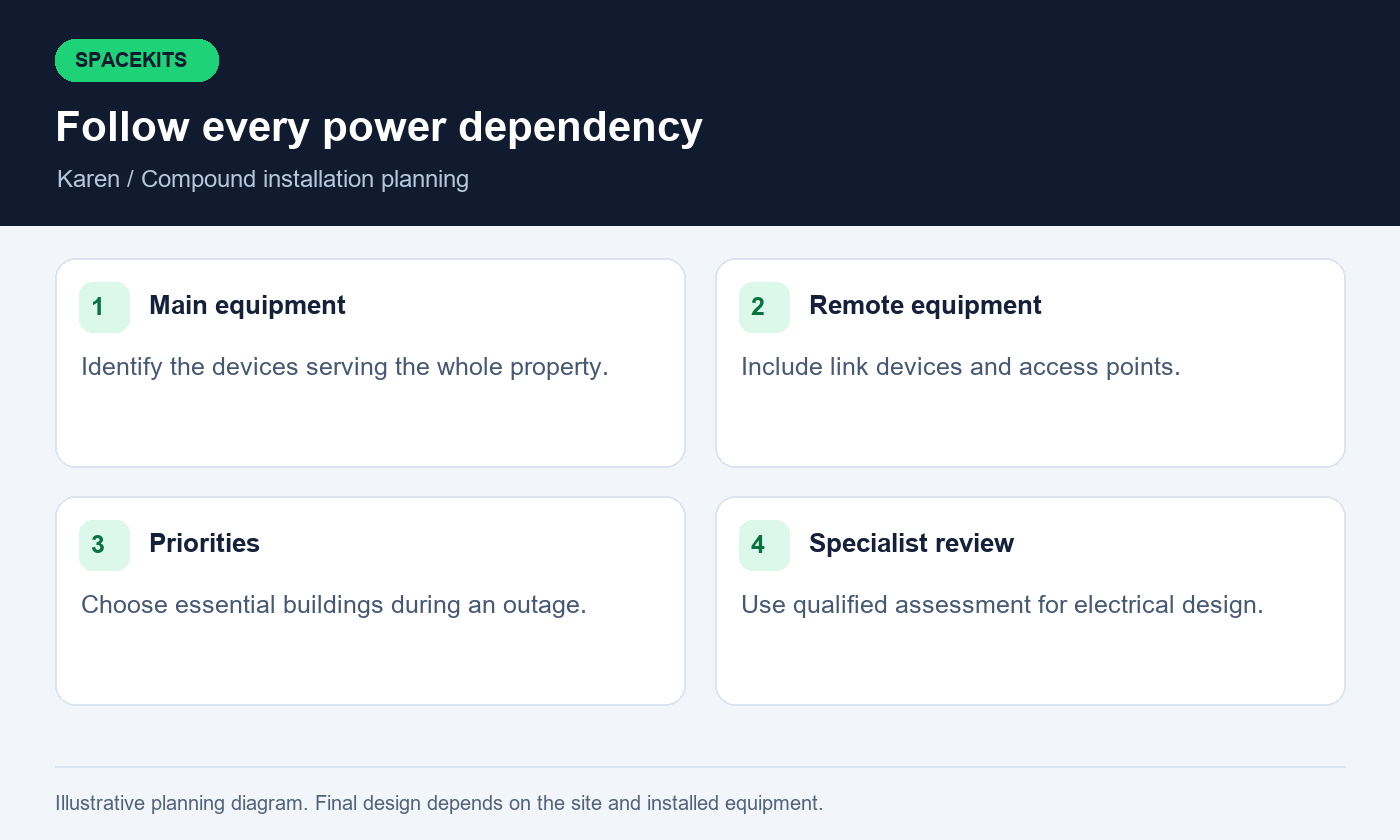
Draw the power dependency of the complete network. The main internet equipment, switches, building-link devices and access points all matter. A backup unit at the house may not keep a cottage online if the receiving equipment at the cottage loses power. This is a common planning gap when the discussion focuses only on the dish and main router.
Ask Starlink installers in Karen to identify the required network equipment and its location. Use an appropriately qualified electrical or backup-power professional to assess the power arrangement, protection and suitable capacity. Do not infer runtime from the capacity printed on one battery without considering the actual connected load and operating conditions.
Choose which buildings need priority during an interruption. Starlink installers in Karen should coordinate those priorities with the power design so that essential equipment shares a workable operating plan. A controlled commissioning check by the responsible professionals can establish how the arrangement behaves under stated conditions. Record the observed result and any limitations. Give household staff safe instructions that focus on ordinary observations and escalation, leaving electrical alterations, exposed wiring and unfamiliar backup equipment to people qualified to assess and work on them.
13. Compare a complete compound quotation
Break the proposal into the main connection, mounting, routes, building links, indoor coverage, outdoor coverage and testing. Identify optional phases separately. This makes it easier to understand the cost of serving an additional cottage or work area and to compare proposals that otherwise use different package labels for very different amounts of work.
When comparing Starlink installers in Karen, ask what evidence supports the quantities and equipment selection. A site survey should explain route assumptions and unresolved issues. If the quote is preliminary, it should say which information could change the final design. Travel, specialist access, additional labour and return visits should be addressed clearly rather than appearing as surprises after work has started.
Distinguish installation support, hardware warranty and subscription support. Starlink installers in Karen should explain how each is handled and who responds to a fault in an inter-building link. Ask what documentation is included at handover and whether a first-use review is part of the service. A transparent proposal allows you to choose a sensible first phase while preserving a plan for future expansion, without confusing an optional later improvement with a requirement that was supposed to be completed in the initial installation.
14. Sequence installation around household activity
Large properties often have several people and contractors working at the same time. Agree where the installation team can work, which areas need access and when interruptions are acceptable. Let household members know if their existing connection will be affected. Protect scheduled work meetings and avoid arranging critical changes at the same time as unrelated electrical or building work where possible.
Starlink installers in Karen should identify a practical sequence for mounting, routing, equipment placement and testing. If the work is phased, agree what will be usable at the end of each stage and what remains incomplete. The customer should not have to infer that a cottage is still offline simply because the main house has already been shown a successful test.
Use one authorised contact to approve variations. Starlink installers in Karen may receive requests from residents, staff or another contractor, but additions should be checked against the scope and budget. Keep a brief record of changes and their consequences. At the end of each working period, confirm the condition of temporary areas and any access needed for the next visit. This keeps a multi-building project understandable and reduces the chance that unfinished work is mistaken for a final arrangement.
15. Test the entire compound path, not just the dish
Use the building map as the acceptance sheet. Test the priority tasks in the main house, detached office and each included cottage or outdoor area. Record the device, location and connection method. If the scope includes simultaneous use, demonstrate a representative sample across more than one building rather than checking each area only when the rest of the property is idle.
Starlink installers in Karen should show how a fault in one area can be distinguished from a property-wide problem. A working main-house connection with an offline cottage points to a different investigation from every building losing service together. This basic understanding helps the owner and support team avoid unnecessary changes to parts of the system that are functioning normally.
Ask Starlink installers in Karen to document completed tests and outstanding items. A speed test collected at the main router should not stand in for a room or building that has not been checked. Give unresolved items a responsible person and next action. Keep the final equipment diagram and photographs with the acceptance record. This provides a useful baseline for future maintenance and makes it easier to assess whether a later change to vegetation, furniture, power or equipment has affected a previously demonstrated result.
16. Give the caretaker a bounded support role
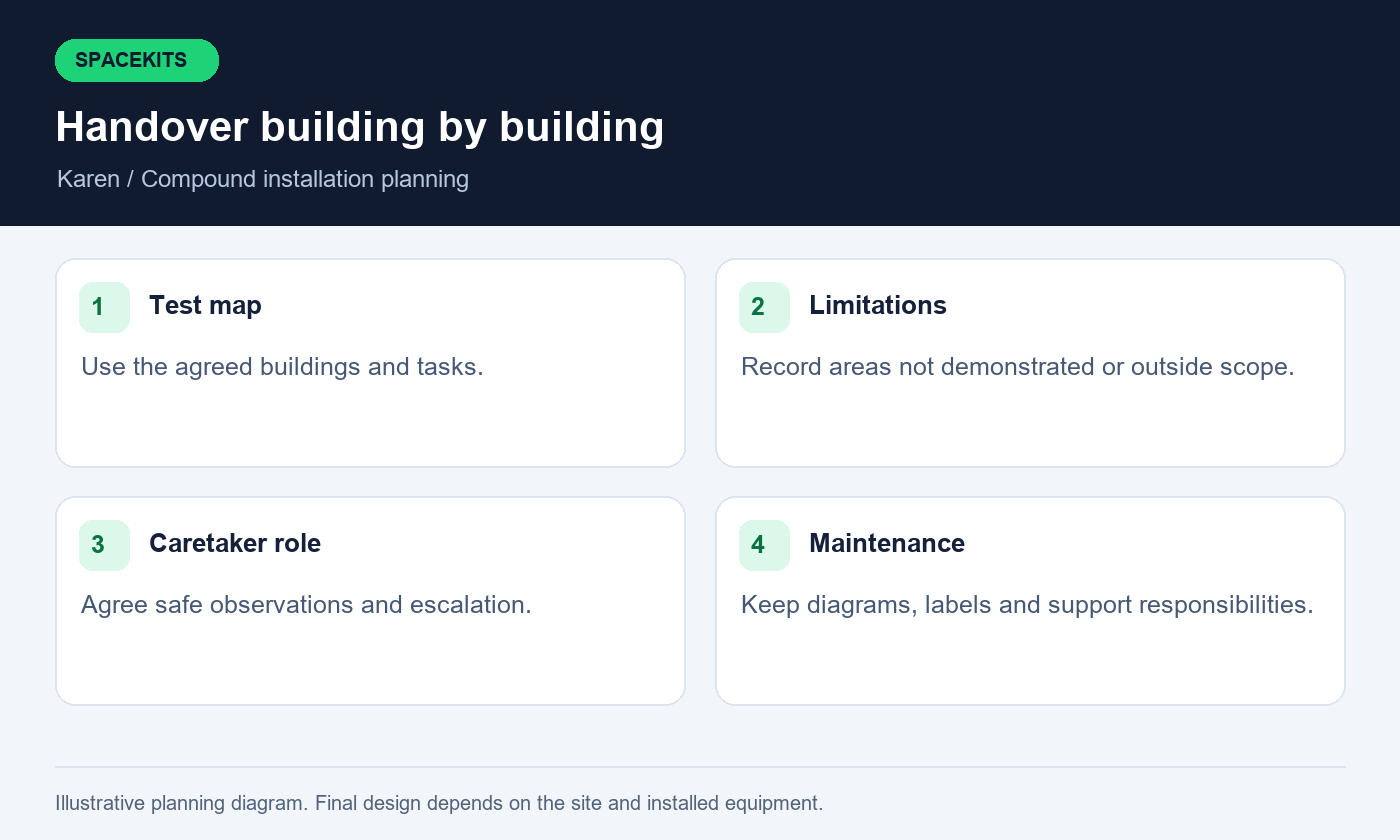
A caretaker can often help by observing ordinary indicators, checking which areas are affected and reporting a specific symptom. That role should match their training and availability. It should not depend on climbing onto roofs, opening electrical equipment or changing unfamiliar network settings. Agree the limits before an outage occurs and creates pressure to improvise.
Ask Starlink installers in Karen for a short handover suitable for the person who will actually use it. Include equipment locations, labels, safe observations and the contact sequence. Keep provider account ownership, payments and recovery information with the authorised owner. A caretaker generally needs a reliable reporting process more than unrestricted access to every account involved in the installation.
Use a simple fault log with the time, affected building and task. Starlink installers in Karen can then distinguish a repeated cottage-link issue from an occasional application problem on one device. After support work, ask the original user to repeat the affected task. Record the result and update instructions if anything changed. This closes the loop and prevents maintenance from becoming a series of unexplained restarts that temporarily alter symptoms without establishing what was repaired or which part of the compound remains affected.
17. Questions to resolve before approving the design
Can one kit serve more than one building? The local network can be designed to distribute a connection where appropriate, but feasibility and performance depend on the site, equipment and usage. Does that mean one router covers the entire compound? No; each building's link and internal coverage need assessment. A successful test in the main house is not evidence for a distant room.
Can Starlink installers in Karen work around mature trees? They can assess candidate locations and explain options, but the result depends on the actual view and permitted design. Do not assume tree removal or an extremely tall mount is required. Can cameras use the connection? Their supplier should confirm the supported arrangement and relevant remote-access requirements.
Will the installation eliminate every outage? Starlink installers in Karen can address work within the agreed local scope, but power, provider service, applications and other equipment remain dependencies. Can expansion be added later? Ask for a documented phase plan that identifies what is prepared now and what a later extension would require. These questions make the proposal easier to evaluate and keep the purchase focused on demonstrated property needs instead of broad claims that no site-specific design can responsibly guarantee.
18. Send a complete Karen compound enquiry
Contact SpaceKits with the exact property pin, a simple building map and the list of priority activities. Include safe photographs of candidate mounting areas, the existing kit if you own one and any network equipment you want assessed for reuse. Identify the person who can approve access and design changes at the property.
For Starlink installers in Karen, useful details include approximate building distances, current power arrangements, essential work deadlines and whether guest or outdoor coverage is required. State any known site restrictions. Do not include private credentials, payment details or unnecessary information about household routines. If a survey is needed to resolve the design, agree its scope before expecting a final materials list.
Review the written proposal against the building map and acceptance tasks. Starlink installers in Karen should explain how each included area connects, what will be tested and who supports the completed arrangement. Keep the final records and review them when the property changes. A well-planned compound installation gives the owner clear priorities, understandable costs and a maintainable network, while residents and guests know which areas have been assessed and what to do if the connection later needs attention.
Related guidance from Starlink installers in Karen
For equipment you already own, read the Nairobi installation-only guide. For managed buildings, review the tenant roof-access and installation brief. These resources support the project-specific checks above and help you prepare the information needed for a written proposal.
Check current service options using the official Starlink Kenya site, then confirm the offer for your own Kenyan service address. Follow the official installation guide for the Standard kit only where it matches your hardware; use the relevant manufacturer instructions for another model. Availability, account conditions and equipment details should be rechecked when you book.
When contacting Starlink installers in Karen, explain which checks you have already completed and which details need a survey. This helps the team prepare a relevant proposal and identify missing information before an appointment is agreed.
To request an assessment, contact SpaceKits on WhatsApp or call +254 725 345 345. Send your location pin, property type, kit details and the tasks you want the installation to support. Ask for written inclusions, exclusions, appointment conditions and support terms before confirming the job. SpaceKits is an independent installation provider; this article does not imply Starlink or SpaceX endorsement, guaranteed speeds or uninterrupted service.
Need Starlink Installation or Network Optimization?
We help homes, offices, apartments, and businesses with Starlink installation, WiFi coverage improvement, and professional setup in Kenya.
Request Installation Chat on WhatsApp